Imagine cutting your business’s energy costs while also boosting your green credentials. Sounds ideal, right? That’s exactly what solar energy promises—but, like any major investment, it’s not without its trade-offs.
For businesses across the UK, switching to solar power is an increasingly attractive option. With rising electricity prices and growing pressure to meet sustainability targets, solar panels offer a practical solution. However, before you dive in, it’s essential to weigh both the benefits and the challenges.
In this article, we break down the top 20 advantages and disadvantages of solar energy for commercial businesses in the UK. Whether you’re a facility manager, financial director, or business owner, this guide will help you decide whether solar is right for your company.
Advantages of Solar Energy for Commercial Businesses
Investing in solar energy can provide businesses several benefits, ranging from financial savings to improved sustainability credentials. Here are the top 10 advantages:
1.1. Cost Savings and Financial Benefits
- Reduced electricity bills – Solar panels allow businesses to generate electricity, significantly lowering energy costs. Many companies in the UK report savings of thousands of pounds per year.
- Government incentives and tax benefits—Businesses can use incentives like capital allowances, VAT reductions, and local grants to make solar installations more affordable.
- Protection against rising energy prices—The cost of grid electricity continues to increase. By installing solar panels, businesses can lock in energy prices and reduce their reliance on external suppliers.
1.2. Environmental and Sustainability Benefits
- Reduction in carbon footprint – Solar panels generate clean energy, reducing reliance on fossil fuels and significantly lowering greenhouse gas emissions. This helps businesses contribute to the UK’s Net Zero targets while enhancing their environmental responsibility.
- Renewable and inexhaustible energy source – Unlike coal, oil, or natural gas, solar power is infinite and does not deplete natural resources, making it a sustainable solution for long-term energy security without harming the environment.
1.3. Energy Security and Independence
- Reduced reliance on the national grid – Generating electricity on-site reduces dependency on external energy suppliers, protecting businesses from unexpected price hikes and supply shortages. This is especially beneficial during times of energy crises or grid instability.
- Resilience during power outages (with battery storage) – Adding battery storage allows businesses to store excess solar energy and use it when needed, ensuring a consistent power supply and reducing downtime due to grid failures. This is crucial for businesses requiring uninterrupted operations.
1.4. Commercial and Brand Benefits
- Enhanced corporate social responsibility (CSR) – Demonstrating environmental responsibility can improve brand reputation and strengthen relationships with customers, investors, and stakeholders.
- Increased appeal to eco-conscious customers and stakeholders – Many consumers and businesses prefer working with companies committed to sustainability, providing a competitive advantage.
1.5. Technological and Operational Advantages
- Scalability and modular design – Solar energy systems can be tailored to fit different business needs, allowing companies to start small and expand as their energy demand grows, making solar a flexible investment.
- Integration with battery storage and EV charging – Businesses can enhance their sustainability efforts by combining solar with battery storage and EV charging stations, supporting their transition to greener operations and reducing fuel-related expenses.
Disadvantages of Solar Energy for Commercial Businesses
While the advantages of solar energy are compelling, there are also some challenges that businesses must consider.
2.1. High Initial Investment Costs
- Upfront cost of solar panel installation – The initial investment for purchasing and installing solar panels, inverters, and mounting systems can be significant, though financial incentives help offset some costs. However, businesses should consider this a long-term investment with substantial savings over time.
- Additional costs for battery storage – While solar panels alone reduce grid reliance, adding battery storage increases upfront costs. However, batteries enhance energy independence, allowing businesses to store power during peak hours or outages.
2.2. Space and Roof Suitability Challenges
- Large roof or ground space required – Commercial solar PV systems require adequate roof space to generate sufficient energy, which may be limited for some businesses, particularly in dense urban areas.
- Structural integrity concerns – Not all buildings are suitable for solar installations. Older or weaker roofs may require structural reinforcements, increasing project costs and installation time. A professional site assessment is essential before proceeding.
2.3. Intermittency and Weather Dependence
- Lower efficiency in cloudy or winter conditions – Although modern solar panels work efficiently even in diffused sunlight, their energy output is still lower during prolonged cloudy periods or in winter when daylight hours are shorter.
- No energy generation at night – Since solar panels only produce electricity during the day, businesses must rely on battery storage or grid electricity to maintain power overnight, which can impact cost savings.
2.4. Regulatory and Planning Constraints
- Planning permission and regulatory approvals – While most commercial solar installations fall under permitted development rights, businesses in conservation areas or listed buildings may require planning permission, adding time and complexity to the project.
- Grid connection delays and costs – Some businesses may face lengthy approval processes or additional fees to upgrade their grid infrastructure, impacting the overall timeline and return on investment.
2.5. Maintenance and Technical Considerations
- Regular maintenance required – Although solar panels require minimal upkeep, they still need periodic inspections, cleaning, and servicing to ensure optimal efficiency and prevent issues such as dirt buildup or faulty components.
- Degradation of solar panels over time – Solar panels gradually lose efficiency over 25–30 years, typically at a rate of about 0.5% per year. While they still generate power after this period, businesses should plan for potential replacements or upgrades.
Is Solar Energy Worth It for UK Businesses?
Despite some challenges, the advantages of solar energy often outweigh the disadvantages, making it a valuable long-term investment for UK businesses. The financial, environmental, and operational benefits make solar a compelling solution for companies seeking to reduce energy costs, enhance sustainability, and achieve energy independence.
However, businesses must carefully consider their specific circumstances before investing in solar. Factors such as available roof space, structural suitability, and initial budget will influence the feasibility and effectiveness of a solar installation. Additionally, companies should assess their energy usage patterns to determine if solar PV, with or without battery storage, aligns with their operational needs.
To maximise the benefits of solar energy, businesses should work with experienced solar providers who can design customised systems tailored to their energy demands. A professional feasibility study, including assessing return on investment and payback periods, will optimise the system for maximum efficiency and cost savings.

Future-Proof Your Business with Solar Energy
The transition to solar energy presents an unparalleled opportunity for UK businesses to cut costs, enhance sustainability, and gain energy independence. While the advantages of solar energy—such as financial savings, environmental benefits, and energy security—make a strong case for adoption, businesses must also consider potential challenges, including upfront costs and space requirements.
Despite these considerations, solar power remains one of the most practical and impactful investments a business can make. With energy prices continuing to rise and government incentives available, there has never been a better time to explore how solar can benefit your company. Whether you want to reduce operational expenses, meet sustainability targets, or future-proof your energy strategy, a well-planned solar installation can deliver long-term returns.
Take the first step toward a smarter energy future today!
Discover how much you could save. Use EvoEnergy’s Solar Panel Calculator to estimate your potential cost reductions and carbon savings. Our team specialises in designing and installing commercial solar systems tailored to your business needs. Contact EvoEnergy today for a consultation and see how solar power can transform your business.
Frequently Asked Questions
What key financial benefits do businesses gain from installing solar panels?
- Reduced electricity bills, Solar energy allows businesses to generate their own electricity, leading to substantial savings (often thousands of pounds per year).
- Access to government incentives, including capital allowances, VAT reductions, and local grants, helps offset installation costs.
- Protection against rising energy prices, By producing their own power, businesses can control energy costs and reduce dependence on volatile grid prices.
How does solar energy support sustainability and company reputation?
- Lower carbon footprint – Solar power reduces reliance on fossil fuels, helping meet the UK’s Net Zero targets and enhancing environmental credentials.
- Use of renewable energy – Solar energy is inexhaustible and replenishes naturally, offering long-term, sustainable electricity generation.
- Improved CSR and brand appeal – Demonstrating commitment to green energy can attract eco-conscious clients, investors, and stakeholders.
What operational advantages do solar systems provide to commercial businesses?
- Energy security and independence – Onsite solar generation reduces reliance on grid supply, offering resilience against outages and supply disruptions, especially when paired with battery storage.
- Scalability & modularity – Systems can start small and scale up as energy needs grow.
- Integration with clean tech – Solar pairs well with battery storage and EV charging infrastructure, supporting broader sustainable business operations.
What challenges or limitations should businesses consider when installing solar panels?
- High upfront costs – Initial investment for panels, inverters, mounting systems, and especially battery storage can be substantial, although incentives may help.
- Space and structural constraints – Adequate roof or ground area is required, and older buildings may need reinforcements, increasing cost and installation time.
- Weather sensitivity and intermittency – Efficiency drops under cloudy or low-light conditions, with zero generation at night, necessitating grid backup or storage solutions.
- Regulatory hurdles – Some sites may need planning permission (e.g., listed buildings), and grid connection procedures can be time-consuming or costly.
- Maintenance & degradation – Panels require periodic cleaning and inspections; they gradually lose efficiency (~0.5% annually), affecting long-term output.
Is investing in solar energy a worthwhile choice for UK businesses overall?
Yes. While solar energy comes with certain challenges like upfront costs and planning complexities, the long-term financial, environmental, and operational benefits often outweigh these drawbacks. Savings from lower energy bills, enhanced sustainability reputation, and growing energy independence make solar installations a compelling long-term strategy.
Businesses are encouraged to conduct feasibility studies and work with experts to tailor systems to their specific energy usage, site constraints, and business goals.
Solar panels have become popular as businesses increasingly look for ways to reduce energy costs and meet sustainability goals. However, installation costs are significant, so many business owners turn to financial support, such as solar panel grants. This blog post will explore whether these grants are worth it for commercial businesses in 2025.
Key Takeaways
- Solar panel grants are an excellent way for businesses to lower the initial investment required for solar installations, making renewable energy more accessible and financially viable.
- By adopting solar energy with the help of grants, businesses can enjoy reduced energy bills, contribute to sustainability goals, and improve their brand reputation by showcasing a commitment to green practices.
- While grants offer significant benefits, businesses must navigate eligibility requirements, application processes, and funding limitations to maximise their chances of success.
- For businesses that don’t qualify for grants, alternatives like Power Purchase Agreements, green loans, tax incentives, leasing programs, and community solar initiatives provide viable pathways to adopt solar energy.
- Partnering with renewable energy consultants can streamline applying for grants, identifying incentives, and implementing solar solutions tailored to a business’s needs.

What Are Solar Panel Grants?
Solar panel grants are financial aids governments, local authorities, or private organisations provide to encourage businesses to adopt solar energy. These grants typically help reduce the upfront costs of installing solar PV systems. In 2025, the UK will offer several schemes, such as the Smart Export Guarantee (SEG) and regional funding program, to assist businesses in transitioning to renewable energy.
Unlike loans, solar panel grants don’t need to be repaid, making them an attractive option for businesses looking to save money while contributing to environmental sustainability. However, eligibility criteria and funding limits often apply, which means not all companies may qualify.
Benefits of Solar Panels Grants for Businesses
Solar panel grants offer several advantages to businesses, including:
- Cost Savings: Grants significantly reduce the upfront investment required for solar installations, making the technology more accessible. This can make it easier for businesses to allocate funds toward other essential operations or growth opportunities.
- Lower Energy Bills: Businesses can reduce their reliance on traditional energy providers by generating renewable energy. Over time, this leads to consistent savings and protection against rising energy prices.
- Environmental Impact: Adopting solar energy helps reduce carbon footprints, aligns with corporate sustainability goals, and contributes to global efforts to combat climate change. Businesses can also meet environmental regulations more efficiently, avoiding potential penalties.
- Improved Reputation: Using solar energy, partly funded through grants, demonstrates a commitment to green practices. This can attract environmentally conscious clients and partners, enhance brand loyalty, and create positive publicity opportunities.
- Long-Term Financial Benefits: While the initial savings from grants are immediate, the long-term financial benefits of reduced operational costs and potential revenue from selling surplus energy add to the overall value.
By leveraging solar panel grants, businesses can achieve a faster return on investment (ROI) and make renewable energy adoption more viable and appealing.
Challenges or Limitations
While solar panel grants are beneficial, they come with specific challenges. Understanding these limitations before relying solely on solar panel grants to fund your project is crucial.
- Eligibility Requirements: Many grants have strict criteria, such as the type of business, location, or size of the solar installation.
- Limited Availability: Some grants are offered on a first-come, first-served basis and may run out of funding quickly.
- Application Complexity: Applying for solar panel grants often requires detailed documentation, which can be time-consuming for business owners.
- Partial Funding: Grants may only cover a portion of the costs, leaving businesses to finance the remainder.

Available Solar Panels Grants and Incentives in 2025
For businesses in the UK, several solar panels grants and incentives are available in 2025:
- Smart Export Guarantee (SEG): Although technically not a grant, SEG allows businesses to sell excess energy back to the grid, creating an additional revenue stream. This scheme ensures companies can earn from surplus energy while reducing dependence on non-renewable sources. SEG has flexible rates depending on the energy provider so that businesses can shop for the best deal.
- Local Authority Grants: Some councils provide grants or funding programs for renewable energy projects. These vary regionally and often target specific sectors such as manufacturing or retail. Local authorities may also offer additional incentives for businesses that meet specific sustainability criteria or operate in low-carbon zones.
- Capital Allowances: While not a direct grant, businesses can claim tax relief on renewable energy investments through capital allowances. The Annual Investment Allowance (AIA) often includes renewable energy equipment, enabling companies to offset a significant portion of their investment against taxable income. This reduces overall tax liability while promoting energy-efficient upgrades.
- Energy Efficiency Schemes: Programs aimed at improving energy efficiency often include funding for solar panel installations. For example, the Industrial Energy Transformation Fund (IETF) supports businesses adopting energy-efficient technologies, including solar PV systems. These schemes frequently combine financial aid with technical guidance to maximise the benefits of renewable energy projects.
In addition to these options, new funding opportunities may emerge as the government prioritises net-zero carbon goals. The first step for any business considering solar panel grants is checking the eligibility and availability of these schemes. Partnering with experts can help companies navigate the application process and identify the most suitable opportunities for their needs.

Are Solar Panels Grants Worth It for Businesses?
Businesses should evaluate the potential financial and environmental benefits of solar panel grants against the effort required to secure them. For many, the reduced upfront costs and long-term energy savings make the grants worthwhile.
However, grants are not the only factor to consider. Businesses must also account for maintenance costs, potential downtime during installation, and time investment in the application process. Solar panel grants can significantly improve ROI, but careful planning and analysis are essential.
Alternatives to Solar Panels Grants
For businesses that don’t qualify for solar panel grants or need additional funding, several alternatives are available:
- Power Purchase Agreements (PPAs): With a PPA, a third party installs and maintains the solar panels, and the business pays for the energy used at a reduced rate. This option eliminates the need for upfront investment and shifts the responsibility of system upkeep to the provider, allowing businesses to focus on operations.
- Green Loans: Specialised loans with favorable terms for renewable energy projects can cover upfront costs. Green loans often feature lower interest rates and extended repayment periods, making them an appealing option for businesses looking to spread out the financial burden of solar installation.
- Tax Incentives: Schemes like Enhanced Capital Allowances (ECA) provide tax benefits for solar investments. These incentives enable businesses to write off renewable energy expenditures against their taxable profits, effectively reducing the overall cost of the system.
- Leasing Options: Some companies offer solar panel leasing programs, in which businesses can rent solar systems instead of buying them outright. This approach minimises financial commitment while still delivering energy savings.
- Community Solar Programs: Businesses that lack sufficient space for solar panels can join a community solar program to invest in shared solar installations and receive clean energy credits or reduced energy costs.
Exploring these alternatives alongside solar panel grants ensures businesses have the resources to proceed with their renewable energy projects and tailor solutions to their specific financial and operational needs.

How to Get Started with Solar Panels Grants?
If you’re considering solar panel grants for your business, follow these steps:
- Assess Your Needs: Determine your energy consumption and whether solar panels suit your property.
- Research Funding Opportunities: Look for grants, incentives, or schemes available in your region.
- Work with Professionals: Engage renewable energy consultants like EvoEnergy to identify the best grants and streamline the application process.
- Prepare Your Application: Gather the required documents and submit your application early to improve your chances of success.
With minimal financial strain, businesses can make the most of solar panels grants and transition to renewable energy.
Your Final Step Toward Renewable Savings
Solar panel grants offer businesses a valuable opportunity to reduce the costs of adopting renewable energy. While they have certain limitations and eligibility requirements, the financial and environmental benefits often outweigh the challenges. For businesses committed to sustainability, grants can pave the way to long-term savings and improved corporate responsibility.
To find out how your business can benefit from solar panels grants, contact EvoEnergy today for expert guidance. Use our Solar Panel Calculator to see how much your business could save with solar energy and take the first step toward a greener future.
Have you ever wondered if your commercial building’s windows could do more than just let in natural light? Imagine they could generate electricity, reduce energy bills, and contribute to your business’s sustainability goals. This is exactly what solar windows promise to deliver.
With the UK’s net-zero commitments and rising electricity costs, businesses seek innovative renewable energy solutions. While rooftop solar panels have become widely adopted, solar windows offer a unique opportunity to integrate energy generation into a building’s structure. But are they a wise investment for commercial properties?
This blog post will explore the benefits, drawbacks, financial viability, and key considerations of installing solar windows in commercial buildings.

What Are Solar Windows and How Do They Work?
Solar windows are an innovative renewable energy technology that integrates transparent solar cells into glass surfaces. This allows windows to generate electricity from sunlight while maintaining visibility. Unlike traditional solar panels, which require large, opaque surfaces, solar windows seamlessly integrate into buildings, turning windows into energy-producing assets.
How Do Solar Windows Work?
Solar windows use photovoltaic (PV) technology, but instead of conventional silicon-based cells, they utilise transparent or semi-transparent solar cells embedded within the glass. These cells can absorb specific wavelengths of light while allowing visible light to pass through.
- Light Absorption: Solar windows use organic photovoltaic (OPV) materials or transparent luminescent solar concentrators (TLSCs) to absorb ultraviolet (UV) and infrared (IR) light, which are invisible to the human eye. This allows visible light to pass through, maintaining the window’s transparency.
- Energy Conversion: The absorbed UV and IR light is converted into electrical energy through thin-film solar cells or quantum dots, which direct the energy toward photovoltaic strips located at the window edges.
- Electricity Generation and Storage: The electricity produced can be used immediately to power a building’s electrical systems or stored in battery storage systems for later use.
Types of Solar Windows
There are several emerging technologies behind solar windows:
- Photovoltaic Glass (PV Glass) – PV glass integrates thin-film solar cells (such as amorphous silicon or perovskite solar cells) into transparent glass panels. These cells convert sunlight into electricity while allowing partial light transmission.
- Transparent Luminescent Solar Concentrators (TLSCs) – TLSCs contain organic molecules that absorb non-visible light (UV and IR) and re-emit it at a different wavelength. The re-emitted light is guided to the window edges, where traditional solar cells convert it into electricity.
- Quantum Dot Solar Windows – Uses nanomaterials called quantum dots to absorb and convert light more efficiently. These materials enhance transparency while optimising energy conversion.

Benefits of Solar Windows for Commercial Properties
Commercial buildings consume significant energy, especially for lighting, heating, cooling, and electronic systems. Solar windows offer an innovative way to enhance energy efficiency while maintaining a modern aesthetic. Here’s how they benefit commercial properties:
1. Energy Savings & Efficiency
One of the biggest advantages of solar windows is their ability to generate electricity without occupying additional space. By converting sunlight into usable energy, they help businesses reduce their reliance on grid electricity and lower operational costs over time.
For commercial buildings with large glass façades, such as office buildings, hotels, shopping centres, and corporate headquarters, this can significantly cut energy expenses—especially during peak daylight hours when businesses consume the most power. Solar windows offer a way to offset energy bills and improve a company’s overall energy efficiency by producing electricity right where it’s needed.
2. Space-Saving & Aesthetic Appeal
Unlike traditional solar panels, which require dedicated roof or ground space, solar windows make use of existing infrastructure—turning an essential architectural feature into an energy-producing asset. This makes them an ideal solution for urban businesses with limited roof space or aesthetic restrictions on external modifications.
Additionally, solar windows blend seamlessly into modern building designs, avoiding the bulkiness of conventional rooftop solar panels. Solar windows provide a visually unobtrusive alternative to harness solar power for commercial buildings, particularly those in historically sensitive areas or those governed by strict planning permissions.
3. Sustainability & Compliance
With the UK government’s net-zero emissions target by 2050, businesses are facing increasing regulatory pressure to improve sustainability practices. Many commercial properties are subject to mandatory energy efficiency compliance requirements, such as:
4. Property Value & Tenant Appeal
As businesses and investors increasingly prioritise sustainability, commercial properties that feature renewable energy solutions are seeing an increase in value. Buildings equipped with solar technology, including solar windows, tend to attract high-value tenants who are looking for eco-friendly office spaces that align with their own sustainability goals.
For landlords and property owners, this means:
- Higher rental demand from eco-conscious tenants.
- Improved asset valuation due to enhanced energy efficiency.
- Lower operational costs, making properties more profitable over time.
Many multinational corporations and SMEs seek to lease commercial spaces that align with their corporate sustainability strategies. Installing solar windows can give a commercial property a competitive edge, making it a more attractive choice for forward-thinking tenants.
5. Energy Security & Grid Independence
Another critical advantage of solar windows is enhanced energy security. As electricity prices in the UK continue to rise, businesses increasingly seek ways to stabilise their energy costs and become less dependent on external suppliers.
By generating electricity on-site, solar windows help businesses:
- Reduce reliance on the national grid and fluctuating electricity tariffs.
- Create a buffer against power outages, especially when paired with battery storage.
- Maintain consistent operational costs, avoiding unexpected price hikes.
Solar windows work particularly well when integrated with other renewable energy solutions, such as:
- Battery storage systems – Store surplus energy for use at night or during peak demand.
- Smart grid technology – Allows buildings to optimise energy consumption based on supply and demand.
- Rooftop solar panels – Complements solar windows by maximising total solar energy generation.

Potential Drawbacks and Challenges of Solar Windows
While solar windows offer numerous benefits, there are also some limitations and challenges that commercial property owners need to consider before investing. Understanding these factors is crucial in determining whether they are the right choice for your business.
1. Lower Efficiency Compared to Traditional Solar Panels
One of the main challenges with solar windows is their lower energy conversion efficiency compared to rooftop solar panels. Traditional solar PV panels typically achieve efficiency rates between 18% and 22%, whereas solar windows currently operate at around 5% to 15% efficiency.
This means that solar windows generate less electricity per square metre than a rooftop solar panel, requiring a larger surface area to produce the same amount of energy. For commercial buildings that rely on high energy outputs, solar windows alone may not be enough to meet total energy demands.
2. Higher Initial Investment
Another key challenge is the higher upfront cost of solar PV glass compared to standard glazing and traditional solar panels. The cost of manufacturing and integrating photovoltaic technology into transparent glass panels increases the overall price of installation.
Additionally, solar windows typically require specialised installation and custom fittings, which further adds to the capital expenditure. This means businesses must weigh upfront costs against long-term energy savings to determine whether the investment is financially viable.
3. Integration & Retrofitting Challenges
For newly constructed buildings, solar windows can be incorporated into the design from the outset, making installation seamless and cost-effective. However, for existing commercial buildings, retrofitting solar windows can present challenges.
- Structural Modifications: Older buildings may require reinforcements or adjustments to support the weight and wiring of solar windows.
- Wiring & Electrical Integration: Unlike standard windows, solar PV glass requires an electrical connection to channel the generated power, which may involve extensive wiring work in existing structures.
- Building Regulations & Planning Permissions: Some commercial properties—especially those in historical or conservation areas—may face restrictions on altering window designs.
Solar Windows vs. Rooftop Solar Panels
| Feature | Solar Windows | Rooftop Solar Panels |
| Energy Efficiency | Lower efficiency (~5-10%) compared to rooftop panels | Higher efficiency (~15-22%) |
| Installation Location | Integrated into windows and glass facades | Installed on roofs of buildings |
| Space Requirement | No extra space needed; uses existing windows | Requires sufficient rooftop space |
| Visibility & Aesthetics | Transparent or semi-transparent, maintains building aesthetics | Visible but can be integrated with building design |
| Cost | Higher cost due to emerging technology | Lower cost per kW compared to solar windows |
| Durability & Lifespan | May have shorter lifespan due to new materials | Proven durability (~25-30 years lifespan) |
| Return on Investment (ROI) | Longer payback period due to lower efficiency | Faster ROI due to higher energy generation |
| Heat & Light Management | Reduces heat gain and glare while generating power | Provides some shade, reducing cooling costs |
| Ideal Use Cases | Ideal for high-rise buildings and urban environments | Ideal for industrial, commercial, and residential rooftops |
| Integration with Buildings | Seamless integration into building design | May require additional mounting structures |
| Maintenance Requirements | Lower maintenance due to fewer external components | Requires periodic cleaning and monitoring |
The comparison between solar windows and rooftop solar panels highlights key differences in efficiency, cost, aesthetics, and ideal applications.
Solar windows are designed for seamless integration into buildings, utilizing existing glass surfaces to generate electricity without altering architectural aesthetics. However, they have lower efficiency (5-10%) compared to traditional solar panels and come at a higher cost per square metre.
Rooftop solar panels, on the other hand, are more efficient (15-22%), have a faster return on investment, and are a proven, cost-effective renewable energy solution. They require dedicated roof space and are more visible, but they generate significantly higher energy output per installed area.
Are Solar Windows Worth the Investment?
Solar windows are an emerging renewable energy technology that offers both energy efficiency and aesthetic benefits. However, their financial viability depends on several factors, including cost, efficiency, payback period, and available incentives. Here are some analyses to help determine if solar windows are a worthwhile investment for commercial and residential properties.
1. Cost of Solar Windows
Solar windows are more expensive than traditional rooftop solar panels due to the advanced materials and transparent solar cell technology used in their manufacturing.
2. Energy Savings & ROI
Solar windows generate electricity, helping businesses and homeowners reduce their reliance on the grid. However, their lower efficiency means they generate less power per square metre compared to traditional solar panels.
3. Incentives & Government Support
To offset costs, businesses can take advantage of government grants, subsidies, and tax incentives for solar technology. Businesses may recover some costs through incentives, but solar windows do not qualify for as many subsidies as traditional PV panels. In the UK, some potential schemes include:
- Capital Allowances for Renewable Energy – Businesses can write off investments in solar technology.
- Smart Export Guarantee (SEG) – Allows businesses to sell excess energy back to the grid (may be limited for solar windows due to lower output)
- Green Loans & Financing – Some banks offer low-interest loans for energy-efficient upgrades.

Key Factors for UK Businesses to Consider
Before committing to solar windows, UK business owners must evaluate several critical factors to determine whether this technology fits their commercial properties. While solar windows offer unique advantages, their effectiveness and financial return depend on multiple variables, including location, energy usage patterns, and integration with other renewable solutions.
1. Location & Sunlight Exposure
The efficiency of solar windows depends mainly on the amount of sunlight a building receives daily. Buildings located in southern regions of the UK, such as London, Brighton, and Bristol, tend to receive higher solar irradiance than those in the northern areas like Edinburgh or Newcastle. However, even in less sunny locations, solar windows can still contribute to energy savings, particularly when combined with other renewable solutions.
2. Energy Demand & Business Operations
To maximise ROI, solar windows should align with a business’s energy consumption patterns. Since solar windows generate power during daylight hours, they are most beneficial for companies that operate predominantly during the day.
3. Integration with Other Renewable Energy Solutions
Solar windows work best with complementary renewable energy technologies, forming a holistic energy management system that enhances efficiency and cost savings.
Making the Right Solar Investment for Your Commercial Property
As businesses across the UK strive to reduce energy costs and meet sustainability targets, solar windows offer an innovative solution for integrating renewable energy into commercial buildings. While they may not yet match traditional solar PV panels in efficiency, they provide unique benefits such as space-saving installation, aesthetic appeal, and regulatory compliance advantages.
Whether you choose solar windows, traditional rooftop solar panels, or a combination of both, the key to success lies in selecting the right solution tailored to your building’s energy needs. That’s where EvoEnergy comes in—helping UK businesses transition to sustainable energy with expert consultancy, design, installation, and maintenance services.
Get Started with EvoEnergy Today
Want to see how much CO₂ and money your business could save? Try our Solar Panel Calculator and get an instant estimate tailored to your commercial property! Explore EvoEnergy’s Solar & Renewable Energy Services and see how we can help your business make the switch to sustainable power.
Investing in solar energy is a step toward lower costs, greater energy security, and a more sustainable future. Contact EvoEnergy today and let’s create a tailored solar solution for your business!
Frequently Asked Questions
What are solar windows and how do they work?
Solar windows integrate transparent or semi-transparent solar cells within glass surfaces, allowing windows to generate electricity by absorbing ultraviolet (UV) and infrared (IR) light while letting visible light pass through. Technologies include photovoltaic glass, transparent luminescent solar concentrators (TLSCs), and quantum dot solar windows.
What are the main benefits of installing solar windows in commercial buildings?
Solar windows generate electricity without needing extra roof or ground space, reduce reliance on grid power, lower energy bills, maintain aesthetic appeal, help meet sustainability regulations, increase property value, improve tenant appeal, and enhance energy security by stabilizing costs and reducing dependency on external suppliers.
How are solar windows different from traditional rooftop solar panels?
Solar windows are less efficient (typically 5-15% vs. 15-22% for panels), have higher installation costs, and generate less energy per square meter. However, they offer seamless architectural integration and save space, making them ideal for urban buildings or those with strict aesthetic or planning restrictions.
What challenges should businesses consider before investing in solar windows?
Challenges include lower efficiency leading to higher area requirements for the same energy output, higher upfront costs, integration complexities in existing buildings (such as structural modifications, wiring, and regulatory approvals), and potentially shorter lifespan compared to traditional panels.
Are solar windows a financially viable investment?
Financial viability depends on factors like installation costs, efficiency, payback period, available government incentives, and the building’s energy usage pattern. Although solar windows often have longer payback periods than rooftop panels, they offer unique benefits valued in urban commercial properties.
What types of commercial buildings are best suited for solar windows?
Buildings with large glass façades such as office towers, hotels, shopping centres, and corporate headquarters benefit most. They are especially suited to urban locations with limited roof space or areas with strict planning and aesthetic controls.
How do solar windows contribute to sustainability and regulatory compliance?
Solar windows reduce carbon emissions by generating renewable energy onsite and help commercial properties comply with UK schemes like ESOS (Energy Savings Opportunity Scheme), SECR (Streamlined Energy & Carbon Reporting), and MEES (Minimum Energy Efficiency Standards).
Can solar windows improve property value and attract tenants?
Yes. Properties with integrated renewable energy solutions like solar windows tend to have higher rental demand from eco-conscious tenants, increased asset valuation, and lower operational costs, making them more competitive and attractive in the real estate market.
How do solar windows enhance energy security for businesses?
By generating electricity onsite, solar windows reduce reliance on volatile grid electricity prices, provide a buffer against outages (especially when paired with battery storage), and allow more predictable energy costs, helping businesses manage operational risks.
Should solar windows be combined with other renewable solutions?
Yes. Combining solar windows with rooftop solar panels, battery storage, and smart grid technologies maximises energy generation, storage, and usage efficiency, enabling a comprehensive and reliable renewable energy system.
Can commercial buildings truly achieve net zero without sacrificing aesthetics and functionality? As businesses in the UK face increasing pressure to reduce carbon emissions, many are exploring innovative ways to integrate renewable energy solutions. Traditional solar panels are an effective way to generate clean electricity, but they often require dedicated rooftop or ground space, which isn’t always feasible for commercial properties with limited availability or design constraints.
This is where transparent solar panels come in. By transforming windows, façades, and skylights into energy-generating surfaces, this emerging technology offers a promising solution for businesses aiming to improve sustainability without compromising building aesthetics.
In this blog post, we’ll explore how transparent solar panels work, their benefits, and challenges, and whether they can be the key to net zero commercial buildings. If you’re a UK business owner, commercial property manager, or sustainability professional, this guide will help you understand whether transparent solar panel technology is right for you.

What Is a Transparent Solar Panel?
A transparent solar panel is a photovoltaic (PV) technology that allows visible light to pass through while converting non-visible wavelengths (such as ultraviolet and infrared) into electricity. Unlike traditional solar panels, which are opaque and designed to absorb as much sunlight as possible, they maintain their see-through appearance, making them ideal for integration into windows, glass facades, and other transparent surfaces.
How Do Transparent Solar Panels Work?
Transparent solar panels utilise specialised materials and technologies to capture light selectively. There are two main types:
- Partially Transparent Solar Panels: These panels use thin layers of photovoltaic material that allow some visible light to pass through while absorbing other wavelengths.
- Fully Transparent Solar Panels: These panels rely on organic photovoltaic (OPV) or transparent luminescent solar concentrators (TLSC) that only absorb ultraviolet and infrared light, leaving visible light unaffected.
Key Benefits of Transparent Solar Panels
One of the biggest advantages of transparent solar panels is their ability to integrate smoothly into existing structures without altering their design or functionality. Unlike traditional solar panels, which require dedicated rooftop or ground-mounted installations, transparent solar panels can be embedded into windows, skylights, glass facades, and even vehicle sunroofs. This makes them an ideal choice for urban environments, where space for traditional solar panels may be limited.
Transparent solar panels offer a visually appealing alternative to conventional PV modules, particularly for architects and designers who prioritise aesthetic integrity. They enable sustainable energy generation without the bulky, dark panels typically associated with solar technology. This feature is especially beneficial for modern skyscrapers, corporate buildings, and heritage structures where maintaining a sleek or historic appearance is essential.
Unlike standard PV panels solely used for energy generation, transparent solar panels serve a dual purpose: They function as structural materials and energy harvesters. In commercial buildings, for instance, glass facades equipped with transparent solar panels can provide natural lighting while simultaneously reducing energy consumption by generating electricity.
-
Sustainability and Energy Efficiency
Transparent solar technology is crucial in reducing carbon footprints and promoting sustainability. Businesses and homeowners can lower their dependence on fossil fuels by harnessing solar energy without significantly altering a building’s design. Additionally, when installed in large glass surfaces—such as office towers or shopping malls—these panels can significantly reduce overall energy demand from the grid, leading to a more energy-efficient future.
-
Reduction in Heat Absorption
Some transparent solar technologies also have the added benefit of reducing heat absorption by blocking ultraviolet (UV) and infrared (IR) rays while allowing visible light to pass through. This can help regulate indoor temperatures, decreasing the need for excessive air conditioning in commercial and residential buildings and further reducing energy consumption.

Potential Applications of Transparent Solar Panels
-
Commercial and Residential Windows
One of the most promising uses of transparent solar panels is in windows for office buildings, homes, and skyscrapers. Instead of relying solely on rooftop solar panels, businesses can transform entire glass facades into energy-generating surfaces. This can significantly enhance the building’s energy efficiency without requiring additional space.
Transparent solar panels can be integrated into electric vehicle (EV) sunroofs, side windows, or windshields to provide auxiliary power. This can help extend battery life and reduce reliance on charging stations, making EVs even more sustainable. Some automotive manufacturers are already experimenting with solar-integrated glass to enhance vehicle efficiency.
The development of ultra-thin, transparent solar panels opens up possibilities for consumer electronics, such as smartphones, tablets, and smartwatches. Imagine a phone screen that can harvest solar energy to extend battery life or a smartwatch that never needs to be charged conventionally. This application is still in its early stages, but it has the potential to revolutionise how we power our everyday devices.
-
Greenhouses and Agriculture
Traditional solar panels can sometimes obstruct necessary sunlight from reaching crops, making them less practical for agricultural settings. However, transparent solar panels allow visible light to pass through while capturing and converting UV and IR light into energy. This means greenhouses can generate electricity while still providing optimal plant growth conditions.
-
Public Transportation and Infrastructure
Transparent solar panels can also be integrated into bus stops, train stations, and even pedestrian walkways, offering a new way to generate clean energy in urban spaces. Solar-integrated glass can be used in shelters, bridges, and public information boards, helping to power lighting, digital displays, and charging stations.
By leveraging these diverse applications, transparent solar panels have the potential to redefine how we think about solar energy, making it more accessible, efficient, and seamlessly embedded into everyday life.
How Can Transparent Solar Panels Benefit Commercial Buildings?
1. Maximising Available Space
Most commercial buildings have large glass surfaces that serve no purpose other than allowing natural light in. Transparent solar panels turn these surfaces into active energy generators, enabling businesses to make better use of their existing infrastructure. Unlike traditional rooftop solar, this technology does not require additional space, making it ideal for office buildings, hotels, retail outlets, and skyscrapers.
2. Improving Energy Efficiency
By integrating transparent solar panels, businesses can reduce their reliance on grid electricity. This leads to:
- Lower operational energy costs.
- Reduced carbon emissions.
- Enhanced energy efficiency when combined with other renewable solutions like rooftop solar and battery storage.
3. Enhancing Building Aesthetics and Property Value
One of the biggest concerns for commercial property owners is maintaining the visual appeal of their buildings. Unlike bulky, dark solar panels, transparent solar panels seamlessly blend into glass structures. This allows businesses to generate power without altering their building’s design, making it an attractive option for modern offices, retail spaces, and architectural landmarks.
Additionally, installing transparent solar panels can increase property value, making buildings more attractive to investors and tenants looking for sustainable spaces.
4. Compliance with UK Sustainability Regulations
The UK government has set ambitious net zero targets, requiring businesses to improve energy efficiency and reduce emissions. Installing transparent solar panels helps businesses comply with the following:
- Energy Performance Certificate (EPC) requirements
- Building Research Establishment Environmental Assessment Method (BREEAM) standards
- UK Net Zero Strategy

Are Transparent Solar Panels Viable for Net Zero Commercial Buildings?
While the technology is promising, businesses must evaluate its efficiency, cost, scalability, and practical applications before adopting it as part of their net zero strategy. Here’s a breakdown:
1. Energy Efficiency Compared to Traditional Solar Panels
Current transparent solar panel technology has lower efficiency than standard rooftop solar panels. While traditional solar panels can achieve 15-22% efficiencies, transparent panels typically range between 5-10% due to their partial light absorption.
However, their ability to cover large glass surfaces compensates for lower efficiency levels, allowing buildings to generate substantial power. As technology advances, researchers are working on improving efficiency through:
- New materials, like perovskite solar cells, offer higher efficiency rates.
- Multi-layered photovoltaic designs to capture more solar energy while remaining transparent.
- Dynamic transparency adjustments, where the panel adapts its opacity based on sunlight intensity, maximising energy capture while maintaining visibility.
2. Integration with Existing Solar Solutions
To maximise energy generation, businesses should integrate transparent solar panels alongside:
- Rooftop solar panels to optimise overall power output.
- Battery storage systems to store excess energy for use during non-sunny hours.
- Smart energy management systems regulate when and how stored solar power is utilised.
A hybrid solar solution using both rooftop and transparent solar panels creates a more efficient and reliable renewable energy system for commercial properties.
3. Scalability & Large-Scale Commercial Adoption
Although transparent solar panel technology is still evolving, its potential for large-scale commercial adoption depends on:
- Manufacturing advancements: Increased production could lower costs, making the technology more affordable.
- Government incentives: Financial support, such as green tax benefits and renewable energy grants, can encourage businesses to adopt transparent solar panels.
- Corporate sustainability goals: Businesses committed to net zero targets will drive demand for innovative solar solutions that integrate seamlessly into existing infrastructure.
4. Economic Considerations: ROI and Cost vs. Benefit
A major factor in the adoption of transparent solar panels is their return on investment (ROI). Businesses should consider:
- Initial installation costs vs. long-term energy savings.
- Payback period—how many years energy savings take to outweigh upfront investment.
- Potential revenue streams include selling excess electricity back to the grid via the Smart Export Guarantee (SEG).
While transparent solar panels currently have a higher price point, declining costs and increasing energy efficiency will likely improve their financial feasibility for businesses.
6. Compliance with UK Sustainability Regulations & Future-Proofing Buildings
Transparent solar panels can help commercial buildings meet the UK’s net zero emissions targets and comply with:
- Energy Performance Certificate (EPC) ratings—improving a building’s energy efficiency score.
- BREEAM sustainability standards, which are important for property valuation and compliance.
- Government-led decarbonisation initiatives, ensuring businesses stay ahead of regulatory changes.

Should UK Businesses Invest in Transparent Solar Panels?
Transparent solar panels present a compelling opportunity for commercial buildings looking to achieve net zero emissions. While efficiency and cost remain key considerations, their ability to integrate seamlessly into windows, façades, and skylights makes them a game-changer for sustainable architecture.
For UK businesses looking to reduce carbon footprints, lower energy costs, and enhance property value, exploring transparent solar panel solutions is a strategic investment in the future. However, whether you opt for transparent solar panels or traditional solar PV, the key is choosing the right solution that aligns with your energy goals, building structure, and budget.
At EvoEnergy, we specialise in renewable energy consultancy, design, construction, monitoring, and maintenance for large businesses across the UK. Whether you’re interested in cutting-edge transparent solar panels or proven traditional solar PV systems, we can help you:
- Assess your building’s solar potential and determine the best technology for your business.
- Design and install high-efficiency solar solutions tailored to your energy needs.
- Integrate battery storage and smart energy management for maximum savings and sustainability.
- Ensure compliance with UK regulations and help you take advantage of government incentives.
Ready to explore solar energy for your commercial building? Contact EvoEnergy today for expert advice and a custom renewable energy solution that drives your business towards a more sustainable future.
Installing solar panels in a conservation area can seem daunting, but it’s not impossible. With sustainability becoming a key priority for businesses, homeowners, and policymakers, understanding the rules around solar energy in protected areas is more important than ever.
This guide explores the regulations, benefits, and practical steps to help you determine whether solar panels in conservation areas are viable for your property or project.
Key Takeaways
- With careful planning and adherence to regulations, solar panels can be installed in conservation areas without compromising their historic or aesthetic value.
- Low-profile panels, solar tiles, and discreet placement strategies allow solar systems to blend seamlessly into protected environments.
- Early consultation with local planning authorities and renewable energy experts ensures compliance and reduces the risk of delays.
- From planning applications to installation and maintenance, EvoEnergy provides tailored solutions for conservation areas and beyond.
- Solar panels reduce energy costs, contribute to sustainability goals, and enhance property value while fostering community and environmental stewardship.
- EvoEnergy caters to various industries, including aerospace, healthcare, transport, and logistics, ensuring that all sectors can embrace renewable energy solutions.

What Defines a Conservation Area?
Conservation areas are designated for special architectural, historical, or environmental significance. In the UK, local planning authorities decide which areas receive this designation. The aim is to preserve the character of these locations while allowing for necessary development that respects their heritage.
Key Characteristics of UK Conservation Areas:
- They may include historic town centres, scenic villages, or areas with significant natural beauty.
- Modifications to buildings or landscapes, including installing solar panels, are subject to stricter planning regulations to maintain the area’s aesthetic and cultural integrity.
- England has over 10,000 conservation areas, with more in Scotland, Wales, and Northern Ireland. Specific local planning authority guidelines govern each.
By designating these areas, the UK ensures its architectural heritage and natural landscapes are preserved for future generations. However, this does not mean that modern advancements like renewable energy cannot play a role—only that careful consideration is required.

Can Solar Panels Be Installed in Conservation Areas?
Yes, installing solar panels in conservation areas is possible, but it requires careful planning and adherence to specific regulations. Unlike installations in non-restricted areas, those in conservation areas must align with local policies designed to preserve the environment’s architectural, historical, or aesthetic significance. Each application is reviewed case-by-case, with authorities focusing on ensuring the proposed installation complements rather than disrupts the area’s character.
Key Considerations for Approval
- Visibility and Placement: One of the primary concerns for conservation authorities is whether the solar panels will be visible from public spaces or detract from the area’s historical charm. Panels should ideally be placed on less visible roofs, such as rear-facing or internal courtyard-facing roofs. Trees, walls, or parapets can also provide natural screening to reduce visibility. Ground-mounted panels may be another option if suitable land is available that does not disrupt the visual harmony of the area.
- Design Compatibility: Authorities typically recommend using solar panels that blend into the existing structure as much as possible. Low-profile panels sit closer to the roof surface and are less intrusive than standard designs. Solar tiles, which mimic traditional roofing materials, are another excellent choice for conservation areas as they maintain the building’s original aesthetic while providing renewable energy benefits.
- Impact Assessment: Before approval, planning authorities will evaluate the potential impact of the proposed solar panel installation. This assessment considers the historical or architectural value of the building and the surrounding area, weighing the environmental benefits of the panels against their visual or structural impact.
- Material and Finish: Using materials and finishes that match or complement the existing building can significantly increase the likelihood of approval. For example, selecting frames and mounts that match the roof colour or using anti-glare coatings to reduce reflectivity can make installations more acceptable.
Planning Permission and Regulations in the UK
Understanding the planning permission process is crucial when considering solar panels in a conservation area.
- Domestic Properties: Homeowners must apply for planning permission when installing solar panels in conservation areas. Exceptions may exist for installations with minimal visual impact.
- Commercial Properties: Businesses face additional scrutiny due to the size and scale of typical solar installations. Larger systems are more likely to require planning permission.
Regulatory Bodies and Guidelines:
- Local Planning Authorities (LPAs): Responsible for granting planning permission and ensuring compliance with local conservation policies.
- Historic England: Offers guidance for installing renewable energy technologies in historic and conservation settings.
- Building Regulations: These ensure that solar panel installations are safe and structurally sound.
By engaging with these bodies early in the process, applicants can address potential concerns and increase the likelihood of approval.

Complying with Legal and Regulatory Framework
Understanding and navigating the regulatory landscape is essential to installing solar panels in conservation areas.
- For Homeowners: Consult your Local Planning Authority (LPA) for specific guidelines. Consider working with a renewable energy consultant to design a solution that meets your needs and complies with regulations.
- For Businesses: Engage with a renewable energy provider like EvoEnergy, who can handle regulatory compliance and planning permissions. Demonstrating the environmental and economic benefits of the project can also help secure approval.
- For Local Authorities and Community Groups: Develop frameworks that balance conservation with renewable energy adoption. Clear and consistent guidelines can encourage responsible installations.
By approaching the regulatory process with preparation and professional support, applicants can ensure a smoother experience.
Benefits of Solar Panels in Conservation Areas
Installing solar panels in conservation areas is feasible and offers a host of benefits to property owners, businesses, and the wider community. These advantages go beyond environmental sustainability and touch on financial savings, community enhancement, and long-term value.
1. Environmental Impact
Solar panels are a renewable energy source that significantly reduces carbon emissions. This is particularly important in conservation areas, where preserving the environment is a key priority. By generating clean energy, solar panels help reduce dependence on fossil fuels, which are a leading contributor to climate change.
- Contribution to Net-Zero Goals: The UK government has committed to achieving net-zero carbon emissions by 2050. Installing solar panels in conservation areas aligns with this national target while demonstrating that heritage preservation and sustainability coexist.
- Improved Air Quality: Reduced reliance on grid electricity generated by fossil fuels leads to better air quality in local communities, further preserving the natural charm of conservation areas.
2. Cost Savings
One of the most appealing benefits of solar panels is the potential for significant cost savings. While initial installation costs may be higher in conservation areas due to additional design considerations, the long-term financial benefits outweigh the upfront investment.
- Lower Energy Bills: Solar panels generate electricity on-site, reducing reliance on costly grid power. Over time, this can lead to substantial savings for both residential and commercial properties.
- Government Incentives: Programs like the Smart Export Guarantee (SEG) allow property owners to sell excess solar energy back to the grid, creating an additional income stream.
- Protection Against Rising Energy Costs: With energy prices fluctuating, solar panels provide a buffer by offering a consistent and predictable source of electricity.
3. Enhanced Property Value
As sustainability becomes a priority for homeowners and businesses alike, properties with renewable energy systems, such as solar panels, are increasingly attractive.
- Desirability for Eco-Conscious Buyers: Buyers looking for environmentally friendly homes or commercial spaces often pay a premium for properties with installed solar systems.
- Future-Proofing Properties: Solar panels make properties more sustainable and prepare them for future energy demands and regulations.
Solar panels can also serve as a unique selling point for landlords in conservation areas when marketing properties to tenants who value green living.
4. Community Benefits
Solar energy installations in conservation areas can create a ripple effect, benefiting the entire community.
- Inspiring Local Initiatives: When one property owner installed solar panels, it often encouraged others in the area to explore renewable energy options. This can lead to wider adoption of green technologies within the community.
- Reduced Energy Dependence: Conservation areas can become models of self-sufficiency by generating their electricity, reducing dependence on external energy sources.
- Collaborative Projects: Community solar projects, where multiple property owners share the benefits of a single installation, are increasingly popular and feasible in conservation areas.
5. Corporate Social Responsibility (CSR)
Solar panels offer an excellent way for businesses operating in conservation areas to showcase their commitment to sustainability.
- Brand Reputation: Adopting renewable energy enhances a company’s public image, making it more appealing to eco-conscious customers and clients.
- Meeting Sustainability Goals: Many businesses have their sustainability targets, and installing solar panels in conservation areas demonstrates a proactive approach to achieving these goals.
- Stakeholder Confidence: Investors and partners often favour businesses prioritising environmental responsibility, viewing them as forward-thinking and resilient.
6. Preservation Through Innovation
Installing solar panels in conservation areas sends a powerful message: modern technology and historical preservation can work hand-in-hand. By integrating renewable energy solutions in a way that respects the area’s character, property owners contribute to both environmental and cultural preservation.
- A Model for the Future: Successfully combining solar energy with conservation efforts creates a blueprint for other regions, proving that renewable energy can be embraced without compromising heritage.

Why EvoEnergy is Your Ideal Partner for Conservation Area Solar Projects
EvoEnergy specialises in designing and installing bespoke solar solutions tailored to the unique challenges of conservation areas. With expertise in navigating planning regulations, we help businesses and property owners achieve their sustainability goals while preserving the area’s character. From consultancy to ongoing maintenance, EvoEnergy ensures every project meets the highest standards of efficiency and compliance.
Serving a Range of Sectors Across the UK
EvoEnergy’s expertise extends beyond conservation areas, providing renewable energy solutions to diverse industries, including:
- Aerospace: We help aerospace facilities reduce their carbon footprint with large-scale solar panel installations tailored to expansive rooftops or ground-mounted systems.
- Transport and Logistics: Our solar solutions help distribution centres, warehouses, and logistics hubs minimise energy costs and promote sustainability.
- Hospitals and Healthcare Facilities: We understand healthcare facilities‘ unique energy demands and design systems that provide reliable and sustainable energy to support critical operations.
Take the Next Step with EvoEnergy
Installing solar panels in conservation areas is a delicate balance between sustainability and heritage preservation. It requires expertise, innovation, and an in-depth understanding of the regulations and challenges of working in protected spaces. EvoEnergy is uniquely positioned to help you navigate this process, providing tailored solutions that respect the character of conservation areas while unlocking the benefits of renewable energy.
By working with EvoEnergy, you can achieve a sustainable energy solution that enhances your property’s value, reduces carbon emissions, and aligns with conservation goals. Installing solar panels in conservation areas doesn’t mean compromising heritage—it means embracing innovation to protect both the past and the future.
Contact EvoEnergy today to explore how we can help you navigate the complexities of conservation area projects or deliver bespoke renewable energy solutions for your sector. Together, we can create a sustainable future that works for everyone.
Frequently Asked Questions
1. Can I install solar panels in a conservation area?
Yes, it is possible to install solar panels in conservation areas, but it requires careful planning and adherence to local regulations to preserve the area’s historic or aesthetic character. Applications are reviewed case-by-case to ensure the installation complements its surroundings.
2. What defines a conservation area?
Conservation areas are designated for their special architectural, historic, or environmental significance. Local planning authorities decide which areas receive this designation to preserve their character while allowing respectful development.
3. What are the main concerns when installing solar panels in conservation areas?
Key concerns include the visibility and placement of the panels, design compatibility with the building’s architecture, impact on the area’s historic or visual character, and the use of appropriate materials and finishes.
4. Do I need planning permission to install solar panels in a conservation area?
Typically, yes. Homeowners usually must apply for planning permission, especially if the panels are visible or the property has special protections. Commercial properties generally face more scrutiny due to larger installations.
5. What kind of solar panels are recommended for conservation areas?
Low-profile panels that sit close to the roof surface and solar tiles that mimic traditional roofing are recommended because they blend better with the building’s aesthetic.
6. Are there any specific guidelines for placement of solar panels?
Panels should ideally be placed on less-visible roofs such as rear-facing or courtyard-facing roofs. Natural screening like trees or walls can help reduce visibility. Ground-mounted panels may be considered if they don’t disrupt the area’s visual harmony.
7. What are the benefits of installing solar panels in conservation areas?
Benefits include reducing carbon emissions, contributing to national net-zero goals, enhancing property value, lowering energy costs, improving brand reputation (for businesses), and demonstrating a commitment to sustainability without compromising heritage.
8. Who should I consult when planning solar panel installation in a conservation area?
Early consultation with local planning authorities and renewable energy experts is crucial. Professional guidance helps ensure compliance with regulations and increases the likelihood of obtaining approval.
9. How does EvoEnergy support installations in conservation areas?
EvoEnergy specialises in creating tailored solar solutions that navigate the unique challenges of conservation areas, handling planning permissions, compliance, installation, and ongoing maintenance.
Are you considering solar panels for your business but worried about the cost? With rising energy prices and increasing pressure to adopt sustainable solutions, many UK businesses are looking for ways to make solar energy more affordable. Government grants for solar panels can help reduce the financial burden and make renewable energy a viable option for your company.
But what grants are available? Who qualifies? And how can your business apply?
In this guide, we’ll break down the key government grants for solar panels, explain eligibility criteria, and walk you through the application process. Whether you’re a small business or a large corporation, this article will help you understand how to take advantage of financial incentives and reduce energy costs.
Why the UK Government Supports Solar Energy for Businesses?
The UK government has set ambitious targets for reducing carbon emissions, aiming to reach net-zero by 2050. The government encourages businesses to adopt renewable energy sources like solar power to achieve this. By offering grants and financial incentives, the government aims to:
- Reduce reliance on fossil fuels.
- Lower energy costs for businesses.
- Support businesses in meeting sustainability goals.
- Enhance national energy security.
Investing in solar energy helps businesses cut costs and improves brand reputation and demonstrates a commitment to sustainability—something increasingly valued by customers and stakeholders.

This data is sourced from the UK government’s Department for Energy Security and Net Zero, which provides monthly updates on solar PV deployment. The figures represent the cumulative installed capacity at the end of each year, reflecting the growth in solar adoption across the UK.
It’s important to note that while this data encompasses both residential and commercial installations, a significant portion of the recent growth is attributed to increased adoption by businesses. For instance, in 2024, there was a notable rise in commercial solar installations, contributing to the overall increase in capacity.
This trend highlights the growing commitment of UK businesses to sustainable energy practices and the significant role of solar power in the nation’s energy landscape.
Government Grants & Incentives for Solar Panels in the UK
Several financial incentives are available to help businesses install solar panels. Here’s a breakdown of the most relevant schemes:
1. Smart Export Guarantee (SEG)
The Smart Export Guarantee (SEG), introduced in January 2020, mandates that licensed electricity suppliers with over 150,000 customers compensate small-scale renewable energy generators for surplus electricity exported back to the grid. This scheme replaced the previous Feed-in Tariff (FiT) program.
2. Annual Investment Allowance (AIA) & 50% First-Year Allowance
The Annual Investment Allowance (AIA) allows businesses to deduct the full value of qualifying capital assets, including solar panels, from their profits before tax, up to a specific limit. The 50% First-Year Allowance also enables businesses to claim 50% of the cost of qualifying assets in the first year.
3. Green Business Finance Schemes
Various government-backed loans and financing options are available to support businesses in implementing green projects, including solar panel installations. These schemes aim to make renewable energy investments more accessible by offering favorable financing.
4. Regional & Local Authority Grants
Various regional and local authorities offer grants to businesses investing in renewable energy projects. These grants aim to promote local sustainability initiatives and reduce carbon emissions.
Comparison Table of UK Solar Panel Incentives for Businesses
| Incentive Program | Eligibility Criteria | Key Benefits |
| Smart Export Guarantee (SEG) | - Renewable energy generation up to 5 MW
- MCS or equivalent certification
- Technologies: solar PV, wind, micro-CHP, hydro, anaerobic digestion | - Financial compensation for surplus electricity exported to the grid
- Encourages adoption of renewable energy technologies |
| Annual Investment Allowance (AIA) | - Investment in qualifying plant and machinery, including solar panels
- Subject to prevailing AIA limits and guidelines | - Immediate tax relief by deducting the full value of qualifying assets from profits
- Improves cash flow through tax savings |
| Green Business Finance Schemes | - Varies by specific scheme
- Generally targets businesses investing in energy efficiency or renewable energy projects | - Access to capital with favorable terms
- Spreads upfront costs over time, enhancing financial feasibility of projects |
| Regional & Local Authority Grants | - Dependent on specific grant programs and business location
- May target specific industries, business sizes, or projects meeting certain environmental criteria | - Financial assistance to reduce initial installation costs
- Supports local sustainability initiatives and carbon reduction efforts |
By leveraging these incentives, UK businesses can significantly reduce the financial barriers associated with installing solar panels, leading to long-term cost savings and contributing to environmental sustainability.
Are You Eligible for a Solar Panel Grant?
Not all businesses qualify for government grants for solar panels, as different schemes have specific requirements. Before applying, companies should assess their eligibility based on the following factors:
Key Eligibility Factors
Business Type
- Some grants are exclusively for small and medium enterprises (SMEs), while others cater to larger corporations.
- Local authority grants may prioritise certain business types, such as manufacturing, retail, or hospitality.
- Public sector organisations like schools and hospitals may have separate funding opportunities.
Energy Consumption & Usage Profile
- Businesses with high electricity usage benefit more from incentives like the Smart Export Guarantee (SEG), which allows them to sell surplus energy.
- Companies that operate 24/7 facilities, such as data centers and warehouses, may qualify for additional financial support.
Location-Specific Availability
- Regional and local council grants vary based on the area’s sustainability goals and funding availability.
- Businesses in urban areas may have access to incentives promoting rooftop solar, while rural businesses may find agriculture-related solar grants.
- Some funding is linked to decarbonisation zones or low-carbon investment areas.
Type of Solar Installation
- Roof-mounted solar panels are often prioritised for funding due to space efficiency.
- Ground-mounted solar installations may be eligible for agricultural or large-scale industrial grants.
- Grants may require businesses to use approved solar panel technologies and Microgeneration Certification Scheme (MCS)-certified installers.
How to Check Your Business’s Eligibility?
Review Official Government Resources
- Check gov.uk and local council websites for updated grant lists.
- Look at past recipients to understand typical qualification criteria.
Assess Your Energy Profile
- Calculate current energy usage and costs to determine the financial benefit of solar panels.
- Identify potential savings from incentives such as SEG payments or tax relief schemes.
Consult with a Renewable Energy Expert
- EvoEnergy can assess your eligibility and recommend the best financial support options.
- Get guidance on grant applications and compliance requirements.
Prepare Necessary Documentation
- Gather business registration details, energy bills, and any relevant sustainability goals.
- For tax relief grants, ensure you have accurate financial statements.
Step-by-Step Guide to Applying for Government Solar Grants
Applying for government grants for solar panels requires a structured approach. Each grant has specific eligibility criteria, required documentation, and processing times. Below is a detailed guide to help businesses through the process efficiently.
Step 1: Research Available Grants
- Identify the most relevant grant schemes based on your business type, location, and energy consumption.
- Check the official UK government website, local councils, and energy regulatory authorities for up-to-date information.
- Consider consulting solar energy specialists like EvoEnergy to find the best financial incentives for your project.
Step 2: Check Eligibility Requirements
- Review the grant-specific criteria to ensure your business qualifies.
- Some grants prioritize SMEs, while others support large-scale industrial or public sector projects.
- Determine if your business operates in a region with additional local funding for solar installations.
- Confirm whether your planned installation meets the technical requirements, such as using MCS-certified solar panels and installers.
Step 3: Prepare Documentation
Having the necessary paperwork ready will speed up the application process. Commonly required documents include:
- Business Registration Details – Proof of company incorporation or VAT registration.
- Energy Usage Reports – Recent utility bills or energy audits.
- Solar Installation Plans – Technical specifications and supplier agreements.
- Financial Statements – If required for grant approval, tax returns or balance sheets.
- Sustainability Commitment – Some grants require businesses to outline their carbon reduction goals or energy efficiency plans.
Step 4: Submit the Application
- Most grants require online submission through government portals, local authority websites, or relevant energy agencies.
- Ensure that all sections are completed accurately, as errors may delay approval.
- If applying for multiple grants, check if they can be combined or require separate applications.
Step 5: Wait for Approval
- Processing times vary, depending on the grant and application volume. Some grants have rolling applications, while others operate on fixed deadlines.
- Businesses may be contacted during this phase for additional information or site assessments.
- Check the grant provider’s website or contact their support teams.
Step 6: Install Solar Panels
- Once the grant is approved, businesses can proceed with installation.
- Use approved suppliers to ensure compliance with grant conditions.
- If required, provide proof of installation to claim the grant funds or tax incentives.
Step 7: Claim Incentives
- Businesses eligible for Smart Export Guarantee (SEG) payments should register with an approved energy supplier.
- For tax relief grants, such as the Annual Investment Allowance (AIA), businesses must include the investment in their tax filings.
- Some grants require periodic reporting on energy savings or environmental impact to maintain compliance.
Estimated Application Timeline for Different Grant Schemes
Below is an estimated timeline for applying for various government grants for solar panels. Processing times vary based on demand, location, and grant-specific requirements.
| Grant/Incentive | Application Window | Processing Time | Approval |
| Smart Export Guarantee (SEG) | Rolling applications | 4-6 weeks | Approval in 1-2 months; ongoing payments based on energy export |
| Annual Investment Allowance (AIA) | Ongoing; included in tax returns | Immediate (claimed in annual tax filing) | No separate approval needed; tax relief applies in the next financial year |
| Green Business Finance Schemes | Depends on provider | 6-12 weeks | Loan approval within 3 months; installation follows financing agreement |
| Regional & Local Authority Grants | Varies by council | 6-16 weeks | Installations must typically begin within 6 months of approval |
These timelines serve as a general guide. Some grants may experience delays due to high demand or regulatory checks. Businesses should apply well in advance of their intended installation date.
The Financial Benefits of Solar Panels for Your Business
Investing in solar energy is not just a commitment to sustainability but a financially strategic decision that can deliver significant long-term savings and revenue opportunities for businesses. Here’s how:
Lower Energy Bills
One of the most immediate benefits of installing solar panels is reducing electricity costs. By generating power on-site, businesses can significantly cut down their reliance on energy supplied by the grid. Solar power provides financial stability with volatile energy prices by allowing firms to produce electricity rather than depending on market rates.
For businesses with high energy demands, such as manufacturing facilities, warehouses, or large office buildings, these savings can translate into substantial cost reductions over the system’s lifespan, typically 25 years or more.
Return on Investment (ROI)
Although the initial installation cost of solar panels can be high, government incentives such as grants, tax relief, and the Smart Export Guarantee (SEG) can help offset this cost. Businesses that take advantage of these financial support mechanisms often see a return on investment within five to ten years, depending on location, energy consumption, and available subsidies.
Additionally, given the long lifespan of solar panels, businesses can continue benefiting from free electricity generation for decades after their initial investment has been recouped.
Selling Excess Energy
Under the Smart Export Guarantee (SEG), businesses can earn money by selling any surplus electricity generated by their solar panels back to the national grid. This creates an additional revenue stream, making solar panels more financially attractive.
The amount businesses can earn depends on their solar generation capacity, self-consumption rates, and energy tariffs offered by licensed electricity suppliers. Businesses that operate mainly during daylight hours may benefit the most, as they can maximise the use of the energy they produce.
Increased Property Value
Installing solar panels can enhance the value of commercial properties. Buildings with renewable energy systems are considered more attractive to potential buyers and tenants, particularly those with sustainability commitments or corporate social responsibility (CSR) policies.
Solar-powered properties often benefit from the following:
- Reduced operational costs, making them more appealing to long-term tenants.
- Higher resale values due to their energy-efficient infrastructure.
- Compliance with future energy efficiency regulations, avoiding potential costs of retrofitting later.
How Can EvoEnergy Help Your Business Secure Solar Grants?
Navigating government grants for solar panels can be a complex process, requiring businesses to understand eligibility criteria, gather documentation, and meet compliance requirements. EvoEnergy provides a comprehensive approach to help companies access financial support for solar energy projects.
Expert Consultancy on Solar Incentives
With extensive experience in renewable energy solutions, EvoEnergy assists businesses in identifying the most suitable government grants and incentives. We analyse your business’s energy needs, location, and industry sector to determine which funding opportunities align with your goals.
By staying current with government policies, tax relief schemes, and local authority grants, our team ensures that your business maximises available financial support for solar installation.
Custom-Designed Solar Solutions
Every business has unique energy demands, and a one-size-fits-all approach does not work for solar panel installations. EvoEnergy designs tailored solar solutions that align with your energy usage, available space, and financial objectives.
- Roof-mounted solar panels for businesses with large flat or pitched roofs.
- Ground-mounted solar solutions for companies with open land suitable for installation.
- Battery storage systems to enhance self-consumption and optimise cost savings.
Our team evaluates solar generation potential, system size, and return on investment to develop an optimal plan for your business.
Ongoing Monitoring and Maintenance
Once your solar panel system is installed, ongoing maintenance is essential to ensure peak performance and long-term savings. EvoEnergy offers:
- Real-time monitoring systems to track solar output and detect any performance issues.
- Scheduled maintenance and servicing to maximise system efficiency.
- Support with regulatory compliance to ensure continued eligibility for government incentives such as the Smart Export Guarantee (SEG).
By providing end-to-end support, EvoEnergy helps businesses achieve a smooth transition to solar energy, while taking full advantage of government funding opportunities.
Calculate Your Potential Savings
EvoEnergy’s Solar Panel Calculator allows businesses to estimate how much they could save by switching to solar energy. You can get insights into potential cost savings, return on investment, and CO₂ reduction by entering details about your energy consumption and available roof space.
Get Expert Advice Today
Transitioning to solar power is a major financial and environmental decision. With government grants available, businesses have never had a better time to invest in renewable energy. EvoEnergy is here to guide you through the process, from grant applications to installation and long-term support.
Contact EvoEnergy today for a free consultation and take the next step towards reducing energy costs while contributing to a greener future.
Frequently Asked Questions
1. What government incentives can UK businesses tap into for solar panels?
Businesses can benefit from:
- The Smart Export Guarantee (SEG) – earning money for surplus energy exported to the grid.
- Annual Investment Allowance (AIA) and 50% First-Year Allowance, offering tax relief on solar equipment costs.
- Green Business Finance Schemes – low-interest or government-backed loans.
Regional or local authority grants – varies by location and council.
2. How do I know if my business qualifies for solar panel grants or incentives?
Qualification depends on:
- Your business type (SME, corporate, public sector)
- Your energy usage, SEG favors businesses with daytime export potential
- Your location, local grants may be region-specific
- Technical requirements, installations typically must be MCS-certified using appropriate technologies.
3. What does the application process look like for these grants or incentives?
- Identify suitable schemes via gov.uk and local council sites
- Check eligibility criteria
- Gather documentation (business registration, energy bills, financials)
- Submit application through government or council portals
- If approved, proceed with compliant installation
- Claim incentives through SEG registration or tax filings.
4. How long does it take to receive approval or benefits?
- SEG: Rolling application, takes 4–6 weeks to apply; approval in 1–2 months; payments start after that.
- AIA: Claimed via annual tax return, no separate approval needed.
- Green finance: Typically 6–12 weeks for approval.
- Local grants: Varies by council; usually 6–16 weeks, and installations often must begin within 6 months of approval.
5. As a business, what financial advantages do solar panels offer?
- Lower electricity costs by generating your own power.
- Income from exporting surplus energy via SEG.
- Tax savings through allowances.
- Potential ROI within 5–10 years, depending on incentives and usage.
- Enhanced property value and attractiveness to sustainable-focused partners or tenants.
Is investing in solar panels still smart for UK businesses in 2025? With energy prices fluctuating, sustainability targets tightening, and technology advancing, business owners may wonder whether solar power is worthwhile.
Solar energy has never been more accessible or beneficial for commercial properties. The combination of reduced installation costs, improved efficiency, and government incentives makes it a strong option for businesses looking to cut operational expenses and reduce their carbon footprint.
In this article, we’ll explore the key factors UK businesses must consider when assessing whether solar panels are worth it in 2025. From financial savings and ROI to government incentives and sustainability benefits, this guide will provide the information you need to make an informed decision.
Key Takeaways
- Solar panels are a cost-effective investment for UK businesses in 2025, offering significant savings on energy bills and reducing reliance on the grid.
- Government incentives, including the Smart Export Guarantee (SEG) and capital allowances, help businesses offset installation costs, making solar power more financially accessible.
- Solar technology and battery storage advancements allow businesses to generate and store more energy efficiently, ensuring a stable power supply even during low-sunlight periods.
- Sustainability pressures and Net Zero targets are increasing, making solar energy a valuable asset for businesses looking to enhance their corporate social responsibility (CSR) and ESG credentials.
- Flexible financing options, such as Power Purchase Agreements (PPAs) and green loans, allow businesses to install solar panels with minimal upfront costs, making solar more accessible to companies of all sizes.
- Delaying solar adoption could result in higher long-term energy costs, while businesses that invest now can lock in financial savings and environmental benefits for decades to come.

The State of Solar Energy in the UK in 2025
The UK’s solar energy landscape has evolved significantly in recent years, driven by several key factors:
- Growing Adoption of Solar Power: More businesses are turning to solar energy to protect themselves against rising electricity costs. The UK’s installed solar capacity continues to grow, with more companies investing in large-scale solar projects.
- Advancements in Solar Technology: Solar panels have become more efficient and durable, allowing businesses to generate more electricity from smaller systems. Improved battery storage options also mean companies can store excess power for later use, reducing reliance on the grid.
- Government Policies & Sustainability Goals: The UK government remains committed to achieving Net Zero by 2050 and has set stricter carbon reduction targets for businesses. This has strengthened incentives for companies to invest in renewable energy solutions like solar panels.
Financial Considerations: Costs, Savings, and ROI
One of the biggest questions businesses ask is: Do solar panels make financial sense?
- Upfront Costs & Financing Options
The cost of solar panel installations has significantly decreased over the past decade. However, many businesses opt for financing solutions such as Power Purchase Agreements (PPAs) or green loans, which allow them to install solar panels with little to no upfront cost.
- Energy Cost Savings
- Solar panels can significantly reduce business electricity bills by generating free energy from the sun.
- Businesses that use much energy during the day, such as manufacturing facilities, warehouses, and offices, can benefit the most.
- Return on Investment (ROI)
- The average payback period for a commercial solar panel system is between 5-8 years, depending on energy consumption and system size.
- With rising electricity prices, the savings over the 25+ year lifespan of solar panels can be substantial.
Government Incentives and Tax Benefits in 2025
In 2025, the UK government will continue to support solar power adoption among businesses through various incentives and tax benefits, making solar investments more attractive. Key programs include:
Smart Export Guarantee (SEG)
The SEG allows businesses to sell excess electricity from solar panels back to the national grid, creating an additional revenue stream. Energy suppliers with over 150,000 customers must offer SEG tariffs, while smaller suppliers may participate voluntarily. Rates vary among suppliers so businesses can shop for the most favorable terms.
Capital Allowances and Tax Relief
Businesses investing in solar installations can benefit from capital allowances, enabling them to deduct a portion of the investment from their taxable profits.
As of April 2022, the UK government has applied a 0% VAT rate\ on installing energy-saving materials, including solar panels and batteries. This measure, which will remain in place until March 2027, can lead to significant savings.
Renewable Energy Grants
Various grants are available to help businesses offset the costs of solar installations. While some programs primarily aim at residential properties, businesses may find opportunities through local or industry-specific grants. Businesses should consult with energy consultants or relevant government departments to identify applicable grants.
By leveraging these incentives, UK businesses can reduce the upfront costs of solar installations, achieve quicker returns on investment, and contribute to national sustainability goals.

Sustainability & Corporate Social Responsibility (CSR)
Investing in solar energy isn’t just about financial benefits—it’s also about enhancing your business’s sustainability credentials.
- Meeting ESG Goals
Many companies must now report on their Environmental, Social, and Governance (ESG) performance. Installing solar panels is a tangible way to reduce carbon emissions and align with sustainability goals.
- Customer and Stakeholder Expectations
Consumers, investors, and business partners increasingly favor companies committed to sustainability. Solar energy can be a powerful way to demonstrate your brand’s environmental responsibility.
- Future-Proofing Against Carbon Regulations
With the UK’s drive towards Net Zero, future regulations may impose stricter carbon reduction requirements on businesses. Investing in solar now can help avoid future compliance costs.
Overcoming Common Challenges
While the benefits of solar energy are clear, some UK businesses hesitate to invest due to perceived challenges. However, proper planning and technology can address most of these concerns.
1. Limited Roof Space? No Problem!
Many businesses worry their roof space isn’t large enough to generate significant solar energy. However, several solutions can help:
- High-Efficiency Solar Panels: Advances in solar technology mean that modern panels can generate more electricity per square meter than older models. This means businesses can install fewer panels while still meeting their energy needs.
- Alternative Installation Options: Ground-mounted solar panels or carports can provide viable alternatives if rooftop space is limited. Solar carports, for example, can transform parking areas into power-generating assets while offering vehicle shade and weather protection.
- Optimised Panel Placement: Professional solar designers, like EvoEnergy, can assess the best orientation and tilt angle to maximise energy production, even on smaller or shaded rooftops.
2. Concerned About Intermittent Solar Generation? Battery Storage is the Solution
One of the businesses’ most common concerns is that solar panels only generate electricity when the sun shines. However, battery storage solutions now allow businesses to store excess power and use it later.
- Energy Independence: Commercial battery storage allows businesses to maintain operations even when sunlight isn’t available, reducing their dependence on the grid.
- Peak Demand Savings: Businesses can use stored energy during peak hours when grid electricity is most expensive, helping to lower energy costs.
- Emergency Backup Power: Solar batteries can provide backup electricity during power outages, ensuring business continuity.
3. Grid Connection and Infrastructure: Navigating the Process with Experts
Connecting a solar panel system to the national grid can seem complex, but partnering with an experienced provider simplifies the process.
- Grid Capacity Assessments: Some businesses worry about grid limitations in their area. EvoEnergy can assess grid capacity and explore potential solutions, such as battery storage or load management systems.
- Regulatory Compliance: Solar panel installations must comply with UK grid connection regulations and energy codes. A trusted provider handles all paperwork, permissions, and technical requirements smoothly.
- Smart Energy Management: Businesses can integrate solar with innovative grid technology to optimise energy usage, reduce reliance on external electricity, and even participate in demand-response programs for additional revenue.
4. Upfront Cost Concerns? Flexible Financing is Available
While solar costs have decreased significantly, some businesses may still be hesitant due to the initial investment required. However, financing options make solar energy accessible with minimal upfront costs:
- Power Purchase Agreements (PPAs): Businesses can install solar panels with no upfront investment and simply purchase the electricity generated at a lower rate than the grid.
- Green Loans & Capital Allowances: Financial incentives, such as capital allowances and green loans, help businesses spread out costs while benefiting from tax relief.
- Grants & Government Incentives: Various regional and national grants may help subsidise installation costs.
5. Maintenance and Longevity: Keeping Solar Panels in Top Shape
Some businesses worry about the long-term maintenance of solar panels, but modern systems require minimal upkeep:
- Durable, Low-Maintenance Design: Solar panels have no moving parts, making them highly reliable and requiring little maintenance.
- Regular Monitoring & Servicing: Many solar providers, including EvoEnergy, offer monitoring systems that track real-time performance, detecting issues early.
- Long Lifespan & Warranties: Most commercial solar panels have a 25-30-year lifespan and performance warranties, ensuring long-term benefits.

Is 2025 the Right Time for UK Businesses to Invest in Solar?
With energy prices remaining volatile, sustainability pressures increasing, and government incentives still available, 2025 is an excellent time for UK businesses to invest in solar panels.
Energy Price Volatility
Energy prices have experienced fluctuations, with a slight increase in January 2025. The price cap rose by £21, bringing the typical annual bill to £1,738 for customers paying by direct debit. While a modest decrease is anticipated in April 2025, long-term forecasts suggest that prices will remain relatively flat over the next few years before potentially declining after 2028.
Sustainability Pressures
The UK government remains committed to achieving net-zero emissions by 2050 and is implementing policies encouraging renewable energy adoption. Initiatives such as the Clean Power 2030 Action Plan aim to accelerate the deployment of renewable energy sources, including solar, to build an energy system that can reduce household and business bills.
Government Incentives
The UK government continues to support solar power adoption among businesses through various incentives and tax benefits, making solar investments more attractive. Key programs include the Smart Export Guarantee (SEG), which allows firms generating excess electricity from solar panels to sell it back to the national grid, creating an additional revenue stream. Additionally, businesses investing in solar installations can benefit from capital allowances, enabling them to deduct a portion of the investment from their taxable profits.
Strategic Timing
Delaying investment in solar energy could lead to higher costs in the future as demand for renewable solutions increases. By acting now, businesses can lock in current incentives, hedge against future energy price volatility, and position themselves as leaders in sustainability.
How EvoEnergy Can Help?
At EvoEnergy, we specialise in designing, installing, and maintaining solar solutions for large businesses across the UK. Our team provides:
- Expert consultation on solar panel feasibility for your business.
- Custom solar energy solutions tailored to your energy needs.
- Access to financing options to help you install solar with minimal upfront costs.
Why Now is the Best Time for UK Businesses to Invest in Solar?
So, are solar panels worth it in 2025? For most UK businesses, the answer is a resounding yes. With energy prices continuing to fluctuate and sustainability expectations rising, investing in solar panels in 2025 is one of the smartest moves a business can make. The financial savings, government incentives, and long-term energy security make solar a compelling choice for companies looking to reduce operational costs and future-proof their business.
By switching to solar, your business can lower electricity bills, take advantage of tax relief and grants, and meet environmental targets—while improving your corporate reputation. Delaying this decision could mean missing out on key financial benefits and paying more for energy in the future.
If you’re considering solar power, now is the time to explore your options. Try our Solar Panel Calculator to see how much your business could save in costs and carbon emissions. If you’re ready to take the next step, visit EvoEnergy’s Renewable Energy Services to learn how we can help design and install a tailored solar solution for your business.
Start your journey toward a more cost-effective and sustainable future today. Contact EvoEnergy to find the right solar energy solution for your business.
Frequently Asked Questions
1. Is investing in solar panels still a smart move for UK businesses in 2025?
Yes. Solar panels have become more financially viable. With lowered installation costs, better energy efficiencies, and supportive government incentives, businesses can save significantly on energy bills while reducing their reliance on the grid
2. How much can businesses save, and what is the typical investment payback period?
While specific savings vary, commercial systems typically recoup their initial cost within 5 to 8 years, depending on energy usage and system size. Given the panels’ long 25+ year lifespan, the long-term savings can be considerable.
3. What government incentives are available to help reduce solar setup costs?
UK businesses can benefit from:
- Smart Export Guarantee (SEG) – Businesses can earn money by exporting surplus electricity back to the grid.
- Capital allowances – Enable solar equipment costs to be deducted against taxable income.
- 0% VAT on solar installations (including batteries), applicable until March 2027.
- Grants – Available at regional or industry-specific levels.
4. Could solar panels help me meet sustainability targets and improve my brand image?
Absolutely. Adopting solar power enhances ESG credentials and supports Net Zero goals. It also signals environmental responsibility to customers, investors, and partners, boosting brand reputation.
5. Are there financing options to reduce the burden of upfront costs?
Yes. Businesses can access financing models like Power Purchase Agreements (PPAs) and green loans, which enable solar adoption with little or no upfront investment, making it viable for companies of any size.
6.What are the risks of delaying solar installation?
Procrastination may lead to:
- Rising energy costs that could erode long-term savings.
- Missing out on expiring incentives and favorable financing arrangements.
- Slower alignment with tightening sustainability targets.
Businesses that act now can lock in both financial benefits and environmental gains for decades.
As businesses across the UK strive to become more sustainable, renewable energy technologies are increasingly in demand. Among the most popular options are solar thermal panels and solar photovoltaic (PV) systems. But which technology is best suited for your business?
This guide provides a clear comparison to help you make an informed decision.
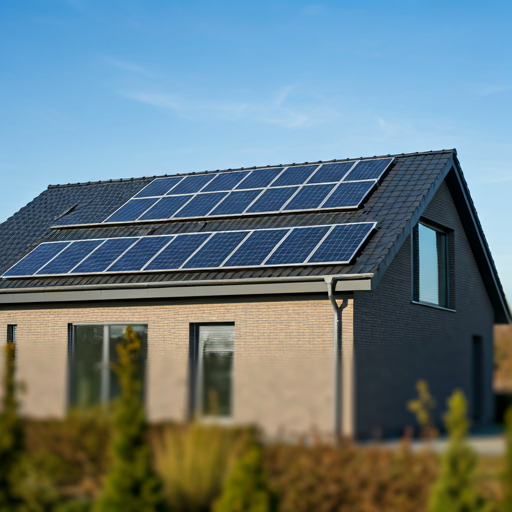
What Are Solar Thermal Panels?
Solar thermal panels are designed to capture sunlight’s heat and use it to produce hot water or air. They consist of collectors, typically mounted on rooftops, that absorb solar energy and transfer it to a fluid. This heated fluid meets heating needs, such as providing hot water for commercial kitchens or heating buildings in colder months.
These systems are particularly effective in sectors like hospitality, healthcare, and manufacturing, where hot water demand is significant. Solar thermal panels offer an efficient and cost-effective way to reduce reliance on traditional heating methods.
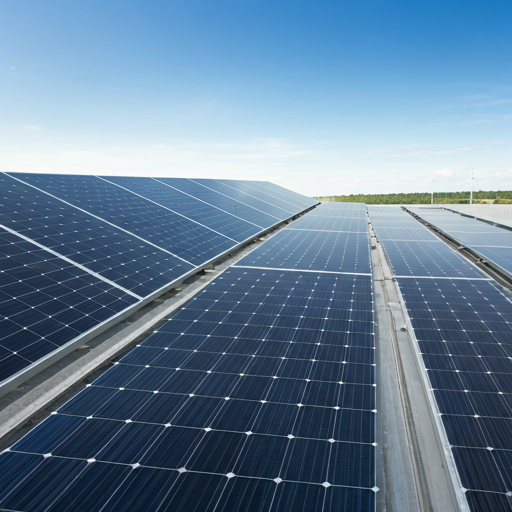
What Are Solar PV Panels?
Solar PV panels convert sunlight into electricity using photovoltaic cells. These panels generate direct current (DC) electricity, converted to alternating current (AC) through an inverter. Thus, solar PV is suitable for powering electrical devices and systems.
Solar PV systems can significantly benefit businesses with high electricity demands, such as offices, data centers, or retail facilities. They provide a versatile energy solution that reduces electricity bills while supporting sustainability goals.
Key Differences Between Solar Thermal Panels and Solar PV
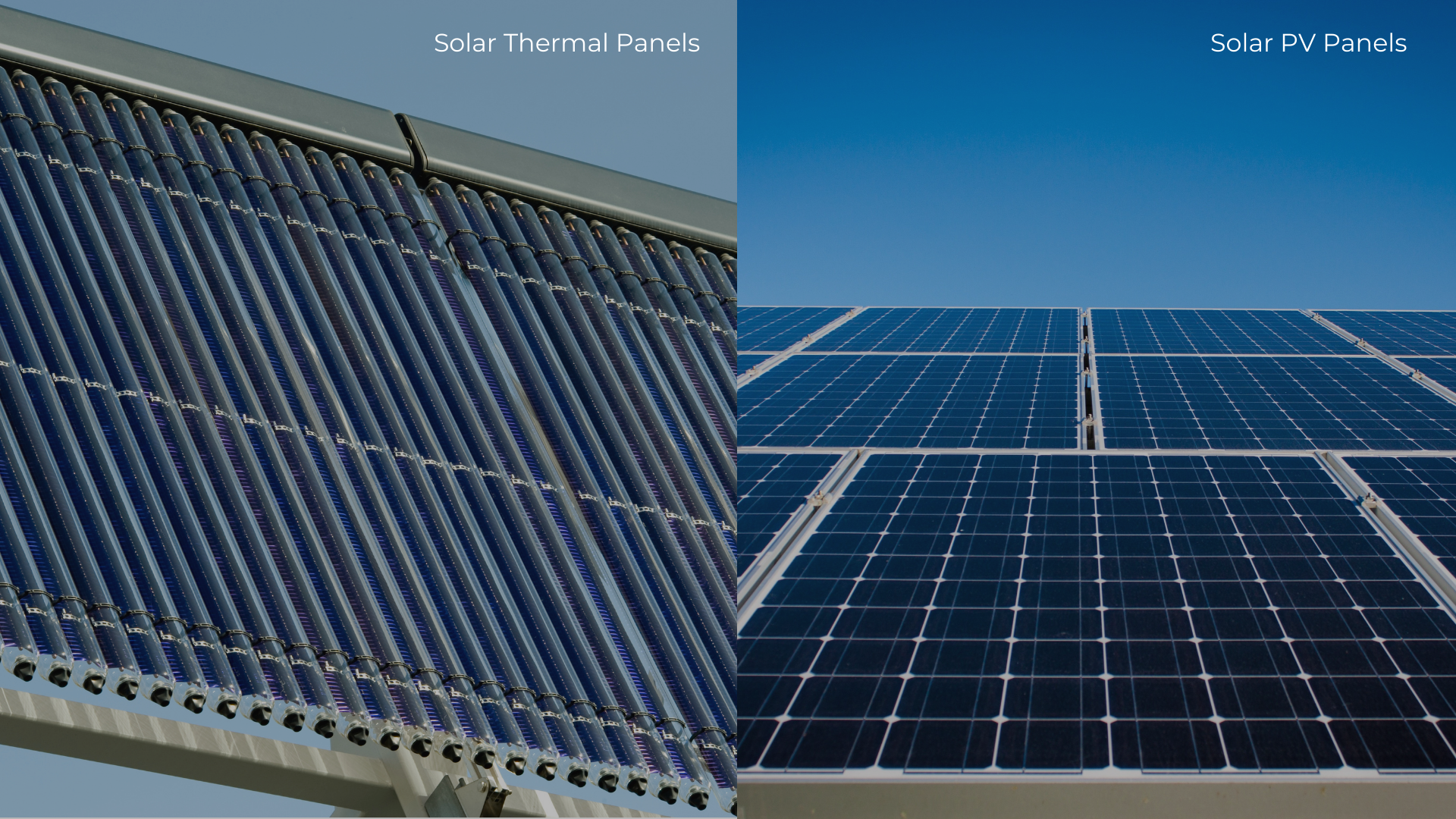
|
Features
|
Solar Thermal Panels
|
Solar PV Panels
|
| Functionality |
Designed to capture and use solar energy for heating purposes. They transfer this heat to a fluid, producing hot water or air for applications like heating systems, industrial processes, or hot water supply. |
Convert sunlight into electricity. This electricity can power various devices, machinery, or entire facilities, making it a highly flexible option for businesses with diverse energy needs. |
| Energy Output |
Optimised for businesses that rely heavily on heating, such as hospitality or healthcare. They provide a consistent hot water or air source and are especially beneficial during colder months. |
It is more versatile and capable of powering lighting, computers, and even heavy machinery. This makes them suitable for retail, technology, and manufacturing businesses, where electricity consumption is significant. |
Installation
Requirements |
They require fewer panels due to their focused purpose, but they need additional components like storage tanks for hot water. These systems are ideal for properties with smaller rooftops that might not support large installations. |
A larger installation area is required to meet significant energy demands. Adequate rooftop space and structural integrity are crucial for mounting the multiple panels for effective electricity generation. |
| Maintenance |
Require periodic maintenance, such as checking fluid levels, inspecting pumps, and ensuring the system’s pressure remains balanced. These steps are essential to maintain efficiency and prevent breakdowns. |
Require minimal maintenance. Regular cleaning of the panels to remove dirt and debris is often sufficient. Additionally, occasional inverter servicing may be necessary to ensure optimal energy conversion. |
Benefits of Solar Thermal Panels
- Efficiency: Solar thermal panels are highly efficient for heating purposes, particularly in the UK’s climate. These systems can convert up to 70% of the solar energy they collect into usable heat, making them one of the most effective solutions for meeting heating demands in regions with moderate sunlight.
- Lower Costs: They generally have lower upfront costs than solar PV systems. Additionally, simpler technology means fewer components, reducing installation and maintenance expenses.
- Specialised Applications: Solar thermal panels are particularly suited for industries with consistent hot water needs, such as hotels, hospitals, and commercial kitchens. Businesses can significantly reduce their reliance on traditional energy sources and achieve long-term cost savings by directly addressing these needs. Moreover, they are ideal for businesses looking to improve their energy efficiency ratings and reduce carbon emissions linked to heating systems.
Benefits of Solar PV Panels
- Electricity Generation: Solar PV panels generate electricity, reducing reliance on the grid and cutting energy bills. Businesses can generate electricity to protect themselves against rising energy costs and improve their energy independence. Additionally, solar PV systems allow companies to operate more sustainably by reducing their carbon footprint.
- Government Incentives: Businesses can benefit from schemes like the Smart Export Guarantee (SEG) by selling excess electricity back to the grid. This provides an additional revenue stream and enhances the financial viability of the investment in solar PV technology. Businesses in the UK can also explore tax benefits and grants supporting renewable energy adoption.
- Versatility: Solar PV systems meet various energy needs, from lighting to running heavy equipment. They are highly adaptable and can be integrated with battery storage systems to store surplus energy during peak hours or periods of low sunlight. This flexibility makes solar PV an attractive option for various industries, including retail, manufacturing, and technology-driven businesses.
Limitations of Solar Thermal Panels
- Limited Applications: They can only address heating needs, requiring supplementary systems for electricity. While highly effective for hot water and heating, solar thermal systems are not designed to meet broader energy demands such as powering electrical devices or equipment, which limits their utility in businesses with diverse energy needs.
- Seasonal Dependence: Efficiency can vary with seasonal sunlight availability in the UK. During the winter, when sunlight is limited, solar thermal panels’ performance may decrease, potentially requiring businesses to rely on auxiliary heating systems. This seasonal fluctuation can pose challenges for industries with consistent year-round heating requirements.
Limitations of Solar PV Panels
- Higher Initial Investment: Solar PV systems can be more expensive to install than solar thermal panels. This upfront cost includes the price of solar panels, inverters, and professional installation. However, these costs are often offset over time through reduced electricity bills and revenue from exporting excess energy.
- Space Requirements: Large-scale systems may require significant rooftop or ground space. Accommodating enough panels to meet energy demands can be challenging for businesses with limited rooftop capacity. Additionally, shading from nearby buildings or trees can impact system efficiency, making site evaluation an essential step before installation.
Factors to Consider When Choosing Solar Technology
- Energy Needs: Evaluate your business’s specific energy requirements. Determine whether your primary demand is for heating, such as hot water for hospitality or healthcare, or electricity for powering equipment, lighting, or data systems. Understanding these needs will guide you toward the most effective technology.
- Space Availability: Analyse the available rooftop or ground space for installation. Solar thermal systems generally require fewer panels but additional space for hot water storage tanks. Solar PV systems, however, may require larger installation areas to meet significant electricity demands, particularly for high-consumption businesses.
- Budget: Assess the initial installation costs in relation to the long-term savings each system offers. Solar thermal systems typically have a lower upfront cost. In contrast, solar PV systems may involve higher initial expenses but provide more significant savings through reduced electricity bills and potential income from exporting surplus energy.
- Sustainability Goals: Consider your company’s environmental objectives. Both technologies contribute to sustainability, but the choice may depend on whether your focus is reducing carbon emissions from heating or achieving broader energy independence through electricity generation.
- Government Incentives: Investigate available solar PV system schemes and incentives, such as the Smart Export Guarantee (SEG). These incentives can significantly offset the cost of installation and improve the return on investment, making renewable energy adoption more financially viable for your business.
Can You Combine Solar Thermal and Solar PV?
Yes, businesses can combine both technologies to meet diverse energy needs. For instance, a hotel can use solar thermal panels to efficiently provide hot water for guest rooms, kitchens, and spa facilities while relying on solar PV panels to generate electricity for lighting, air conditioning, and electronic devices. This approach ensures comprehensive energy coverage and allows businesses to optimise their energy usage and reduce dependency on non-renewable energy sources. Furthermore, combining these systems can enhance overall cost savings and sustainability by addressing heating and electricity requirements with renewable solutions tailored to specific operational demands.
Find Your Perfect Solar Solution
Both solar thermal panels and solar PV systems offer unique benefits for businesses, each serving different energy needs and operational goals. The right choice ultimately depends on your energy requirements, budget, and sustainability objectives. By understanding each technology’s key differences and advantages, you can make an informed decision supporting your business’s growth and sustainability efforts.
Ready to take the next step? Use EvoEnergy’s Solar Panel Calculator to discover how much you can save on energy costs and CO₂ emissions by installing solar panels on your property. It’s quick, easy, and gives valuable insights tailored to your business.
Want to learn more about how EvoEnergy can transform your energy strategy? Visit our Renewable Energy Services page to explore our full range of solutions, including solar PV systems. Let EvoEnergy help you unlock renewable energy’s full potential and achieve a greener future.
Table of Contents
- What Are Biosolar Roofs?
- How Biosolar Roofs Work?
- Types of Biosolar Roofs
- What are the Benefits of Biosolar Roofs?
- Biosolar Roofs vs. Traditional Solar Installations
- Environmental Impact of Biosolar Roofs
- Is a Biosolar Roof Right for Your Business?
- How to Maintain a Biosolar Roof?
- How Can We Help Your Business?
Biosolar roofs are innovative systems that combine solar panels with green roof technology. These roofs integrate photovoltaic (PV) systems, which generate renewable energy, with layers of vegetation that provide ecological benefits. The concept merges the environmental advantages of green roofs, such as improved biodiversity and stormwater management, with the energy-producing capabilities of solar panels, making it an ideal solution for businesses looking to enhance their sustainability efforts.
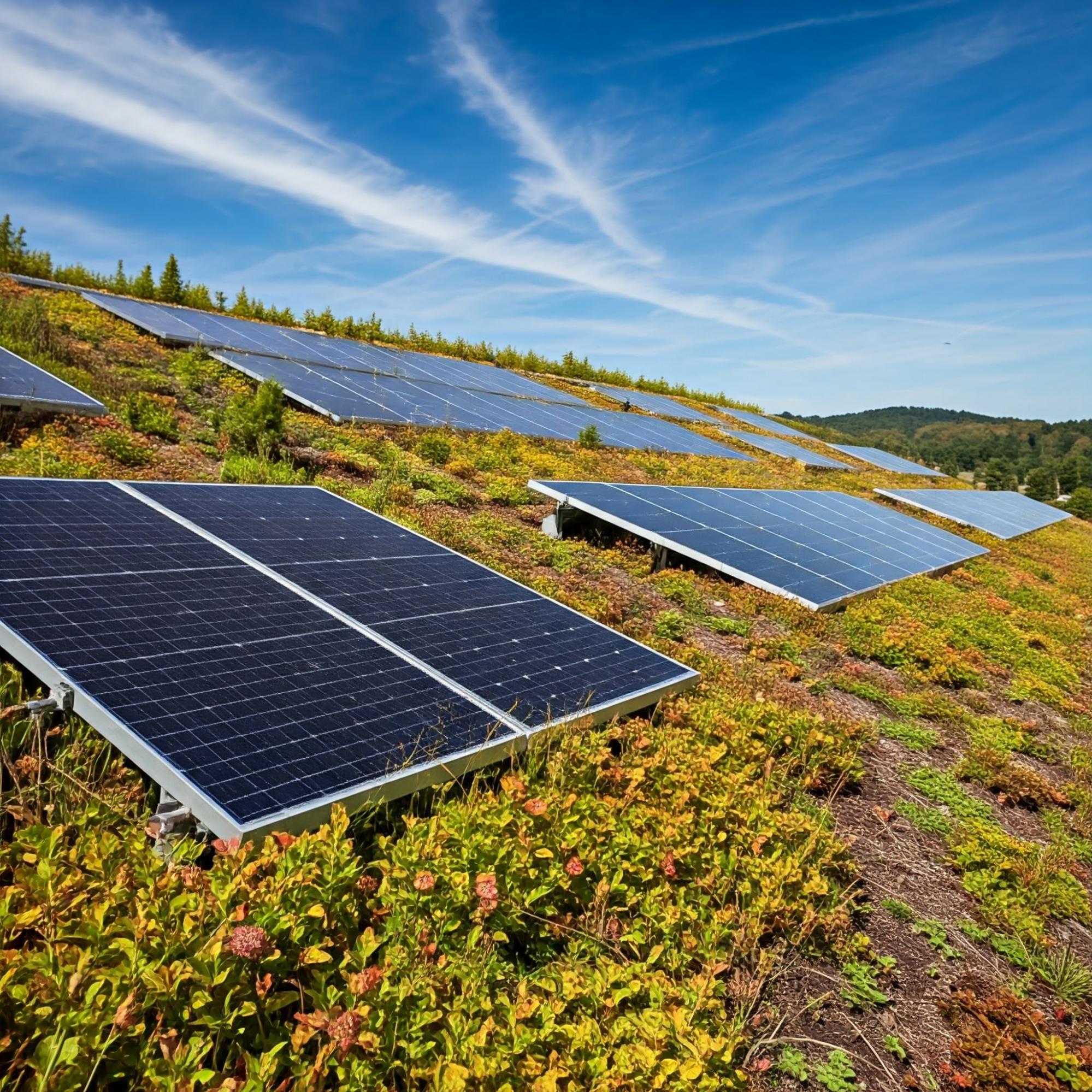
What Are Biosolar Roofs?
Biosolar roofs are dual-purpose systems that combine solar power generation with the ecological benefits of a green roof. The main components include photovoltaic panels that capture sunlight to produce electricity and a green roof layer consisting of various plant species. These elements combine to create a multifunctional roof contributing to energy efficiency, biodiversity, and urban environmental management.
How Biosolar Roofs Work?
Biosolar roofs harness sunlight through the photovoltaic panels to generate electricity, just like a traditional solar installation. However, adding a green roof layer enhances the system by cooling the solar panels through evapotranspiration from the plants. This cooling effect can increase the efficiency of the solar panels. Additionally, the green roof helps manage stormwater, reduce the urban heat island effect, and support local biodiversity, making the entire roof system more effective and sustainable.
Combining solar panels with green roofs can have amazing benefits. These ‘Biosolar’ roofs combine the energy-generating capability of solar PV arrays with the water-storing, habitat-creating benefits of green roof systems.
Types of Biosolar Roofs
There are two main types of biosolar roofs:
- Extensive Biosolar Roofs: These have lightweight, low-maintenance vegetation like sedum and moss. They are ideal for buildings with limited structural load capacity.
- Intensive Biosolar Roofs: These feature deeper soil and a variety of plants, including shrubs and small trees. They offer more biodiversity but require more maintenance and stronger structural support.
What are the Benefits of Biosolar Roofs?
- Cooler temperatures: Ironically, on long, hot, summer days, solar PV panels can become less efficient; temperature plays an important part in their efficiency. Some reports suggest heat can reduce output efficiency by as much as 10-25% in certain cases. Research has shown that compared to flat unvegetated gravel roofs; green roofs can be up to 21ºc cooler (Kaiser 1981), clearly providing some benefits for PV arrays.
- Opportunities for wildlife: Additionally, as the solar PV panels create shading on the roof surface, new habitats are created, allowing a large range of species to be on the roof, bringing ecological benefits. Three different micro-habitats can be created; the first one ideal for growing sedum, the second is a more moist area, as the PV panels shed water onto the green roof when it rains, and the third is the dry shade where the panels cover the green roof. Each of these areas can be used to attract an abundance of wildlife that would not otherwise be a part of the city or region.
- No damage to the roof: Biosolar roofs offer additional technical advantages. Due to the integrated nature of the two systems, the green roof system can be used as ballast for the PV panels, meaning that they can be fixed to the roof without any risk of penetrating waterproof membranes or the structure of the roof itself.
- Reduction of Urban Heat Island Effect: Biosolar roofs help combat the urban heat island effect, a phenomenon where urban areas become significantly warmer than their rural surroundings due to human activities and heat-absorbing materials like concrete and asphalt. The vegetation on biosolar roofs cools the surrounding air through evapotranspiration, thereby reducing the ambient temperature and contributing to a cooler urban environment.
- Stormwater Management: The green roof component of biosolar roofs acts as a natural sponge, absorbing rainwater and reducing the amount of stormwater runoff. This helps mitigate the risk of flooding and eases the burden on urban drainage systems. Additionally, the vegetation and soil layers can filter out pollutants from rainwater, improving the quality of water that eventually reaches natural water bodies.
- Cost-Effectiveness: Biosolar roofs offer significant potential for long-term savings and a favorable return on investment (ROI). While the initial installation cost of a biosolar roof may be higher than that of a traditional roof or standalone solar installation, the combined benefits of energy generation and reduced building operating costs contribute to overall cost-effectiveness.
- Incentives and Grants: Several government incentives and grants are available to encourage the adoption of biosolar roofs, making the financial investment more attractive for businesses. In the UK, businesses can take advantage of programs such as the Feed-in Tariff (FiT) or the Smart Export Guarantee (SEG), which provide payments for the electricity generated by solar panels and exported to the grid. These schemes help to reduce the payback period and improve the financial viability of biosolar installations.

Biosolar Roofs vs. Traditional Solar Installations
Compared to traditional solar installations, biosolar roofs offer enhanced environmental benefits. While standard solar panels solely focus on energy production, biosolar roofs add ecological value by supporting biodiversity, reducing urban heat, and managing stormwater.
However, biosolar roofs may require more initial planning and investment due to the additional components and the need to ensure compatibility between the green roof and the solar panels. The long-term benefits, including potential energy efficiency gains and environmental impact, often outweigh these initial challenges, making biosolar roofs an attractive option for forward-thinking businesses.
Environmental Impact of Biosolar Roofs
Biosolar roofs have a profound positive impact on the environment. By combining renewable energy with green infrastructure, they help reduce greenhouse gas emissions and support urban biodiversity. Furthermore, they contribute to stormwater management and improve air quality in densely populated areas. Their ability to address multiple environmental challenges makes them a valuable tool in the fight against climate change.
Is a Biosolar Roof Right for Your Business?
Biosolar roofs are a versatile solution, but their suitability depends on your building’s structure, location, and energy goals. Buildings in urban areas, where space is limited, can benefit significantly from this dual-purpose system. Businesses looking to improve their sustainability credentials and reduce energy costs will find biosolar roofs to be an excellent investment.
How to Maintain a Biosolar Roof?
Installation of green roofs increases the lifetime of roof surfaces protecting them from UV and other environmental damage. As the green roof is a living system it is a lot easier to maintain without disrupting energy generation when the roof system requires maintenance, simply replanting, or sowing seeds around the panels.
Biosolar roofs provide an opportunity to maximise roof spaces to generate electricity, increase the lifetime of the roof, and with thoughtful planting, provide a habitat for urban flora and fauna essential for future healthy cities.
Guest blog post from Hosta Consulting. Image credit: Dusty Gedge.
How Can We Help Your Business?
As the UK’s market leader in renewable energy solutions, we are in the best position to help your business realise the potential for electric vehicle charging infrastructure on your site. We also offer supplementary technologies, which would work in harmony with an electric vehicle charging facility, such as, site electrical upgrades, battery storage and solar PV, perhaps all combined into a private Smart Grid. These technologies would allow your business to harness the power of renewable energy and provide enough power needed to fast charge a wide range of electric cars.
Ultimately, it is up to us to make the change towards sustainability in order to create a greener future. Now is a good time to assess your net zero aspirations and talk to us about how we can help achieve them. Our team of renewable energy experts are available to provide Net Zero consultancy and renewable (Solar, EV, battery) quotations alongside installation operations and maintenance support to asset owners.
Table of Contents
- Key Takeaways:
- Solar Panel Insights Through Data
- Using a Solar Panel Calculator
- EvoEnergy’s Process for Tailored Solar Solutions
- Why Does Knowing the Right Number of Solar Panels Matter?
- Solar Panel Estimation Guide
- Strategic Solar Panel Planning for UK Businesses and Institutions
- Moving Forward with Solar Power: Your Next Steps
By calculating the right number of solar panels, organisations can maximise energy efficiency, minimise costs, and significantly impact their sustainability goals. Whether you run a business or oversee an educational facility, understanding the factors influencing this decision will help you make an informed investment.
Key Takeaways
- Calculating the right number of solar panels ensures sufficient electricity generation without overspending on unnecessary capacity, reducing grid dependency and promoting energy independence.
- Proper planning and using tools like a solar panel calculator can help businesses and institutions avoid over- or under-estimating their solar needs, ensuring an optimal return on investment through reduced energy bills and government incentives.
- By matching energy usage with the right solar panel capacity, organisations can significantly lower their carbon footprint, align with sustainability objectives, and enhance their reputation among environmentally conscious stakeholders.
- Sector-specific estimates, such as those for offices, schools, warehouses, and hospitals, help organisations visualise their energy needs and require solar panel installations to achieve a 100% offset in electricity consumption.
- EvoEnergy’s comprehensive approach includes consultancy, bespoke design, and installation services, supported by monitoring tools, to provide businesses and institutions with practical and sustainable solar energy solutions.
Solar Panel Insights Through Data
Energy Needs vs. Solar Panel Requirements
| Business/Institution Type | Average Energy Use (kWh) Per Year | Number of Panels Needed |
Small Office
| 156,000 | 460 |
| Large Office | 240,000 | 790 |
| School | 300,000 | 1840 |
| Hospital | 1,800,000 | 4200 |
| Warehouse | 960,000 | 2600 |
*Assuming desire to achieve 100% offset
This table guides businesses and institutions in estimating their solar panel requirements based on their annual energy consumption. It aligns energy needs with the number of solar panels required to achieve a 100% offset of electricity usage. The data is categorised by business or institution types, making it easier for different sectors to visualise and plan their transition to renewable energy.
Cost Savings by Sector
| Business/Institution Type | Energy Output (kWh) Per Year | Annual Cost Savings (£) | CO2e Reduction (kg) Saved Per Year |
| Small Office | 240,000 | 85,000 | 48,000 |
| Large Office | 600,000 | 200,000 | 115,000 |
| School | 360,000 | 125,000 | 70,000 |
| Hospital | 1,800,000 | 630,000 | 360,000 |
| Warehouse | 960,000 | 320,000 | 190,000 |
This table offers a straightforward way for businesses and institutions to understand how energy consumption translates into solar panel requirements. By categorising different types of organisations (e.g., offices, schools, warehouses), the table compares energy needs and the estimated number of solar panels required to offset those needs with renewable energy fully.
The values are based on typical energy consumption levels and the average output of solar panels in the UK. It is a practical tool to help organisations evaluate the feasibility of transitioning to solar energy by illustrating the scale of solar installations needed to achieve energy independence.
Using a Solar Panel Calculator
A solar panel calculator can provide a quick and accurate estimate of the number of solar panels needed. EvoEnergy’s tool allows businesses and institutions to input energy consumption data, roof dimensions, and location to calculate the ideal number of panels, potential energy savings, and CO₂ reduction. This tool simplifies the planning process and helps you understand the potential ROI of your solar investment.
EvoEnergy’s Process for Tailored Solar Solutions
At EvoEnergy, we specialise in answering the question, how many solar panels do I need, through a comprehensive process:
- Consultancy: We assess your energy requirements and site potential.
- Design: Our team creates bespoke solar solutions tailored to your needs.
- Construction and Monitoring: We manage installation and provide ongoing monitoring to ensure optimal performance.
Why Does Knowing the Right Number of Solar Panels Matter?
Installing the correct number of panels ensures you generate enough electricity to meet your needs without over-investing in unnecessary capacity. This helps organisations optimise energy output while balancing production and usage. An energy-efficient system can also reduce reliance on traditional grid power, providing greater energy independence.
Overestimating or underestimating your requirements could lead to higher initial expenses or insufficient energy production, affecting your ROI. Proper planning ensures that your investment is cost-effective, delivering measurable savings on energy bills over time. Additionally, many businesses and institutions can benefit from government incentives, improving financial returns.
Solar energy production helps businesses and institutions reduce their carbon footprint, which aligns with sustainability goals and enhances their reputation among environmentally-conscious stakeholders.
Solar Panel Estimation Guide
Estimating the number of solar panels your business needs involves several key factors. Start by assessing your average daily energy consumption and peak demand. To calculate your energy use, determine your annual kilowatt-hour (kWh) usage, then divide by 365 to get your daily average. For example, a business using 25,000 kWh annually uses approximately 70 kWh daily.
Next, calculate the required kilowatts (kW) with the formula:
Required kW = (Annual Energy Usage in kWh) / (Peak Sunlight Hours per Day * 365). Consider your peak sunlight hours—typically 4 to 6 hours.
Factor in your desired energy offset. The ideal solar offset is 100%, but depending on net metering policies, a different percentage might maximize savings. Calculate solar offset using:
Solar Offset = (Yearly Solar Electricity Generated in kWh) / (Yearly Electricity Consumed in kWh).
Finally, adjust for conversion efficiency by dividing the required kW by 0.8. Then, determine the number of panels by dividing adjusted kW by the panel’s output (e.g., 250 watts). This step-by-step approach ensures a tailored solar solution for your business.
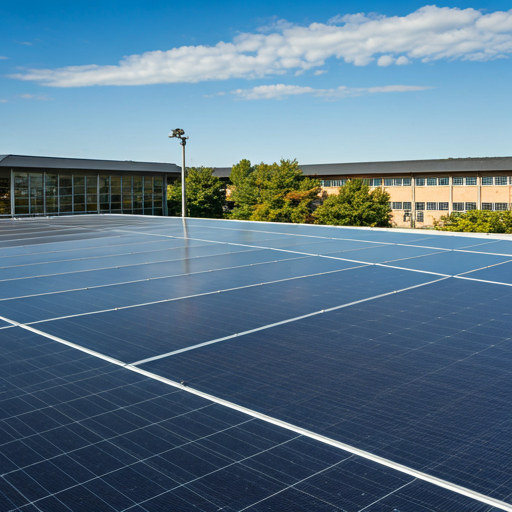
Strategic Solar Panel Planning for UK Businesses and Institutions
For Businesses
Businesses typically have high energy demands, especially those in manufacturing or logistics. Solar panels can help reduce energy costs during peak operating hours, with the benefit of demonstrating corporate social responsibility.
For Educational Institutions
Schools, colleges, and universities often have unique energy usage patterns, with peak demand during daylight hours. Installing the right number of panels can significantly reduce operational costs while serving as an educational tool for students.
Moving Forward with Solar Power: Your Next Steps
Determining how many solar panels I need is a critical step in transitioning to renewable energy. UK businesses and institutions can make informed decisions by considering energy usage, roof space, and local irradiance. EvoEnergy’s tailored consultancy and design services ensure you get the right solution.
Take the first step toward a sustainable future using our Solar Panel Calculator, or contact EvoEnergy for a personalised consultation.
Frequently Asked Questions
Why is it important to know how many solar panels a business or institution needs?
Installing the correct number of solar panels ensures sufficient electricity generation to meet energy needs without overspending on unnecessary capacity. This optimises energy efficiency, reduces grid dependency, maximises financial returns, and supports sustainability goals.
How does EvoEnergy help businesses figure out the right number of solar panels?
EvoEnergy provides tailored consultancy, bespoke system design, and installation services. They use data on energy consumption, site potential, and roof dimensions, supported by solar panel calculators, to deliver optimal solar solutions.
What factors influence how many solar panels are needed?
Key factors include the organisation’s annual energy consumption, peak sunlight hours at the location, roof space availability, desired percentage of energy offset, and solar panel efficiency.
Can you give examples of solar panel requirements for different types of businesses or institutions?
Yes. For a 100% electricity offset, a small office needs about 460 panels (~156,000 kWh annually), a large office 790 panels (~240,000 kWh), schools about 1,840 panels (~300,000 kWh), hospitals approximately 4,200 panels (~1,800,000 kWh), and warehouses around 2,600 panels (~960,000 kWh).
How does a solar panel calculator simplify the planning process?
Solar panel calculators allow businesses to input variables like energy usage, roof size, and location to estimate the ideal number of panels, potential energy savings, and CO₂ reductions, enhancing the accuracy of planning and ROI predictions.
How do businesses estimate their energy needs for solar planning?
Businesses review their past electricity consumption (usually in kWh per year), calculate daily averages, and factor in peak sunlight hours. Adjustments are made for system efficiency and desired solar offset percentage.
What is a typical method to calculate required solar capacity?
Calculate required kW by dividing annual energy usage (kWh) by (peak sunlight hours × 365), then adjust for efficiency (commonly dividing by 0.8). Divide this adjusted kW value by individual panel output (e.g., 250 watts) to estimate number of panels.
Are there variations depending on the sector or institution type?
Yes. Usage profiles differ. For instance, schools have peak demand during daylight, making solar especially effective, while hospitals have much higher total energy needs, requiring larger installations.
What are the next steps for businesses interested in solar power?
Businesses should assess their energy usage, consider available roof space, use tools like EvoEnergy’s Solar Panel Calculator, and consult renewable energy experts to design and install tailored solar solutions.