Key Takeaways
- Installing solar panels on a garage roof is a viable option, especially if the garage is within your property boundary and already has an electricity cable connecting it to the main house. This existing connection can support the photovoltaic (PV) system, making the installation straightforward.
- If there’s no existing cable between the house and garage, you’ll need to lay one, which involves digging a trench through the garden. This task can be done by yourself or with professional assistance.
- For commercial projects, EvoEnergy typically requires a garage roof space of at least 300 square meters. For smaller residential projects, consulting with a domestic solar installer is recommended.
- To estimate the potential energy generation from your garage roof, you can use tools like EvoEnergy’s solar PV calculator. This will help you understand the feasibility and benefits of installing solar panels on your garage.
Solar panels are becoming increasingly popular as homeowners seek ways to harness renewable energy, reduce costs, and boost their property value. But can you install solar panels on a garage roof?
The short answer is yes. Whether your garage is attached or detached, solar panels can be installed effectively to convert sunlight into energy, even on smaller structures.
This article explores the benefits, considerations, and costs associated with garage roof solar installations.
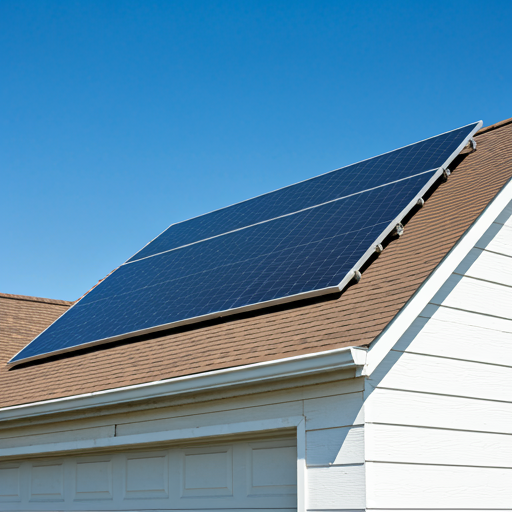
Is It Possible to Install Solar Panels on a Garage Roof?
Garage roofs come in various types—flat, sloped, metal, and tiled—all of which can accommodate solar panels with the right setup. While sloped roofs (especially south-facing ones in the UK) are optimal, even flat roofs can be effective with adjustable mounts.
It’s crucial to evaluate the structural integrity of your garage roof. If it’s old or not designed to bear additional weight, reinforcing it may be necessary. For a solar panel system to be efficient, the garage roof must have enough space to fit multiple panels. Generally, at least 10 square metres is recommended for a standard residential setup.
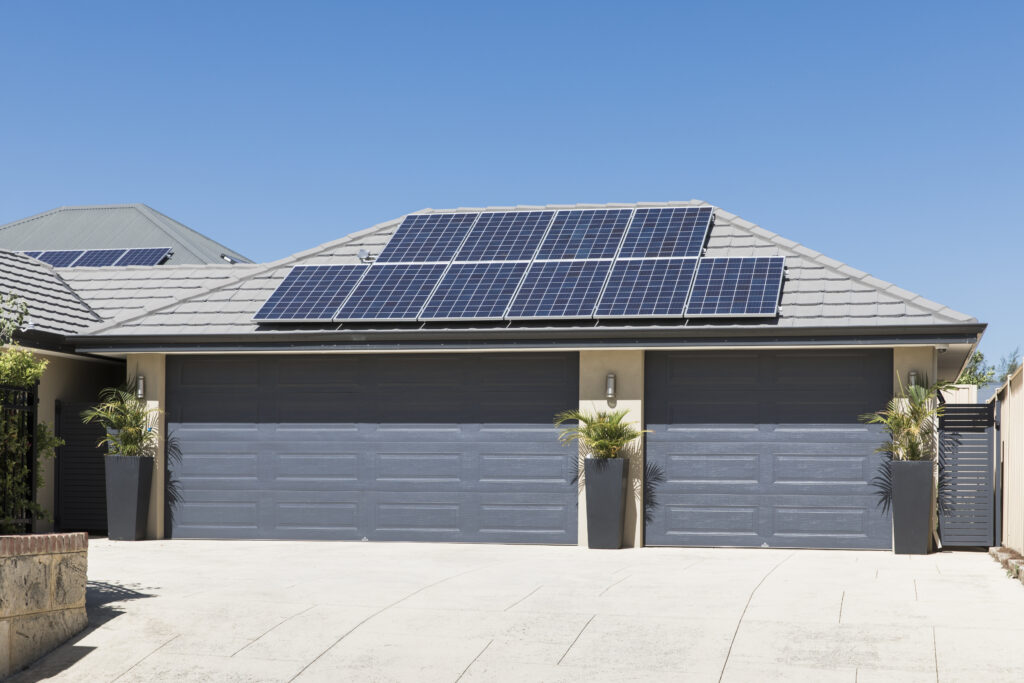
What Are the Benefits of Installing Solar Panels on a Garage Roof?
Installing solar panels on a garage roof offers several practical and financial advantages, making it a smart choice for homeowners looking to maximise renewable energy use. Below, we dive deeper into the main benefits:
Maximising Space
Many garages, whether detached or attached, have ample roof space that often needs to be used. Homeowners can turn an idle area into a productive energy-generating site by installing solar panels on this surface.
A garage roof installation allows solar energy generation without wasting valuable ground for properties with limited garden or yard space. This is especially advantageous for those who want to maintain their outdoor spaces for other uses.
Energy Independence
Solar panels on a garage roof can power the entire home or specific areas, such as the garage itself. This is particularly useful if you use the garage as a workshop or for charging electric vehicles (EVs), providing a dedicated and sustainable power source for your needs.
When combined with battery storage, garage solar panels can provide backup power during outages, enhancing energy security. Stored solar energy can power essential home functions even when the main grid is down, offering peace of mind and continuous operation.
Increased Property Value
Homes with solar panel installations are increasingly attractive in the real estate market. According to recent studies, properties equipped with solar panels sell faster and for higher prices than those without. A solar-equipped garage can enhance your home’s appeal by showcasing an additional eco-friendly feature.
Potential buyers are often willing to pay a premium for homes with energy-efficient upgrades, and a garage solar system is a visible commitment to sustainability. It adds a functional and financial value, translating into higher market desirability and potential return on investment.
Environmental Impact
Installing solar panels on your garage roof directly reduces carbon emissions. By generating renewable energy, you decrease reliance on fossil fuels and help fight climate change. A typical solar panel installation can offset around 1.3 to 1.6 tonnes of CO₂ emissions annually.
Every small step counts when combating climate change, and adding solar panels to your garage is a proactive approach. You’re powering your home sustainably, setting an example for the community, and supporting the broader movement toward renewable energy.
What Factors Should You Consider Before Installation?
- Orientation and Sunlight Exposure: The efficiency of a solar panel system depends on the amount of sunlight it receives. A south-facing garage roof in the UK receives optimal sunlight throughout the day. East and west-facing roofs can also work but may yield slightly less energy.
- Roof Load Capacity: It is vital to ensure that your garage roof can bear the weight of solar panels and their mounting system. A professional assessment is necessary to determine whether reinforcements are needed.
- Planning Permissions and Regulations: In many cases, installing solar panels on a garage roof does not require planning permission in the UK unless the property is in a conservation area or listed. Checking local regulations ensures compliance.
- Connection to the Home’s Electrical System: Installing solar panels on a garage requires connecting the system to your home’s main electrical network. Hiring certified professionals is essential for safe and efficient integration.
How Much Does It Cost to Install Solar Panels on a Garage Roof?
Installing solar panels on a garage roof typically ranges between £4,000 and £8,000, depending on the system size, type of panels, and any structural adjustments needed. This cost includes equipment, labour, and electrical connections.
Garage-based solar panels can significantly save electricity bills, potentially reducing costs by up to £300 per year, depending on the system size and energy usage patterns.
The UK government offers incentives such as the Smart Export Guarantee (SEG), which allows homeowners to sell excess energy back to the grid. This can further offset installation costs and improve the payback period, which is usually between 5 and 10 years.
Are There Any Limitations or Challenges?
- Limited Space: Garage roofs might offer less space than a house roof, limiting the number of panels you can install. This could affect the overall energy output and efficiency of the system.
- Weather Impact: Garages are typically less insulated than homes, exposing the roof to extreme weather conditions, which could impact the panels’ performance over time.
- Maintenance Requirements: Regular cleaning and maintenance are crucial to ensure maximum efficiency. Garage roof installations may require additional attention, especially if the roof is flat, as debris and water may accumulate.
How to Choose the Right Solar Panel System for Your Garage Roof?
- Panel Types Suitable for Garage Roofs: Monocrystalline panels are a great choice for garage roofs due to their high efficiency, even in limited spaces. Thin-film panels, especially for lightweight structures, can also be suitable.
- Selecting the Right Inverter: An efficient inverter is essential to optimising energy conversion. Microinverters, which allow each panel to operate independently, can be particularly effective for smaller installations.
- Battery Storage Options: Integrating battery storage enhances the benefits of garage solar setups, enabling you to store energy for use at night or during low-sunlight periods. This is especially useful if the garage is also used for EV charging.

Ready to Power Up Your Garage? Explore Your Solar Options Today!
Installing solar panels on a garage roof is not only possible but also highly beneficial. They maximise unused space, reduce energy bills, and boost property value. However, it is essential to assess the structural capacity, orientation, and regulations before proceeding.
If you’re interested in seeing how much energy you could generate and how much you could save, try out EvoEnergy’s Solar Panel Calculator to explore the potential benefits for your garage setup. For tailored advice and professional installation services, visit our renewable energy services and start your journey towards sustainable energy today.
Frequently Asked Questions
1. Can I install solar panels on my garage roof?
Yes, whether your garage is attached or detached, it’s a viable option, especially if it’s already connected electrically to your main house.
2. What are the advantages of a garage-mounted solar system?
It maximises unused space, enhances energy independence (especially with battery storage and EV charging), increases property value, and cuts carbon emissions by roughly 1.3–1.6 tonnes annually.
3. How much does it typically cost, and what savings can I expect?
Expected installation costs range from £4,000 to £8,000, with potential annual savings of up to £300, and a payback period of 5–10 years, particularly when factoring in earnings via the SEG.
4. What should I check before proceeding?
Consider roof orientation (south-facing is optimal), structural capacity (may need reinforcement), local planning regulations, and integration with your home’s electrical system by a certified professional.
5. How many solar panels can fit on my garage roof?
Depends on the roof’s total area and shape; a professional assessment or EvoEnergy’s PV calculator can give you an accurate estimate.
6. Will installing panels affect the lifespan or warranty of my garage roof?
It could, especially on older roofs. Maintenance access and structural integrity should be evaluated to avoid damage.
What are the planning restrictions if my property is in a Conservation Area or is listed?
In these cases, planning permission is likely required, always check with your local planning authority before installation.
Table of Contents
- Key Takeaways
- How Does Selling Electricity Back to the Grid Work?
- Eligibility Requirements in the UK
- Available Schemes and Incentives in the UK
- Alternative Options for Selling Electricity Back to the Grid in the UK
- Steps to Set Up and Start Selling Electricity Back to the Grid
- Financial Benefits and Considerations
- Maximise Your Solar Investment: Start Selling Electricity Back to the Grid Today
Selling electricity back to the grid has become an increasingly popular way for homeowners and businesses to maximise the value of their renewable energy systems. With the UK government aiming for net-zero emissions by 2050, there has been a significant push to support renewable energy adoption. In 2023, it was reported that over 1 million homes in the UK had solar panels installed, contributing to a significant portion of the country’s renewable energy supply.
This guide explains how exporting excess energy can benefit you financially and explores the various schemes and options available in the UK.
Key Takeaways
- Over 1 million homes in the UK now have solar panels, highlighting the growing trend of renewable energy adoption.
- With SEG rates averaging between 3-10 pence per kWh, optimizing your system and energy management can lead to significant financial returns.
- Beyond SEG, options like peer-to-peer trading, PPAs, and community energy projects provide flexible ways to sell surplus energy.
- Ensure your system is MCS certified and equipped with the proper metering to qualify for export schemes.
- Investing in battery storage allows you to sell energy during peak times, maximizing your returns.
How Does Selling Electricity Back to the Grid Work?
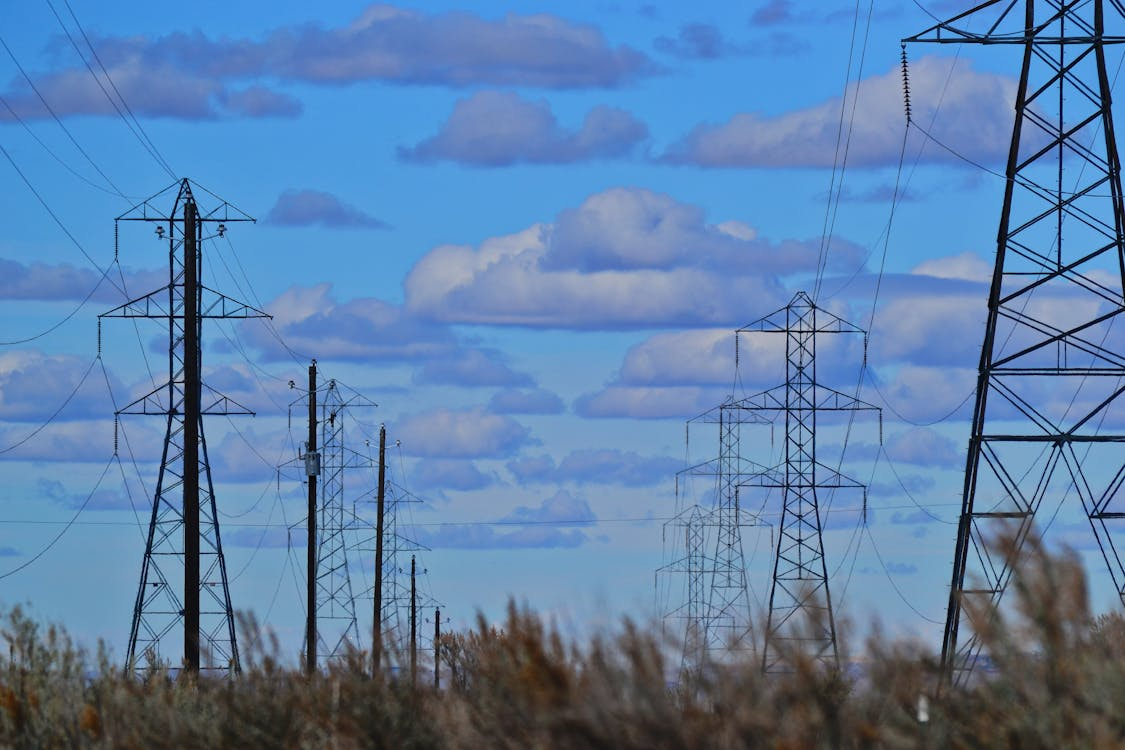
Selling electricity back to the grid involves exporting excess electricity generated by renewable systems, like solar panels, to the national grid. Typically, solar photovoltaic (PV) systems produce more energy during peak sunlight, creating a surplus. This surplus can be fed back into the grid using inverters and metering systems designed to measure energy flow accurately. Energy providers purchase this surplus electricity, compensating you based on agreed rates or schemes, such as the Smart Export Guarantee (SEG).
Eligibility Requirements in the UK
To participate in selling electricity back to the grid, individuals and businesses must meet specific eligibility criteria. Your renewable energy system, for instance, must be Microgeneration Certification Scheme (MCS) certified. Additionally, you will need an approved metering system like a smart metre or an export metre to measure the amount of energy exported. Statistics show that around 75% of new solar installations in the UK are SEG-eligible, demonstrating the growing accessibility of these schemes.
Available Schemes and Incentives in the UK
- Smart Export Guarantee (SEG): Introduced in 2020, the SEG replaced the previous Feed-in Tariff (FiT) scheme. It mandates licensed electricity suppliers to offer payment to small-scale low-carbon generators for the electricity they export to the grid. The average SEG rate in the UK ranges between 3 and 10 pence per kWh, depending on the provider. While it may seem modest, efficient energy management and system optimization can significantly increase returns.
- Major suppliers like Octopus Energy and British Gas offer competitive SEG rates. It is crucial to review each provider’s offer and choose the best rate based on your energy production and usage.
Alternative Options for Selling Electricity Back to the Grid in the UK
- Peer-to-Peer Energy Trading: Platforms such as Power Ledger are emerging, allowing households to sell excess electricity directly to neighbours or businesses. This decentralised approach enhances flexibility and profitability.
- Power Purchase Agreements (PPAs): Businesses can negotiate PPAs to sell electricity directly to large consumers or organisations, often at higher rates than traditional SEG.
- Community Energy Projects: By joining community energy initiatives, individuals and businesses can collectively manage and sell their electricity, increasing bargaining power and profit potential.
- Battery Storage Systems: Investing in battery storage allows you to store surplus energy and sell it during peak demand hours when electricity rates are higher. This can be a highly effective way to maximise the returns on your solar investment.
- Microgrid Participation: Some regions offer opportunities to participate in localised microgrids, where users share energy. This setup enables greater flexibility and control over electricity sales.
There are two options for selling renewable energy back to your electricity supplier. If you’re prepared to fill in many forms, you can get paid the same price per unit exported as you pay to buy it off your supplier’s net metering. Alternatively, there’s an easier option where you get paid less per unit generated, but it’s a lot less hassle.
THE NET METERING OPTION
If you’ve invested in some serious energy-generating kit and expect to produce surplus electricity, you’ll want to set up a net metering arrangement. This means that your energy supplier will pay you a decent price for every spare kWh of electricity generated that you don’t need yourself. This means you’ll need to get an OFGEM-approved export meter, and your supplier may be able to help. You also get to keep your ROC entitlements with this option.
NPower-Microgeneration Scheme
0800 316 2610 – www.npower.com
With the npower juice deal, domestic customers can get paid the same amount for their exported electricity as the standard tariff follows on unit rate they pay for the electricity they buy from npower (this tariff may vary regionally). You need to send off a meter reading every six months, and after the calculations are processed, you are paid by a personal cheque within 60 days. This scheme is currently open for application until April 2007, after which npower Juice is thinking about revamping the scheme. Currently, wey offer export meters for £60. Also, you do get to keep the right to claim your ROC.
The only complicated part is that you need three meters: generation, import, and export meters. npower juice
EDF Energy- Green Tariff
0800 096 9000 – www.edfenergy.com
EDF Energy offers two options for selling excess electricity back to the grid.
- Non-metered option: A flat rate of £10 per kW of generator annually.
- If an export meter can be installed: 7.64p per unit of electricity exported to the national grid. The initial meter installation may cost up to £250 plus VAT. Contact EDF for more details.
THE EASY OPTION
Suppose your generating kit is designed to supplement (rather than exceed) your home energy use. In that case, you’re probably better off going for the easier options offered by Good Energy and Ecotricity. The deal is you get a lower price per unit of electricity generated (whether it’s used on site or exported). They don’t mind whether you use the electricity yourself, or whether it spills into the local grid. The good thing is that you don’t need to buy an export meter, but you do lose your right to claim your ROCs and they get to cash them in on your behalf.
Ecotricity
0800 032 6100 –www.ecotricity.co.uk
Ecotricity offers 9p for every unit of electricity you generate, whether you use it or not. However, you lose your right to apply for ROCs. You need to inform Ecotricity of your generation meter reading annually, which is then used to credit your bill for the electricity you generate.
The Generation meter reading must be supplied to Ecotricity annually, which is then used to credit your bill for the electricity you generate.
WHAT IF YOU HAVE A LARGE PV SYSTEM?
Scottish and Southern Energy
01738 456000 – www.scottish-southern.co.uk
A recently announced scheme, but only for Solar PV systems, offers a very attractive rate for exported power from your system and may, therefore, be of interest to larger PV customers.
SSE will pay 18p per kWh for all exported power from your system and will install an import/export meter to monitor the power being exported. SSE will do all the paperwork required for the ROCs, but this price includes them taking the ROC revenue.
This may not be the most appropriate scheme for smaller PV customers who use most of the power within the property.
More details may be found: ONLINE HERE
For more details on the benefits of commercial batteries.
Steps to Set Up and Start Selling Electricity Back to the Grid
- Evaluate Your Renewable Energy Setup: Assess the capacity and efficiency of your solar or other renewable systems to ensure they produce enough excess energy for export.
- Obtain Necessary Certifications and Approvals: Ensure your system meets MCS standards and installs the appropriate metering (e.g., a smart metre).
- Select the Right Energy Supplier: Research SEG providers and alternative platforms, comparing rates and conditions to maximise your returns.
- Register Your System: Complete the necessary registration with your chosen supplier or platform to start earning from exported electricity.
Financial Benefits and Considerations
Exporting electricity can be profitable, especially for businesses with large-scale solar PV installations. The potential earnings depend on system size, location, and energy consumption patterns. According to a 2023 report, companies in the UK with large solar PV systems can earn approximately £3,000-£5,000 per year by selling excess electricity, depending on their SEG rate and overall efficiency. To ensure maximum profitability, it’s essential to calculate the return on investment (ROI) accurately, considering maintenance and optimization costs.
Maximise Your Solar Investment: Start Selling Electricity Back to the Grid Today
Selling electricity back to the grid offers a practical and profitable solution for maximising the use of renewable energy systems. With various schemes and technologies available, understanding the options can help you make informed decisions and enhance your returns. Whether through the SEG or alternative methods like peer-to-peer trading, the opportunities are vast for those willing to invest in and optimise their renewable systems.
Try our Solar Panel Calculator to see how much you could save and earn by selling electricity back to the grid. Get a customised estimate tailored to your business setup! Visit our Renewable Energy Services today to explore how we can help you install and optimise your solar energy system for maximum returns.
Frequently Asked Questions
1. What qualifies my solar system to sell electricity back to the UK grid?
Your system must be MCS‑certified, and you need an approved export meter (like a smart meter) to accurately record your exported electricity. Around 75 % of new solar installations meet these criteria
2. What compensation can I expect for exporting electricity under the Smart Export Guarantee (SEG)?
SEG payments typically range between 3 and 10 pence per kWh, varying by supplier. Even though the rates may appear modest, strategic energy management, like timing your exports, can significantly enhance financial returns.
3. Are there alternatives to SEG for selling excess solar energy?
Yes. Beyond SEG, you can explore peer-to-peer trading, power purchase agreements (PPAs), or participation in community energy projects, each offering different structures and potential benefits.
4. How can I maximise financial returns from my solar investment?
Consider combining battery storage with your solar setup. Batteries enable you to store extra energy and release or export it during periods of higher demand or better rates, enhancing both self-consumption and export earnings.
As energy prices continue to rise and environmental concerns become more pressing, solar energy is emerging as a viable solution for homes and businesses worldwide. Solar roof system, particularly, have gained traction as a practical way to harness the sun’s power while minimising environmental impact. This article delves into everything you need to know about solar roof systems, from the benefits and technical specifications to the latest statistics on solar adoption in the UK and worldwide.
Key Takeaways
- Solar roof systems significantly reduce energy costs and carbon emissions, making them a smart investment for both businesses and homeowners.
- Global solar adoption is growing rapidly, with the UK seeing substantial increases in installed capacity and supportive government incentives.
- Solar roof systems offer long-term savings, increase property value, and provide resilience against rising energy costs and grid instability.
- Government programs, such as the Smart Export Guarantee (SEG) and capital allowances, make solar installations more affordable in the UK.
Why Solar Roof Systems?
Solar roof systems provide significant energy savings by converting sunlight into electricity for your home or business. This means less reliance on traditional energy sources, lowering monthly bills. In fact, businesses in the UK have reported energy savings of up to 70% after installing solar panels on their roofs. By producing your own energy, you also protect yourself from fluctuating energy prices and can potentially sell excess energy back to the grid.
Reducing carbon emissions is a key priority for many organisations and individuals, and solar energy plays a critical role in achieving this. By adopting a solar roof system, you’re contributing to a greener planet by decreasing the demand for fossil fuels and significantly reducing your carbon footprint. Studies show that solar systems can offset up to 25 metric tons of CO₂ annually, equivalent to planting 600 trees.
Global and UK Solar Statistics
Global Solar Adoption
The global solar energy market continues to expand rapidly. As of 2024, the total installed solar capacity worldwide has surpassed 1,000 gigawatts (GW), with China leading the way, accounting for over 35% of the global market. The US and Europe, including Germany and Spain, follow closely, contributing to significant growth in solar energy adoption.
UK Solar Adoption
In the United Kingdom, solar energy has grown steadily, particularly in the commercial and residential sectors. As of 2024, the UK has an installed capacity of over 15 GW of solar energy, with more than 1 million homes and thousands of businesses now powered by solar panels. Government initiatives, such as the Smart Export Guarantee (SEG), allow businesses to sell excess energy back to the grid, making solar roof systems an even more attractive investment.
Understanding the Solar Roof System
A solar roof system is made up of several key components that work together to convert sunlight into usable energy.
Solar Panels
Solar panels are the most visible component of the system. The two primary types used in solar roof systems are monocrystalline and polycrystalline panels. Monocrystalline panels are known for their higher efficiency, while polycrystalline panels are more affordable but slightly less efficient. Both types of panels have a lifespan of 25 to 30 years, making them a long-term investment.
Inverters
Inverters are crucial to any solar energy system as they convert the direct current (DC) produced by the panels into alternating current (AC), which powers your appliances. Modern inverters are highly efficient, with some offering up to 98% conversion efficiency.
Mounting and Racking Systems
Mounting systems secure the solar panels to your roof. They are designed to be weather-resistant and maintain the structural integrity of your roof. Depending on your roof’s slope and orientation, mounting systems can be customised to maximise solar exposure.
Battery Storage
For those looking to store energy for use during nighttime or cloudy days, battery storage can be integrated into the system. This allows you to further reduce your reliance on the grid and enhances energy resilience.
Advantages of Installing a Solar Roof System
Long-Term Investment
While the initial cost of a solar roof system might seem high, it’s important to view it as a long-term investment. Not only will it significantly reduce your energy bills, but it will also increase the value of your property. Studies show that homes with solar panels sell faster and at higher prices compared to those without.
Government Incentives
In the UK, several government incentives, such as the SEG, make solar installations more affordable. Additionally, businesses can benefit from capital allowances, enabling them to deduct the cost of solar installations from their taxable profits.
Resilience and Future-Proofing
By installing a solar roof system, you are future-proofing your home or business against rising energy costs and potential power shortages. Solar systems can also be combined with battery storage, providing resilience in high-demand or grid outages.
Invest in Solar Roof Systems for a Sustainable and Cost-Efficient Future
Solar roof systems are more than just an investment in your property—they’re an investment in the future of energy. As the world transitions to more sustainable energy sources, solar technology will be critical in reducing carbon emissions and ensuring energy independence. If you’re ready to explore how a solar roof system can benefit your home or business, contact EvoEnergy today to get started or use our Solar Calculator to estimate your potential savings.
Frequently Asked Questions
1. What is a solar roof system, and how does it benefit homes and businesses?
A solar roof system captures sunlight and converts it into electricity via rooftop-mounted solar panels. These systems help reduce energy bills, protect against fluctuating energy prices, and cut down carbon emissions. In the UK, some businesses report savings of up to 70% on energy costs after installation. Additionally, systems can offset as much as 25 metric tons of CO₂ annually, which is akin to planting 600 trees.
2. What fuels the increasing adoption of solar roof systems in the UK?
The UK’s installed solar capacity has surpassed 15 GW, powering over 1 million homes and numerous businesses. This growth is driven by supportive government initiatives, including the Smart Export Guarantee (SEG) and beneficial capital allowances, which improve the financial viability of solar installations.
3. What are the main components of a solar roof system?
Key elements include:
- Solar panels: Typically monocrystalline (high efficiency) or polycrystalline (lower cost) panels, both with lifespans of 25–30 years.
- Inverters: Convert DC power from panels into AC power for building use, modern units can achieve up to 98% conversion efficiency.
- Battery storage (optional): Stores excess energy for use during cloudy periods or at night, enhancing energy resilience.
4. Why are solar roof systems considered a long‑term investment?
Although the upfront costs are relatively high, solar roof installations yield long-term returns through:
- Substantial reductions in energy bills
- Increased property value (homes with solar often sell faster and at higher prices)
- Improved energy resilience, especially when paired with battery storage, to guard against future energy price rises and potential grid outages
5. How do solar roof systems support sustainability and energy security?
By generating clean, onsite electricity, solar roof systems significantly reduce reliance on fossil fuels and energy imports. Combining solar with battery storage further boosts self-sufficiency and helps maintain power during grid instability or blackouts.
6. What’s the broader environmental impact and future outlook?
As solar adoption accelerates, globally (over 1,000 GW installed) and in the UK, solar roof systems play a pivotal role in both environmental protection and energy independence. For homeowners and businesses alike, investing in solar is not just about short-term gains, but also about contributing to a sustainable, low-carbon future.
Solar energy is transforming the global energy landscape. With over 1 terawatt (TW) of solar capacity installed globally by 2023, solar power has become one of the fastest-growing renewable energy sources. The UK alone has contributed approximately 14 gigawatts (GW) to this figure, supporting its commitment to a greener future. As governments, businesses, and homeowners seek sustainable energy solutions, solar cells have emerged as a critical technology for reducing carbon footprints and lowering energy costs.
Recent advancements in solar technology are making solar energy more accessible and efficient. This guide will walk you through the basics of solar cells, how they work, and why they are critical for a sustainable future.
Key Takeaways
- Solar cells use the photovoltaic effect to convert sunlight into electricity, providing a clean, renewable energy source.
- The most common types of solar cells include monocrystalline, polycrystalline, and thin-film, each with unique efficiency and cost characteristics. Emerging technologies like perovskite solar cells offer promising advancements in efficiency and affordability.
- As of 2023, global solar capacity has exceeded 1 terawatt (TW), with the UK contributing 14 gigawatts (GW) and aiming to double its solar capacity by 2030.
- Solar cells are used in various applications, from powering homes and businesses to solar farms, electric vehicle charging stations, and space exploration.
- The future of solar technology includes innovations such as bifacial panels, transparent solar windows, and solar-powered transportation, all of which contribute to a more sustainable energy landscape.
- While solar energy faces challenges such as weather dependency and initial installation costs, advancements in storage and efficiency are helping to overcome these obstacles.
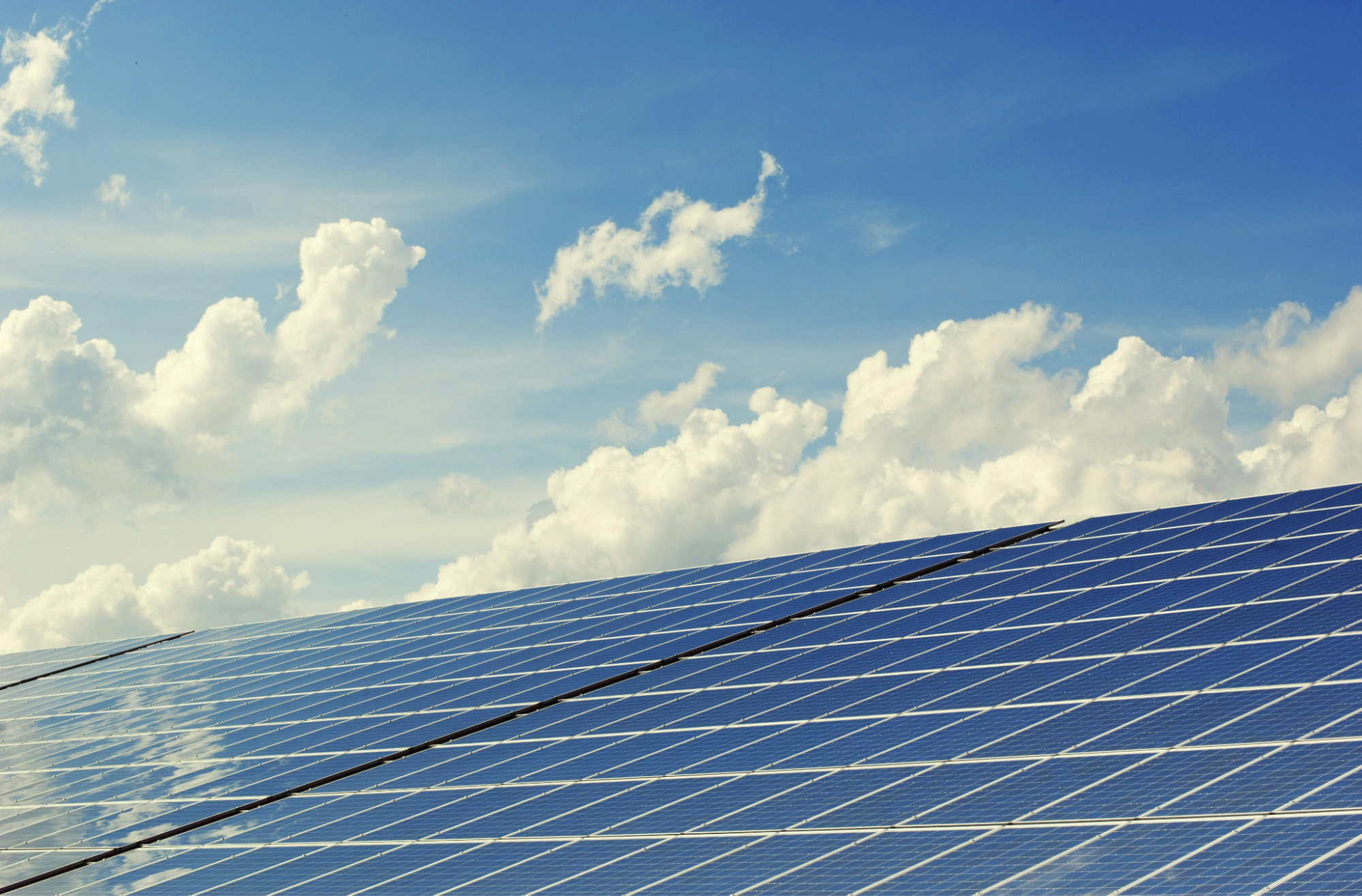
What Are Solar Cells?
Solar cells, also known as photovoltaic (PV) cells, are the foundational building blocks of solar panels. Their primary function is to convert sunlight directly into electricity. This process is based on the photovoltaic effect, where light energy is absorbed by semiconducting materials—typically silicon—and transformed into an electrical current.
Most solar cells are composed of layers of semiconducting materials that absorb photons (light particles). These layers are treated to create an electric field, much like a battery, with a positive and a negative charge. When sunlight hits the solar cell, photons dislodge electrons from atoms within the semiconductor material, creating a flow of electricity.
There are several types of solar cells, each with distinct characteristics that make them suitable for different applications:
- Monocrystalline Solar Cells are made from a single, continuous crystal structure of silicon. They are the most efficient type of solar cell, often reaching efficiency rates between 20-22%. Due to their higher efficiency, they require less space to produce the same amount of electricity as other types. Their sleek black appearance also makes them a popular choice for residential installations. However, they are generally more expensive to produce, which is reflected in their cost.
- Polycrystalline Solar Cells are made from silicon crystals that are melted together. While they are less efficient than monocrystalline cells, typically reaching 15-17% efficiency, they are more affordable. Their blueish appearance results from how the silicon crystals interact with light. Polycrystalline panels, such as solar farms or large commercial rooftops, are often used in larger installations where space is not a limiting factor.
- Thin-Film Solar Cells deposit one or more thin layers of photovoltaic material, such as cadmium telluride or amorphous silicon, onto a substrate. These cells are lightweight and flexible, which makes them ideal for innovative applications like integrating solar cells into windows, building facades, or even wearable technologies. However, their efficiency is lower, generally, 10-12%, making them less suitable for installations where space efficiency is important.
- Perovskite Solar Cells, which offer the potential to revolutionise the solar industry. Made from a compound called perovskite, these cells are inexpensive to produce and have achieved efficiency rates of over 25% in laboratory settings. They hold the promise of lowering solar energy costs even further while increasing the efficiency of energy conversion. Though still in the experimental phase for widespread commercial use, perovskite cells are being tested for stability and scalability, with hopes that they will soon become a standard option in solar technology.
How Solar Cells Generate Electricity?
Solar cells harness sunlight through a process known as the photovoltaic effect. When sunlight strikes the surface of a solar cell, it initiates a chain reaction that generates electricity. The solar cell is composed of semiconductor materials, typically silicon, which has the unique property of absorbing photons—the tiny particles of light.
When these photons are absorbed, they excite electrons within the silicon atoms, freeing them from their atomic bonds. This movement of electrons creates an electric current. However, this is initially direct current (DC), which needs to be converted into alternating current (AC) — the type of electricity used in homes and businesses. This is done through a device known as an inverter. Once converted, the electricity can be used to power everything from appliances to industrial equipment or stored for later use in battery systems.
The photovoltaic effect is a seamless process that allows solar cells to transform sunlight into usable energy. This offers a renewable and sustainable power source that helps reduce reliance on fossil fuels.
Applications of Solar Cells
Solar cells are an incredibly versatile technology with a wide range of applications, from powering homes and businesses to cutting-edge uses in transportation and even space exploration. As solar technology becomes more efficient and affordable, its applications continue to grow, transforming industries and everyday life.
Commercial and Industrial Applications
Solar cells power office buildings, warehouses, factories, and large-scale production facilities in commercial and industrial settings. These systems often involve installing solar panels on large, flat roofs, allowing businesses to offset a significant portion of their electricity usage. Solar power helps companies reduce their energy bills, lower carbon emissions, and achieve sustainability goals, which are increasingly important in today’s business environment.
Solar power can provide a reliable and sustainable energy source in the industrial sector, particularly energy-intensive operations such as manufacturing facilities, data centres, and cold storage units. Companies are increasingly integrating solar with energy storage solutions to ensure a continuous power supply, even during periods of low sunlight or high demand. Solar-powered factories and warehouses are becoming more common, and some facilities can operate off the grid for extended periods.
Residential Applications
Homeowners are increasingly turning to solar cells to generate electricity for their homes. Residential solar panel installations, typically on rooftops, allow homeowners to produce energy and reduce their dependence on the grid. With rising energy costs, solar panels offer long-term financial benefits by reducing electricity bills. Moreover, excess energy produced can be fed back into the grid, allowing homeowners to earn credits or money from energy providers through programs like the Smart Export Guarantee.
Utility-Scale Solar Farms
Utility-scale solar farms consist of large arrays of solar panels spread across vast land areas, often in rural or desert regions. These farms generate massive amounts of electricity, which is then fed into the national grid. Solar farms play a key role in meeting the growing demand for renewable energy, with many countries, including the UK, investing in large-scale projects to achieve their climate goals.
Transportation Applications
Solar cells are also used in transportation, powering vehicles, charging stations, and infrastructure. Solar-powered electric vehicle (EV) charging stations are becoming more common, allowing drivers to charge their cars using clean energy. These stations are often installed at businesses, public spaces, and along highways, helping further reduce electric vehicles’ carbon footprint.
Agricultural Applications
Solar cells power farms and support sustainable farming practices in the agricultural sector. Solar-powered irrigation systems, greenhouses, and barns are increasingly common, helping farmers reduce their operational costs and reliance on fossil fuels. Solar panels can be installed on farm buildings or fields as part of agrivoltaics, where crops and solar panels coexist, maximising the land’s productivity.
The Benefits of Using Solar Cells
- Economic Benefits: Businesses and homeowners can significantly reduce their electricity bills by switching to solar power. Additionally, various government incentives, such as capital allowances in the UK, make solar an even more attractive investment.
- Environmental Benefits: Solar energy is a clean, renewable source of power that helps reduce carbon emissions and fight climate change.
- Energy Independence: Solar cells allow businesses and individuals to generate electricity, reducing reliance on the grid and fossil fuels.
Solar Cells Powering the Future
Solar cells are driving the renewable energy revolution. Solar technology provides a reliable, efficient, and sustainable solution for businesses looking to reduce their carbon footprints and energy costs. With ongoing advancements and falling prices, solar power will play an even more significant role in the global energy mix in the coming years.
Ready to explore how solar energy can transform your business? Contact EvoEnergy today for tailored solar solutions that meet your sustainability goals.
Frequently Asked Questions
1. What are solar cells?
Solar cells, also called photovoltaic (PV) cells, are the basic units of solar panels that convert sunlight directly into electricity through the photovoltaic effect.
2. How do solar cells generate electricity?
When sunlight hits the solar cell, photons from the light excite electrons in the semiconductor material (usually silicon), knocking them loose and creating an electric current. This process is called the photovoltaic effect.
3. What materials are used in solar cells?
Most solar cells are made from semiconducting materials like silicon. Other materials include gallium arsenide, cadmium telluride, and newer compounds like perovskite.
4. What types of solar cells exist?
Common types include:
-
- Monocrystalline cells (high efficiency, sleek black appearance)
- Polycrystalline cells (more affordable, bluish appearance)
- Thin-film cells (lightweight and flexible, used in innovative applications)
- Perovskite cells (emerging technology with high efficiency and low cost potential)
5. What is the photovoltaic effect?
It is the process where sunlight photons convert into electricity by exciting electrons in a semiconductor, creating a flow of electrical current.
6. How is the electricity from solar cells used?
Solar cells produce direct current (DC) electricity, which is converted to alternating current (AC) by an inverter for use in homes, businesses, or storage in batteries.
7. What are common applications of solar cells?
They are used for residential solar panels, commercial and industrial buildings, utility-scale solar farms, transportation such as electric vehicle charging stations, and agricultural systems like solar-powered irrigation.
8. What are the benefits of using solar cells?
Economic savings on energy bills, environmental benefits from reducing carbon emissions, and increased energy independence by generating your own electricity.
9. What is the future of solar cell technology?
Innovations include higher efficiency materials, bifacial panels that capture sunlight on both sides, transparent solar windows, and solar-powered transportation solutions.
As the effects of climate change become more pronounced, the world is in a race to adopt sustainable energy solutions. Renewable energy has emerged as a vital pillar in this transition, offering clean, infinite sources of power that can replace fossil fuels. The rise of advanced solar, wind, hydropower, and energy storage technologies is reshaping the energy landscape and setting the stage for a greener and more resilient future. With the global demand for energy soaring, innovations in renewable technology are essential to meet climate goals, including the net-zero targets set by nations across the globe.
Key Takeaways
- Renewable energy accounts for 30% of global electricity generation, with solar and wind leading the charge.
- The UK generates nearly 50% of its electricity from renewable sources, making it a global leader in the adoption of offshore wind and solar energy.
- Advanced solar technologies like perovskite cells and 3D solar panels increase solar efficiency.
- Energy storage innovations such as solid-state batteries and hydrogen storage are key to stabilising renewable grids.
- The rise of AI, IoT, and blockchain is transforming energy management, enabling smarter grids and decentralised energy production.
- Investment in renewable energy is projected to surpass $1 trillion annually by 2030, as businesses and governments accelerate the shift to clean energy.
- The future will see a surge in distributed energy generation, hybrid renewable systems, and the integration of electric vehicles with renewable energy.
The Global Renewable Energy Landscape in 2024
Renewable energy is on a steep upward trajectory, driven by international commitments to limit global warming. As of 2024, renewable energy accounts for nearly 30% of global electricity generation, with solar and wind energy being the most rapidly expanding technologies.
- Solar power capacity has increased by over 20% year-on-year, making it one of the fastest-growing energy sectors globally.
- Wind energy is also expanding rapidly, with major offshore projects in Europe and Asia contributing to record growth.
- Hydropower remains a stable renewable energy source, accounting for 15% of global electricity, while geothermal and tidal power are emerging in specific regions like Iceland, Indonesia, and coastal areas of the UK.
Global renewable energy investment exceeded $500 billion in 2023 and is projected to surpass $1 trillion annually by 2030 as more countries aim for 100% renewable energy grids. Despite this, challenges still need to be addressed, including supply chain disruptions, high initial costs in some regions, and grid limitations that slow the integration of renewable power into national systems.
UK’s Role in Renewable Energy Development
The United Kingdom is a global leader in renewable energy adoption, particularly in wind power. As of 2024, the country generates nearly 50% of its electricity from renewables, with offshore wind playing a pivotal role. The UK government has set an ambitious target of becoming a net-zero economy by 2050, aiming to decarbonize its electricity grid by 2035.
- Offshore Wind Power: The UK is home to some of the world’s largest offshore wind farms, including the Hornsea Project, which produces enough energy to power 2.5 million homes. By 2030, offshore wind capacity is expected to rise to 40 GW, quadrupling the current levels.
- Solar Energy: Solar installations are rapidly increasing, with the UK’s total solar capacity nearing 15 GW. Large-scale solar farms are being developed nationwide, and many businesses are adopting rooftop solar solutions.
- Tidal and Hydropower: The UK is also pioneering tidal energy projects, with developments like the MeyGen tidal array contributing to its renewable energy mix.
Incentives such as the Contracts for Difference (CFD) scheme and capital allowances for green energy investments make it easier for businesses to transition to renewable power sources. Additionally, the UK is investing in smart grids and energy storage systems to better manage integrating renewable energy into its national grid.
Breakthrough Technologies Driving the Future of Renewable Energy
The future of renewable energy lies in breakthrough technologies that enhance efficiency, lower costs, and offer new ways to generate and store energy. Here are some key innovations driving the sector:
- Advanced Solar Technologies: Next-generation solar panels, such as perovskite solar cells, promise to deliver higher efficiency at a lower cost than traditional silicon-based panels. 3D solar cells and flexible solar panels are also emerging, offering new residential, commercial, and industrial applications.
- Energy Storage Innovations: Battery storage is essential for stabilising renewable energy grids. Solid-state batteries are set to revolutionise energy storage, offering greater energy density and safety. Hydrogen storage is another game-changer, as hydrogen can store excess renewable energy for longer durations.
- Artificial Intelligence in Energy Management: AI is increasingly important for optimising renewable energy systems. Machine learning algorithms can predict energy demand, optimise grid operations, and improve the efficiency of solar and wind farms.
- Offshore Wind and Tidal Power: As offshore wind farms grow in size, advances in floating wind turbines and turbine blade technology are increasing the efficiency and scalability of these projects. Similarly, tidal energy is gaining momentum with new, more efficient tidal turbines.
- Bioenergy and Carbon Capture: Innovations in bioenergy—energy derived from organic materials—are making it a more sustainable option for producing electricity. Carbon capture technologies are also advancing, helping to mitigate emissions from existing power plants by capturing CO₂ and storing it underground.
The Intersection of Renewable Energy and Digital Transformation
Digital transformation is critical to advancing renewable energy technologies. The rise of IoT (Internet of Things) and AI (Artificial Intelligence) is enabling smarter energy systems that can optimise energy production and distribution in real time.
- Smart Grids: These are digitised power grids that can automatically balance supply and demand, reducing waste and smoothing renewable energy integration. They rely on IoT sensors and AI algorithms to detect issues in the grid and adjust accordingly.
- Blockchain for Energy Trading: Blockchain is emerging as a tool for peer-to-peer energy trading, allowing individuals and businesses to trade excess solar or wind power in decentralised markets, bypassing traditional utilities.
- Microgrids and Prosumers: Digital tools are decentralising energy production. Microgrids allow communities and businesses to produce their energy and even sell excess power back to the grid. Prosumers who produce and consume energy are driving this change by installing rooftop solar panels and battery systems.
Future Trends in Renewable Technology: What to Watch
Several trends will shape the future of renewable technology over the coming years:
- Distributed Energy Generation: Small-scale renewable energy production, such as solar panels on rooftops and wind turbines on farms, will continue to grow, allowing individuals and businesses to generate their energy and sell surplus to the grid.
- Electrification of Transport: As electric vehicles (EVs) become more widespread, integrating EVs with renewable energy systems will be critical. Charging stations powered by solar panels are already deployed, creating a synergy between transport and renewable energy.
- Hybrid Renewable Systems: Combining multiple renewable technologies, such as solar, wind, and energy storage, into a single system can ensure a more reliable and consistent energy supply, even when one source is intermittent.
- Circular Economy in Renewable Manufacturing: The manufacturing of renewable technologies, like solar panels and wind turbines, is becoming more sustainable by adopting circular economy principles, ensuring that materials are reused, recycled, and repurposed at the end of their life cycle.
Challenges and Opportunities in Scaling Renewable Technologies
While renewable technologies are advancing rapidly, there are still challenges to overcome:
- Technological Bottlenecks: Despite progress, many renewable technologies still face limitations, such as efficiency losses in solar panels and wind turbines and high costs for new innovations like solid-state batteries.
- Cost Barriers: While renewable energy is becoming more affordable, the upfront investment for large-scale renewable projects can still be prohibitive, particularly in developing countries.
- Grid Limitations: Many national grids were not designed for renewable energy, and integrating high levels of intermittent power (like solar and wind) can strain the system. Investments in grid infrastructure are needed to accommodate this shift.
However, opportunities abound:
- Investment Trends: The sector is seeing unprecedented growth with billions of dollars flowing into renewable energy projects and technologies. Private-sector investment is particularly strong in areas like energy storage and grid modernisation.
- International Cooperation: Many countries are working together to share innovations and create global standards for renewable energy technologies, speeding up the transition to a low-carbon future.
The Future is Bright, But Action is Needed
The future of renewable technology is full of promise. Innovations in solar, wind, energy storage, and digital transformation will reshape the energy landscape and bring us closer to a net-zero world. However, bold action is required from individuals, businesses, and governments alike to realise this future truly. As technology advances, so too must our commitment to sustainability, ensuring that we harness the power of renewable energy for generations to come.
If your business is ready to take the next step toward sustainability and wants to explore how renewable energy can reduce operational costs and environmental impact, contact EvoEnergy today. Our tailored renewable energy solutions are designed to help businesses of all sizes achieve their sustainability goals while staying ahead in the energy transition. Get in touch with our team of experts for a consultation!
Frequently Asked Questions
What is the current global status of renewable energy in electricity generation?
As of 2024, renewable energy accounts for nearly 30% of global electricity generation, with solar and wind being the fastest-growing sources.
How significant is the UK’s role in renewable energy?
The UK is a global leader, generating nearly 50% of its electricity from renewable sources, especially offshore wind. It aims to become a net-zero economy by 2050 and decarbonize its electricity grid by 2035.
What are some breakthrough technologies shaping the future of renewable energy?
Key innovations include advanced solar technologies like perovskite and 3D solar cells, solid-state batteries and hydrogen for energy storage, AI for energy management, and improvements in offshore wind and tidal power.
What trends are expected to dominate renewable energy in the future?
Growth in distributed energy generation, electrification of transport with integration of EVs and renewable sources, hybrid renewable systems combining multiple technologies, and sustainable manufacturing following circular economy principles.
What challenges does the renewable energy sector still face?
Challenges include technological bottlenecks such as efficiency limits and high costs, upfront investment barriers especially in developing regions, and grid infrastructure limitations for integrating intermittent renewable power.
What opportunities are driving growth in renewable energy?
Massive investments exceeding $500 billion in 2023 and projected to surpass $1 trillion annually by 2030, strong private-sector interest especially in storage and grid upgrades, and international cooperation accelerating innovation and adoption.
Why is energy storage critical for renewable energy?
Storage technologies like solid-state batteries and hydrogen storage help stabilise the grid by storing excess energy and releasing it as needed, addressing the intermittency of solar and wind power.
How can businesses engage with renewable energy development?
Businesses can invest in various renewable solutions like solar, wind, and storage, benefit from government incentives and schemes, and partner with experts like EvoEnergy for tailored solutions to meet sustainability goals and reduce operational costs.
What role do electric vehicles (EVs) play in renewable energy’s future?
EVs are integral, with charging infrastructure increasingly powered by renewables, creating synergy between sustainable transport and clean energy systems.
In the UK, investing in solar panels is not only an environmentally responsible decision but also a financially smart one, thanks to capital allowances on solar panels. More businesses are choosing solar energy to lower energy costs and take advantage of capital allowances, which can reduce tax liabilities while also helping to reduce their carbon footprints.
But did you know there’s another significant financial benefit to this switch? It’s called capital allowances.
What are Capital Allowances For Solar Panels?
Capital allowances for solar panels refer to the tax relief that businesses can claim on certain types of expenditure, typically on assets used in the course of their trade or business. These allowances serve as a form of tax incentive the government provides to encourage investment in assets that benefit the business in the long term.
There are several types of capital allowances that businesses can claim:
- Annual Investment Allowance (AIA): This allowance allows businesses to deduct the full value of qualifying capital expenditure from their profits before tax, up to a certain limit (which has been £1 million annually in recent years). Solar panel installations typically qualify for AIA, allowing businesses to deduct the entire cost in the year of purchase.
- Writing Down Allowance (WDA): For expenditures that exceed the AIA limit, businesses can claim WDAs, which allow them to write off a percentage of the remaining expenditure each year.
- Structures and Buildings Allowance (SBA): This applies to the construction costs of non-residential buildings and structures, allowing businesses to claim a deduction of 3% per year over 33⅓ years. While SBA is not directly applicable to solar panels, it’s relevant if solar installations are part of a larger construction project.
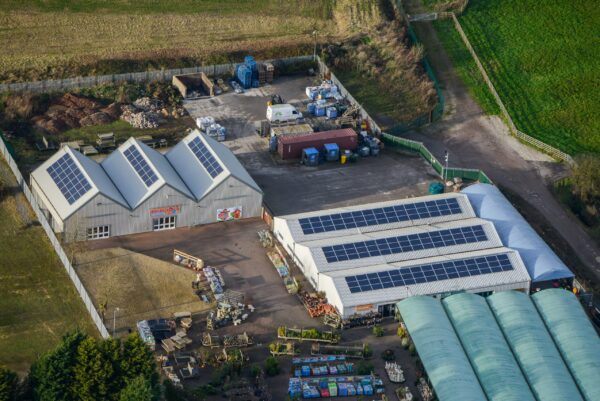
How Do Capital Allowances Work for Businesses?
Capital allowances effectively reduce the profit on which a business is taxed. For example, if a company spends £500,000 on a solar PV system and claims AIA, it can deduct this amount from its taxable profits, potentially saving a significant amount in taxes. By reducing the initial outlay through tax relief, capital allowances make solar investments more attractive and financially manageable for businesses.
Eligibility Criteria for Solar Investments
Qualifying Expenditures
When it comes to capital allowances, not all expenses qualify. Therefore, understanding what constitutes eligible expenditures is crucial for maximising the tax benefits associated with solar investments. Here’s a closer look at what qualifies:
- Solar PV Systems: The primary expense that qualifies for capital allowances is the cost of purchasing and installing solar photovoltaic (PV) systems. This includes the solar panels themselves, which convert sunlight into electricity. The cost of both standard and advanced solar panels (such as bifacial or high-efficiency panels) can be claimed under capital allowances.
- Inverters and Power Electronics: In addition to the panels, businesses can claim capital allowances on the inverters and power electronics that convert the DC electricity generated by the panels into AC electricity, which can be used by the business or fed into the grid.
- Energy Storage Solutions: If your solar investment includes energy storage, such as solar PV batteries, these too are eligible. Energy storage systems allow businesses to store excess solar energy for use during periods when the sun isn’t shining, increasing energy independence and efficiency.
- Mounting and Racking Systems: The structural systems that hold the solar panels in place, whether on a rooftop or as a ground-mounted array, are also eligible for capital allowances. This includes both fixed and tracking systems that follow the sun’s movement to maximise energy production.
- Installation Costs: The labor and associated costs of installing the solar panels, inverters, and other related equipment can be claimed. This is an often-overlooked area where businesses can recoup a significant portion of their investment. It’s important to include the direct labor and costs related to any necessary electrical upgrades, scaffolding, and safety measures required during installation.
- Grid Connection Fees: If your solar installation requires connection to the national grid, any fees paid for this process are eligible for capital allowances. This ensures that the full scope of your investment, from panels to grid connection, is covered.
- Ongoing Maintenance and Monitoring Systems: While initial installation costs are the primary focus, certain ongoing costs related to the monitoring and maintenance of the system might also be eligible under specific capital allowances categories. This includes costs for monitoring software or services that ensure the solar PV system operates efficiently.
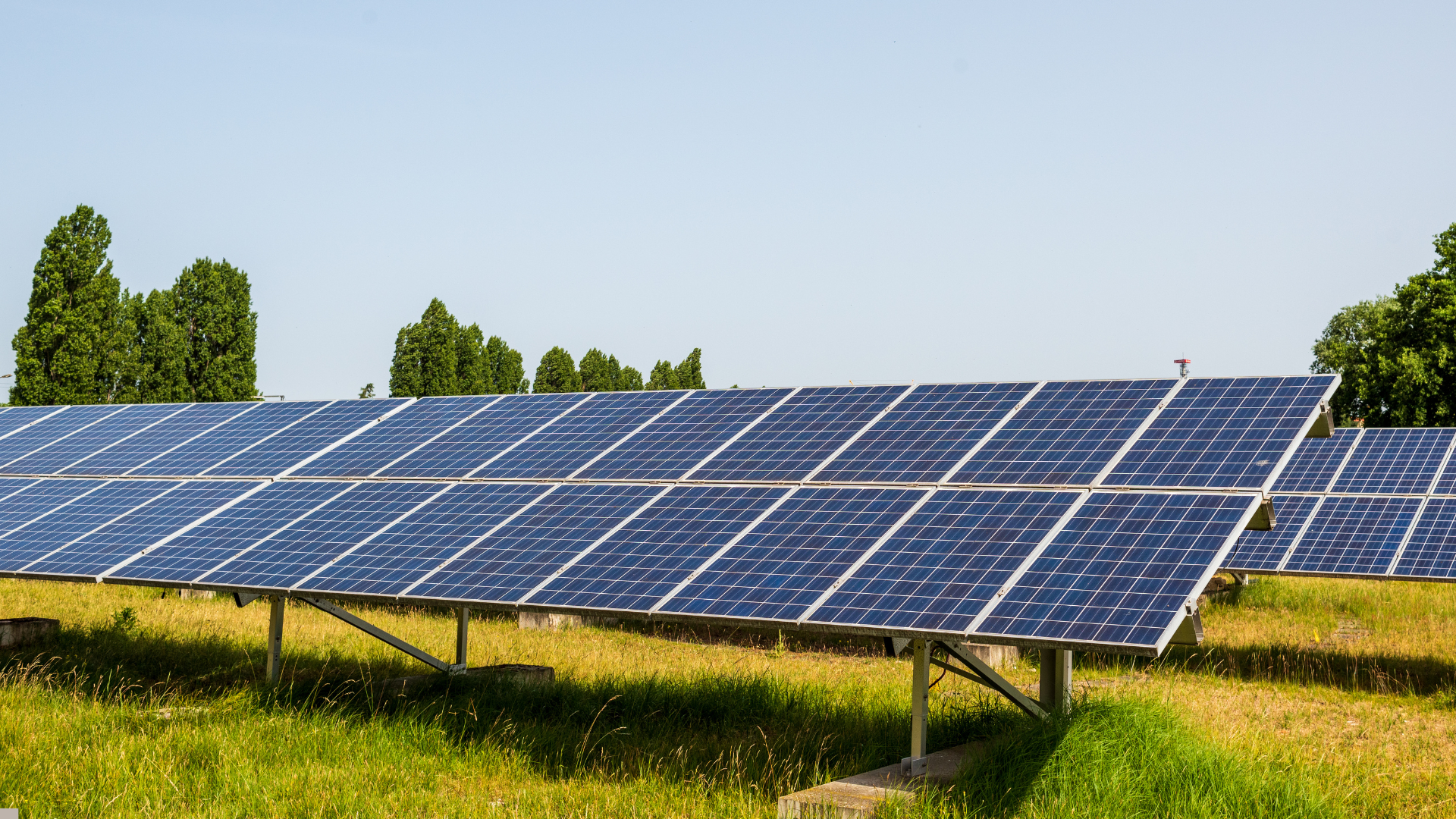
Does Your Business Qualify for Solar Panel Capital Allowances?
Capital allowances are a powerful tool for UK businesses investing in solar energy. By understanding and leveraging these tax reliefs, businesses can significantly reduce the cost of solar installations, improve their ROI, and contribute to a more sustainable future. If your business is considering solar investments, now is the time to explore how capital allowances can make these projects more financially viable.
Ready to make the most of your solar investment? At EvoEnergy, we specialise in helping businesses maximise solar energy’s financial and environmental benefits. Our experts are here to guide you every step of the way, ensuring you get the maximum return on your solar installation. Contact us today to learn more about our tailored solar technologies and start saving!
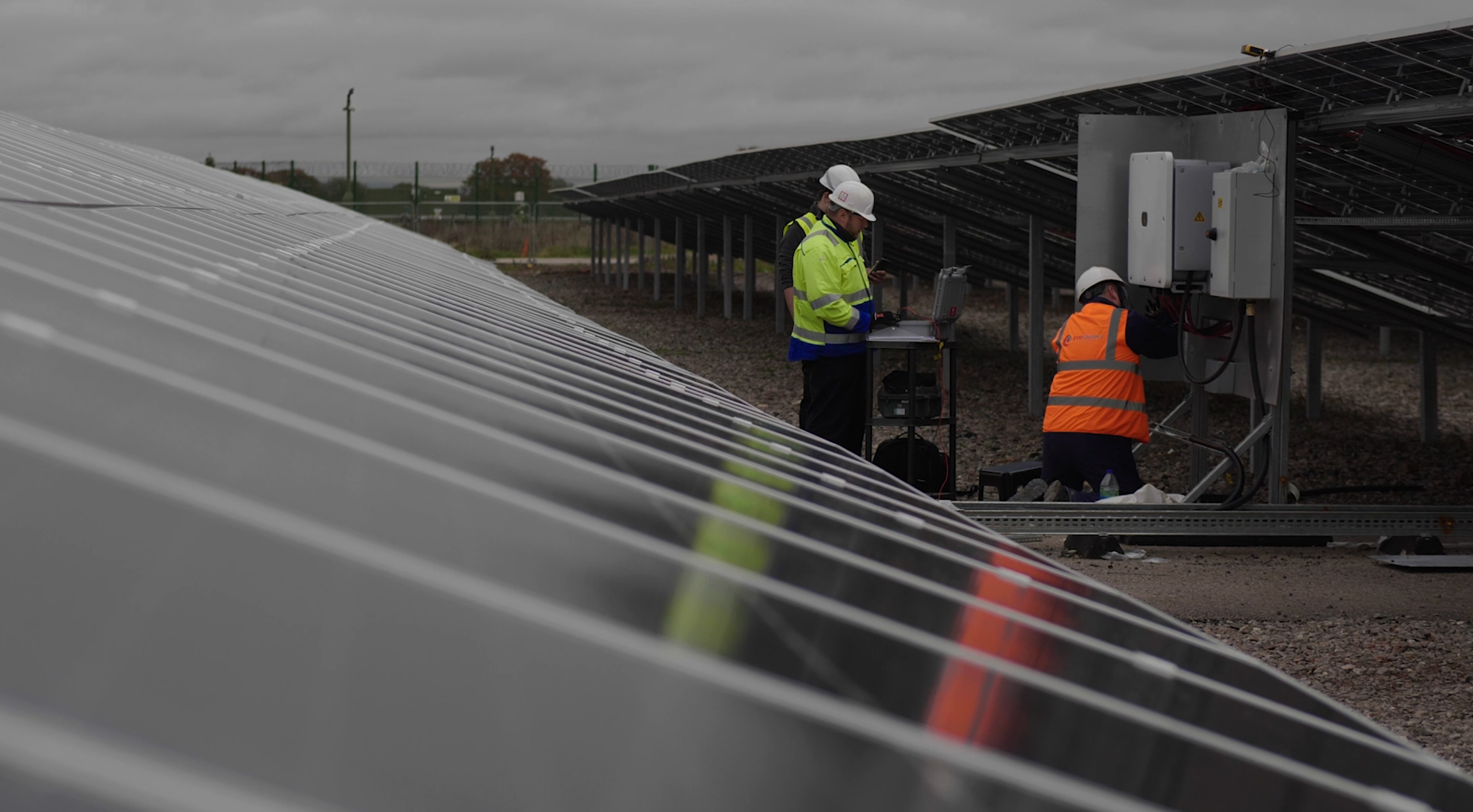
Long-term Benefits of Solar Panel Investments for UK Businesses
Investing in solar energy offers UK businesses a range of long-term benefits beyond immediate cost savings. By incorporating solar power into their energy strategy, companies can significantly enhance their return on investment and position themselves for sustainable growth.
Improving Return on Investment
Solar investments have the potential to improve a company’s return on investment by reducing operational costs associated with traditional energy sources. Through lower energy bills and potential revenue generation from excess energy production, businesses can achieve substantial savings over the lifespan of their solar installations.
Long-term Cost Savings
Due to its renewable and sustainable nature, solar energy offers long-term cost savings compared to relying solely on traditional energy sources. By harnessing solar power, businesses can mitigate the impact of fluctuating energy prices and reduce their dependence on grid electricity, leading to more predictable and stable energy expenses.
Increase in Property Value
Businesses that invest in solar installations can also experience increased property value. Solar panels not only enhance the aesthetics of a building but also demonstrate a commitment to sustainability, which can make the property more attractive to potential buyers or tenants, thereby boosting its overall value.
Impact on Carbon Footprint
Businesses can significantly reduce their carbon footprint and environmental impact by transitioning to solar energy. Solar power is a clean and renewable energy source that produces electricity without harmful emissions, helping companies contribute to climate change mitigation efforts and demonstrate environmental responsibility.
Overall, solar investments’ long-term benefits for UK businesses include financial savings, increased property value, and environmental stewardship. By partnering with EvoEnergy and embracing solar power, companies can secure a sustainable future while optimising their operational efficiency and competitiveness in the market.
Maximising Capital Allowances for Solar Panel Investments
Strategic Planning and Timing
Businesses should carefully plan the timing of their investments to maximise the benefits of capital allowances. For example, if a company expects higher taxable profits in a particular year, it might strategically time its solar investment to take full advantage of the AIA. Additionally, businesses should consider future-proofing their solar investments by opting for scalable systems that can be expanded as energy needs grow.
Integrating Capital Allowances with Other Incentives
Capital allowances can be combined with other government incentives to maximise financial returns. For instance, businesses might combine capital allowances with the Renewable Heat Incentive (RHI) or green finance options like government-backed loans. This approach can further reduce the upfront costs and enhance the overall financial benefits of solar investments.
Unlock Unmatched Growth and Sustainability with Solar Investments and Capital Allowances!
Businesses that invest in solar projects with EvoEnergy are securing their financial future and contributing to a more sustainable and eco-friendly business environment. The benefits of solar investments go beyond just financial gains—they positively impact the environment, society, and the company’s reputation.
Don’t miss the opportunity to transform your business with solar investments and capital allowances. Contact EvoEnergy today to see how your organisation can benefit from renewable energy solutions and the financial benefits available. Harness the power of solar energy and capital allowances to drive your business’s growth, innovation, and sustainability.
Frequently Asked Questions
1. What capital allowances are available for businesses investing in solar panels?
Businesses can benefit from:
- AIA (Annual Investment Allowance) to fully deduct qualifying solar expenditure up to the annual limit (≈ £1 million).
- WDA (Writing Down Allowance) for costs beyond the AIA, allowing annual write-offs.
- SBA (Structures & Buildings Allowance) for related construction costs (3% per year over ~33 years), if solar is part of a larger building project.
2. What solar investment costs qualify for capital allowances?
Qualifying costs include:
3. How do capital allowances improve solar project ROI?
By reducing taxable profits, these allowances decrease immediate tax liabilities. This acts like a discount on upfront costs, making solar more affordable and improving cash flow, payback periods, and overall ROI, while also contributing to environmental goals and adding value to a property.
4. How can businesses maximise the tax benefits of solar investments?
- Strategic timing: Invest during high-tax years to utilise full AIA allowance.
- Combine with other schemes: Use capital allowances alongside programs like RHI or green financing to further boost financial returns.
Solar photovoltaic (PV) technology has emerged as a cornerstone of sustainable energy solutions, offering an environmentally friendly way to generate electricity. By converting sunlight into electrical energy, solar PV systems help reduce reliance on fossil fuels, lower energy bills, and contribute to a cleaner planet. However, determining the ideal time to install solar PV systems is crucial for maximising efficiency and return on investment. This decision hinges on several factors: geographic location, energy consumption patterns, government incentives, and local climate conditions.
Factors Affecting Solar PV Installation Timing
1. Location and Solar Irradiance
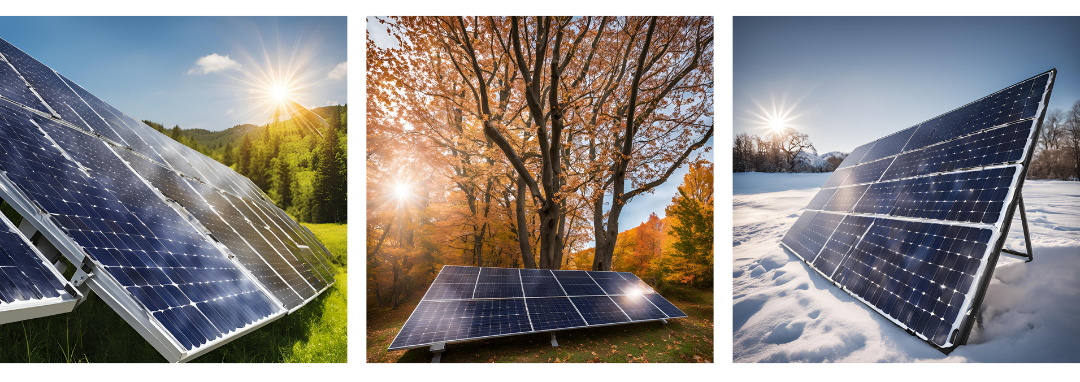
Geographic location plays a pivotal role in the effectiveness of a solar PV system. Areas closer to the equator generally receive more direct sunlight year-round, making solar PV more productive. However, even in regions with less solar exposure, like parts of the United Kingdom, solar energy can still be a viable option due to advances in solar technology and the availability of incentives.
Seasonal variations in sunlight also influence solar PV performance. In the UK, for example, summer months offer longer daylight hours and higher solar irradiance, leading to increased energy generation. On the other hand, winter months with shorter days and lower sun angles reduce solar output.
Solar calculators are an excellent way to assess the suitability of solar PV for a specific location. These tools consider solar irradiance, roof orientation, and shading to estimate potential energy production and savings.
2. Energy Consumption Patterns
Analysing energy usage patterns throughout the year is essential for optimising solar PV installations. In the United Kingdom, energy consumption often peaks during the colder months when heating systems are in high demand. Conversely, summer months may decrease consumption due to milder temperatures and longer daylight hours.
By matching solar generation to consumption, businesses and homeowners can maximise the benefits of their solar PV systems. For example, if energy usage is higher during the day, a solar PV system can offset this demand, reducing reliance on grid electricity and lowering energy bills.
3. Government Incentives and Policies
Government incentives can significantly impact the timing of solar PV installation. In the United Kingdom, various financial incentives, such as tax credits, rebates, and subsidies, are available to encourage the adoption of solar energy. These incentives can reduce the upfront costs of installation and improve the overall return on investment.
Net metering programs, which allow solar PV owners to sell excess energy back to the grid, can further enhance solar energy’s financial benefits. Understanding eligibility requirements and the availability of these programs is crucial when planning the installation of a solar PV system.
4. Climate and Weather Conditions
The local climate is another key factor in determining the optimal time for solar PV installation. The UK experiences weather conditions throughout the year, from cloudy and rainy winters to sunnier summers. While solar PV systems can generate electricity even on cloudy days, prolonged periods of low sunlight can reduce efficiency.
Additionally, weather conditions can affect the installation process itself. Installing solar panels during favorable weather ensures smoother installation and minimises potential delays due to rain, snow, or high winds.
Best Times to Install Solar PV
Summer
Summer offers the highest solar irradiance, making it an ideal time for solar PV installation. The longer days and stronger sunlight ensure the panels operate efficiently, providing immediate energy savings. Moreover, installing in the summer allows homeowners and businesses to benefit from the peak solar generation period, reducing their reliance on grid electricity.
Winter
While winter may not seem ideal for solar PV installation, there are advantages. Energy demand is typically higher during the colder months, and having a solar PV system in place can help offset some of these costs. Additionally, installers may have more availability during the winter, potentially leading to quicker installation times and possibly lower costs due to reduced demand.
Spring/Fall
Spring and fall, often referred to as shoulder seasons, provide a balanced option for solar PV installation. The weather is generally mild, making installation easier and more predictable. Solar irradiance during these seasons is still substantial enough to generate significant energy, and the timing allows the system to be fully operational before the peak energy demand in winter or summer.
Other Considerations
Financing Options
Financing the installation of a solar PV system can be a significant consideration. In the UK, various financing options are available, including solar loans, power purchase agreements (PPAs), and leasing arrangements. These options can make solar PV more accessible by spreading the cost over time, allowing immediate energy savings without a substantial upfront investment.
Battery Storage
Battery storage systems complement solar PV installations by storing excess energy generated during the day for use at night or during cloudy periods. This increases energy independence and ensures solar PV owners maximise their investment. With advances in battery technology, integrating storage solutions has become a more attractive option for residential and commercial solar PV systems.
Professional Installation:
Choosing a reputable and experienced installer is crucial for the success of a solar PV project. Professional installation ensures that the system is optimised for maximum efficiency and longevity. EvoEnergy’s Solar Panels for Business offers tailored solutions for commercial entities, providing end-to-end services from consultation and design to installation and maintenance. Partnering with experts ensures that the solar PV system is correctly installed and aligned with the business’s specific needs.
Discover the Perfect Moment to Embrace Solar Energy with EvoEnergy!
Various factors influence solar PV installation timing, including geographic location, energy consumption patterns, government incentives, and local climate conditions. Understanding how these elements interact is essential for maximising your solar investment’s efficiency and financial return.
However, it’s important to remember that every situation is unique. An individual assessment of your circumstances and expert consultation can provide tailored advice to ensure you make the most informed decision. Whether you’re a business looking to reduce energy costs or a homeowner seeking sustainability, the right timing can make all the difference.
We encourage you to explore your solar options and take the next step toward energy independence. Don’t hesitate to contact us for comprehensive consultation and professional installation services!
Solar photovoltaics (PV) are a key player in the global transition to renewable energy. By converting sunlight directly into electricity, solar PV systems offer a sustainable and efficient way to generate power. As the world grapples with climate change and the depletion of fossil fuels, renewable energy sources like solar PV cannot be overstated.
How Solar Panels Work?
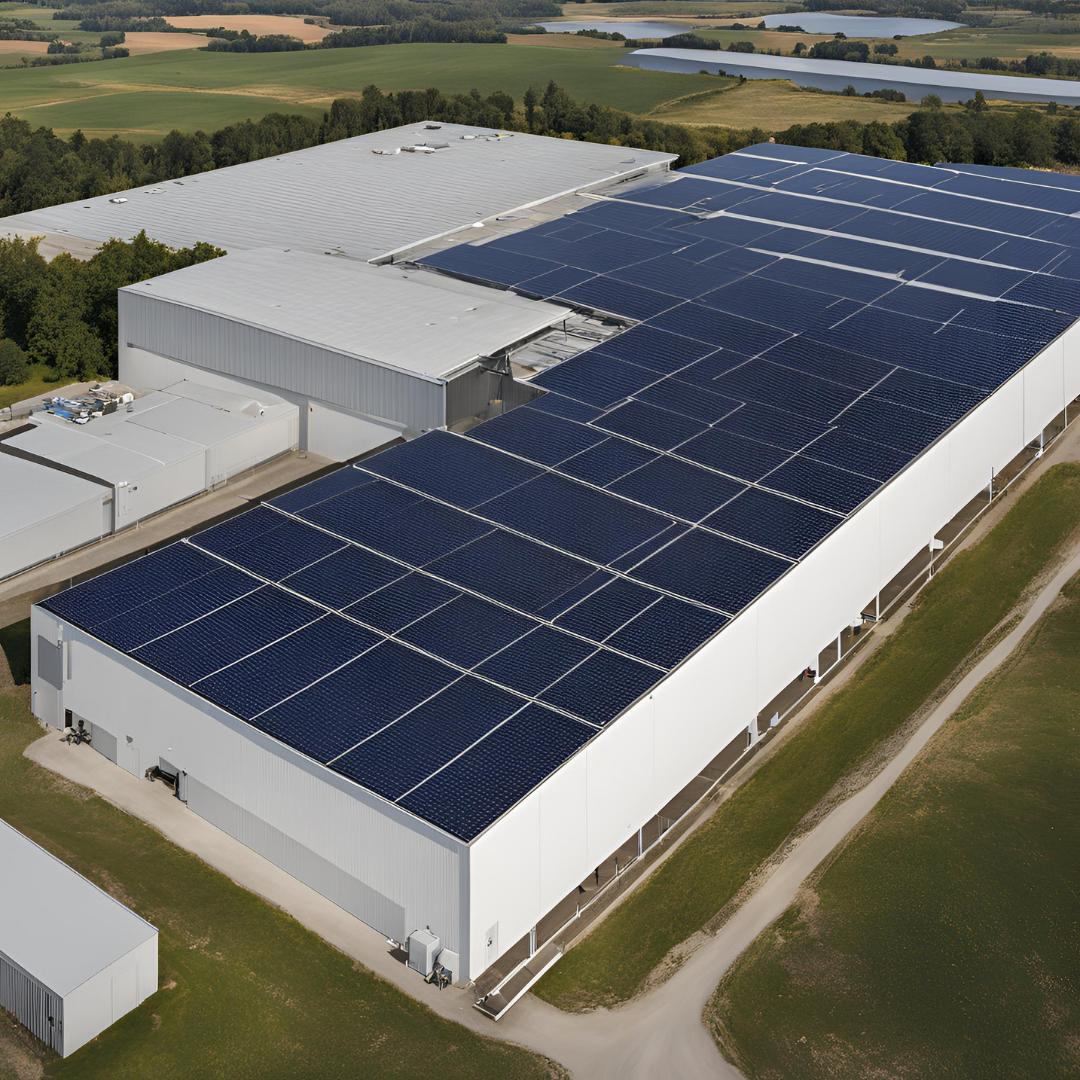
Solar panels operate on the principle of the photovoltaic effect, where semiconductor materials like silicon absorb sunlight and release electrons. When captured by an electric field within the solar cells, these free electrons create an electric current. This current is then directed through an inverter to be converted into alternating current (AC), the standard form of electricity used in homes and businesses.
The greater the intensity of the light, the greater the flow of electricity. PV systems generate no greenhouse gases, saving approximately 325kg of carbon dioxide emissions per year – adding up to about 8 tonnes over a system’s lifetime – for each kilowatt peak (kWp – PV cells are referred to in terms of the amount of energy they generate in full sun light).
PV arrays now come in a variety of shapes and colours, ranging from grey ’solar tiles’ that look like roof tiles, to panels and transparent cells that you can use on conservatories and glass to provide shading as well as generating electricity. As well as enabling you to generate free electricity, they can provide an interesting alternative to conventional roof tiles.
Read Further: How Do Solar Panels Work?
Types of Solar Panels
Monocrystalline Panels
Monocrystalline panels are made from a single, pure silicon crystal and are known for their high efficiency and longevity. Their uniform appearance and better performance in low-light conditions make them a popular choice, albeit at a higher cost.
Polycrystalline Panels
These panels are made from multiple silicon crystals melted together. They are less efficient than monocrystalline panels but are more cost-effective, making them suitable for larger installations where space is not a constraint.
Thin-Film Panels
Thin-film panels are lightweight and flexible and constructed from various materials, such as cadmium telluride or amorphous silicon. While they are less efficient than crystalline panels, their adaptability and lower cost make them ideal for certain applications.
Components of a Solar PV System
- Solar Panels: The primary component that captures sunlight and converts it into electricity.
- Inverter: Converts the direct current (DC) the panels produces into alternating current (AC) for use in buildings.
- Batteries: Store excess energy produced during the day for use during nighttime or cloudy periods.
- Grid Connection: Allows surplus energy to be fed back into the national grid, enabling a two-way exchange of electricity and often earning the system owner credits or payments.
Benefits of Solar Photovoltaics
Environmental Benefits
Solar PV systems significantly reduce greenhouse gas emissions by replacing fossil fuel-based electricity with clean, renewable energy. This transition lowers the carbon footprint of energy production and contributes to cleaner air, benefiting public health and the environment.
Economic Benefits
- Lower Energy Bills: Solar PV systems can significantly reduce electricity bills by generating a portion or all of a building’s energy needs. The savings can be substantial over time, especially with rising energy prices.
- Increased Property Value: Properties equipped with solar PV systems are often valued higher than those without, as buyers recognise the long-term financial benefits and sustainability advantages.
Energy Independence
Solar PV systems provide a degree of energy independence by reducing reliance on external power sources. This is particularly beneficial in remote areas or during power outages, where a solar system with battery storage can continue to supply electricity.
Grid Stability
By generating electricity close to the point of consumption, solar PV systems reduce the load on the grid and contribute to overall stability. Additionally, the widespread adoption of solar PV can decrease the need for extensive and costly grid infrastructure upgrades.
Factors to Consider Before Installing Solar PV
Sun Exposure and Shading
The effectiveness of a solar PV system is highly dependent on the amount of sunlight it receives. To maximize energy production, it is crucial to assess the orientation, tilt, and shading of the installation site. In the UK, south-facing roofs with minimal shading are ideal.
Local Regulations and Incentives
Before installation, it’s important to understand local regulations and incentives. The UK government offers various schemes, such as the Smart Export Guarantee (SEG), which allows solar PV owners to sell excess electricity back to the grid. Planning permissions and building regulations should also be reviewed to ensure compliance.
System Size and Cost
The size of the solar PV system should be tailored to the property’s energy needs. Larger systems generate more electricity but come with higher upfront costs. It’s important to balance the potential savings with the initial investment and consider financing options like loans or leasing.
Prices for PV systems vary, depending on the size of the system to be installed, type of PV cell used and the nature of the actual building on which the PV is mounted. The size of the system is dictated by the amount of electricity required.
The average domestic system costs around £4,000- £9,000 per kWp installed, with most systems usually between 1.5 and 2 kWp. Solar tiles cost more than conventional panels, and panels that are integrated into a roof are more expensive than those that sit on top.
If you intend to have major roof repairs carried out it may be worth exploring PV tiles as they can offset the cost of roof tiles.
Grid connected systems require very little maintenance, generally limited to ensuring that the panels are kept relatively clean and that shade from trees has not become a problem. The wiring and components of the system should however be checked regularly by a qualified technician.
Stand-alone systems, i.e. those not connected to the grid, need maintenance on other system components, such as batteries.
Energy Storage Options
While batteries are not essential for all solar PV systems, they are beneficial for storing excess energy for later use. This is particularly useful in areas with frequent power outages or for those seeking to maximize energy independence.
EvoEnergy’s Solar Panel Installation Process
Switching to solar energy may seem challenging, but it doesn’t have to be. Here’s a breakdown of our streamlined process:
- Consultation with a Solar Specialist: Our renewable energy experts will assess your current energy consumption and future needs to help you identify the ideal size and type of solar system for your situation.
- Explore Financial Solutions: Various financing options are available, including leasing, loans, and power purchase agreements (PPAs). We’ll help you select the best option that aligns with your financial goals.
- Installation and Ongoing Support: After your solar system is installed, our team will provide continuous monitoring and maintenance to ensure it operates at maximum efficiency.
Unlock the Power of Solar PV for Your Business Today!
Solar photovoltaic (PV) systems offer numerous advantages, from reducing your carbon footprint and lowering energy bills to increasing your property value and enhancing energy independence. When you consider factors like sun exposure, local regulations, and system size, solar energy is clear as a sustainable and cost-effective solution for the future.
If you’re ready to explore how solar energy can benefit your business, EvoEnergy is here to guide you every step of the way. From expert consultation to ongoing monitoring and maintenance, we provide the expertise and resources to make your transition to renewable energy seamless.
For more information about solar PV and other renewable energy technologies, submit an enquiry to today. And if you’re curious about how much CO₂ and money your business could save by installing solar panels on your roof, check out our Solar Panel Calculator.
Frequently Asked Questions
How do solar panels generate electricity?
Solar panels convert sunlight directly into electricity via the photovoltaic effect. Semiconductor materials (typically silicon) absorb photons, releasing electrons. These electrons are captured by an electric field within the cell, creating electrical current. This direct current (DC) is then converted into usable alternating current (AC) by an inverter for powering buildings or exporting to the grid.
What are the environmental and economic benefits of solar PV systems?
- Environmental impact: Each kilowatt-peak (kWp) of installed capacity saves approximately 325 kg of CO₂ emissions per year, amounting to about 8 tonnes over its lifetime.
- Economic advantages: Solar PV systems reduce electricity bills, enhance property values, and provide energy independence, especially impactful amidst rising energy costs.
What types of solar panels are available and how do they differ?
- Monocrystalline panels: Made from a single, pure silicon crystal. They offer higher efficiency and reliability, particularly in low-light conditions, but come at a premium.
- Polycrystalline panels: Produced from multiple silicon crystals melted together. They’re more cost-effective, though less efficient, making them suitable for larger installations with ample space.
- Thin-film panels: Lightweight and flexible, constructed from materials like cadmium telluride or amorphous silicon. Though less efficient, they’re ideal where adaptability, aesthetics, or weight are factors.
What are the key components of a solar PV system?
A standard solar PV system includes:
- Solar panels – Capture sunlight and convert it to electricity.
- Inverter – Converts DC output to AC for use in buildings or for export.
- Battery storage (optional) – Stores surplus energy for use during non-sunlight hours.
Grid connection – Enables two-way electricity exchange, often allowing businesses to export excess power and receive payments.
What factors should businesses consider before installing solar PV in the UK?
- Sun exposure and shading: Optimal output requires a south-facing roof with minimal shade, and correctly judged tilt.
- Local regulations and incentives: Understand relevant planning permissions and make use of schemes like the Smart Export Guarantee (SEG) to earn for excess energy exported to the grid.
- System size and cost: Systems typically range from 1.5 to 2 kWp for homes, costing around £4,000–£9,000 per kWp. Larger systems cost more but provide greater savings. PV tiles or integrated options may increase costs but may offset roofing expenses if roof work is already planned.
- Maintenance needs: Grid‑connected systems require minimal upkeep, mainly cleaning and shading checks. Off‑grid or battery-integrated systems require additional maintenance for components like batteries.
How does EvoEnergy support businesses through the solar PV installation process?
EvoEnergy offers a full-service approach, including:
- Consultation: Tailoring system size and type to energy usage.
- Financial guidance: Helping navigate leasing, loans, and PPAs.
- Installation and support: End-to-end services including ongoing monitoring and maintenance to ensure peak performance.
Thermal solar panels are important in producing renewable energy and providing efficient solutions for heating water and spaces. However, when considering their installation, one key factor that often gets overlooked is their weight. Understanding the weight of thermal solar panels is essential to ensuring that they are installed safely and effectively.
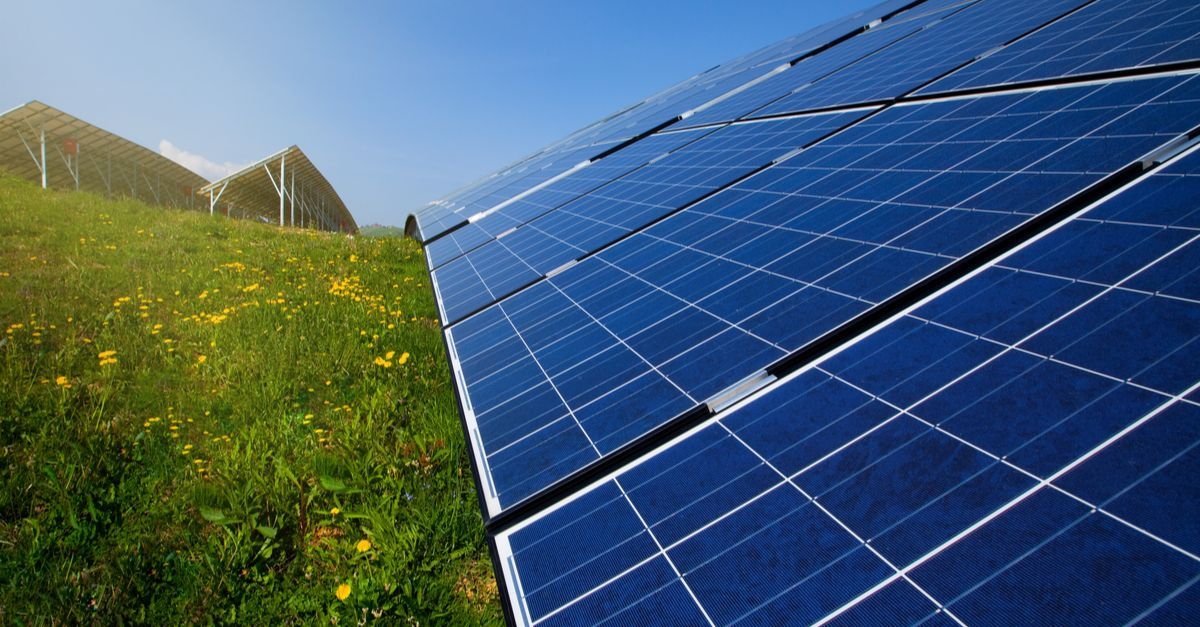
How Thermal Solar Panels Work?
Thermal solar panels, also known as solar thermal collectors, absorb sunlight to generate heat, typically used to warm water or air for domestic, commercial, or industrial use. Unlike photovoltaic (PV) panels that convert sunlight into electricity, thermal panels focus on capturing and utilising heat. These panels are made from glass, metal, and insulation layers, all contributing to their overall weight.
Types of Thermal Solar Panels
Understanding these types helps choose the right panel based on your building’s structural capacity and energy needs. There are various thermal solar panels, each with different weight characteristics.
Flat-Plate Collectors
Flat-plate collectors are among the most common thermal solar panels used in residential and commercial applications. They consist of a flat absorber plate that captures solar energy, a transparent cover that reduces heat loss, insulation to prevent energy from escaping, and a metal casing.
Flat-plate collectors generally weigh between 20 to 30 kg per square metre. The actual weight can vary depending on the specific materials used, the glass’s thickness, and the insulation’s quality.
Evacuated Tube Collectors
Evacuated tube collectors are another popular type of thermal solar panel, especially in colder climates where heat retention is crucial. These panels contain rows of glass tubes, each with a vacuum inside to minimise heat loss.
Evacuated tube collectors typically weigh between 10 and 20 kg per square metre, which makes them lighter than flat-plate collectors. However, the total weight depends on the number of tubes and the volume of fluid they contain.
Integral Collector-Storage Systems
Integral collector-storage (ICS) systems are designed to collect solar energy and store heated water in the same unit. Due to the combined function of heat collection and water storage, these systems are heavier.
Depending on the amount of water stored and the materials used in the construction, ICS systems can weigh 30 to 50 kg per square metre.
Mounting Systems
Mounting systems are an essential part of any solar panel installation. They ensure that the panels are securely attached to the roof or structure and can withstand environmental factors such as wind and snow.
Mounting systems generally add an additional 5 to 10 kg per square metre to the total weight, depending on the complexity and materials used.
Weight Considerations in Operational Conditions
Weight per Square Metre
Weight per square metre is a critical measurement that defines the load a thermal solar panel imposes on a surface area of the building’s roof or structure. This metric is vital for calculating whether a building can support the panels without compromising structural integrity. A higher weight per square metre requires a more robust and load-bearing structure.
Factors Affecting Weight in Operational Conditions
Several factors influence the actual weight of thermal solar panels when in operation:
- Fluid Content: Fluids (like water or glycol) within the panels add to their operational weight.
- Insulation Materials: The type and thickness of insulation used in the panels can increase the weight.
- Mounting Systems: The brackets and frames that secure the panels add weight, which must be factored into the overall load.
- Thermal Expansion: Temperature changes cause materials to expand and contract, which can subtly affect the weight and stress on the mounting systems over time.
Practical Implications for Installation
Structural Integrity and Load-Bearing Capacity
Before installing thermal solar panels, it is crucial to assess the load-bearing capacity of the roof or structure. An expert evaluation can determine if the current structure can handle the added weight or if reinforcements are necessary. This assessment should consider not only the weight of the panels but also the dynamic loads from wind, snow, and thermal expansion.
Building Regulations and Compliance
In the UK, building regulations require that any solar panel installation must not exceed the structural load capacity of the building. Compliance with these regulations is critical to avoid potential safety hazards. Ensuring that the installation meets local building codes will help prevent structural failures and legal issues.
Expert Tips for Managing Thermal Solar Panel Weight
Choosing the Right Panels for Your Building
Selecting the appropriate type of thermal solar panel is crucial. Evacuated tube collectors, due to their lighter weight, might be a better option for buildings with limited load-bearing capacity. Flat-plate collectors, offering higher durability and efficiency, can be considered for structures with more robust roofs.
Installation Best Practices
To minimise the impact of weight on your building, consider these best practices:
- Professional Assessment: Always consult a structural engineer before installation to ensure the building can handle the additional load.
- Proper Mounting: Use high-quality mounting systems that distribute the weight evenly across the structure.
- Regular Maintenance: Periodically check the panels and mounting systems to ensure they are secure and functioning properly, especially after extreme weather conditions.
Ensuring a Safe and Effective Thermal Solar Installation
Understanding the weight of thermal solar panels and how it affects your building is crucial for a successful installation. By considering factors such as weight per square metre and the structural integrity of your building, you can make informed decisions that ensure both safety and efficiency. Proper planning, compliance with building regulations, and choosing the right panels will help you reap the benefits of thermal solar energy without compromising your property’s structural integrity.
Take the Next Step Today! Consult with EvoEnergy for Your Solar Needs
If you’re considering installing thermal solar panels, contact EvoEnergy today for a consultation. Our experts can help you assess your building’s load-bearing capacity and recommend the best solar solutions tailored to your needs. Let us help you maximise the sun’s power safely and efficiently.
Frequently Asked Questions
1. How much do common types of thermal solar panels weigh per square metre?
- Flat-plate collectors typically weigh 20–30 kg/m², depending on material thickness and insulation quality.
- Evacuated tube collectors are lighter, generally around 10–20 kg/m², depending on the number of tubes and fluid volume.
- Integral collector‑storage (ICS) systems are heavier, approximately 30–50 kg/m², because they integrate both heat collection and fluid storage in one unit.
2. How much additional weight do mounting systems add to the panels?
Mounting systems add another 5–10 kg/m² to the total load, depending on bracket design and materials used.
3. What factors affect the operational weight of thermal solar panels?
Several elements influence the actual load when panels are operational:
- Fluid content, such as water or glycol, increases weight.
- Insulation materials and their thickness contribute to the overall mass.
- Mounting hardware, frames, supports, and connectors, also add to the load.
Thermal expansion, due to temperature fluctuations, can subtly affect the stress and perceived weight on mounting systems over time.
4. Why is knowing weight per square metre important for installations?
Weight per square metre is a key metric for assessing whether a roof or structure can safely support the panels without structural risk. Buildings with lower load-bearing capacity may need reinforcement before installation. It’s essential to conduct a structural assessment to ensure safety, considering both static and dynamic loads (e.g., wind, snow, thermal movement).
The solar energy industry is witnessing a remarkable transformation, driven by continuous technological advancements. Among these innovations, 3D solar cells, also known as 3D photovoltaic (PV) technology, are emerging as game-changers. These cutting-edge solar cells offer a new dimension of efficiency and energy production, positioning them to redefine how we harness solar power.
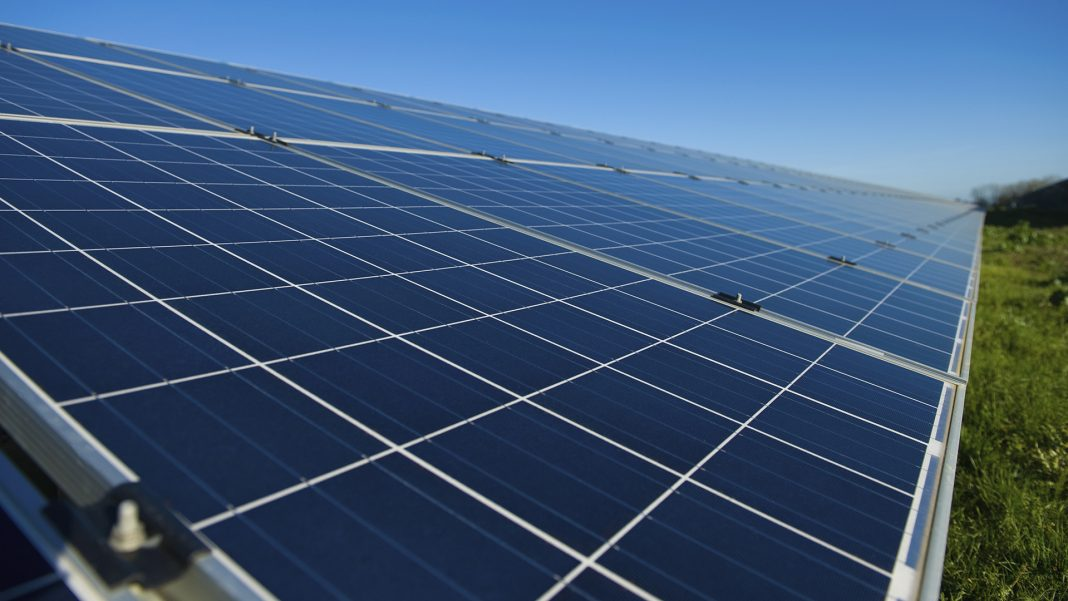
What are 3D Solar Cells?
3D solar cells are a revolutionary type of photovoltaic technology that differs fundamentally from traditional 2D solar panels. While conventional solar cells are flat and rely on a single plane to capture sunlight, 3D solar cells employ a three-dimensional design that maximises light absorption. This configuration allows them to capture sunlight from multiple angles, significantly enhancing their efficiency.
The three-dimensional structure of 3D PV technology often involves intricate, layered designs, which increase the surface area available for capturing sunlight. This innovation not only boosts energy production but also makes better use of the available space, making it an attractive option for various applications, particularly in urban environments where space is at a premium.
How 3D PV Technology Works?
The working principle behind 3D PV technology is centred around its ability to trap and utilise sunlight more effectively than flat solar panels. Traditional solar cells are limited by the angle of sunlight they can capture, typically requiring optimal positioning to achieve maximum efficiency. In contrast, 3D solar cells can absorb sunlight from different directions throughout the day, leading to higher energy yields.
The layered or tower-like structures in 3D solar cells create a labyrinth for light to travel through, ensuring that even diffuse or reflected light is harnessed. This ability to capture more light, regardless of its source or angle, makes 3D solar cells particularly effective in environments where sunlight is not always direct, such as in areas with significant shading or during less sunny periods.
The performance improvements compared to 2D solar cells are clear. The multi-angled design of 3D PV technology means that energy production is more consistent and less dependent on the time of day or year. This results in a more reliable and efficient energy source, ideal for both small-scale and large-scale applications.
Benefits of 3D Solar Cells
Increased Efficiency
By capturing more sunlight from various angles, 3D PV technology can produce significantly more electricity than conventional flat panels. This translates into higher energy output per unit area, making them an excellent choice for installations where space is limited.
Space Optimisation
In urban areas, where rooftop or ground space is often scarce, 3D solar cells can generate more power within a smaller footprint. This makes them particularly suitable for commercial buildings, residential areas, and other settings where space efficiency is crucial.
Cost-effectiveness
Although the initial investment in 3D solar cells may be higher due to their complexity, the long-term savings are substantial. The increased efficiency means that fewer panels are needed to achieve the same energy output, reducing material costs and installation expenses. Over time, the energy savings can offset the initial costs, providing a compelling return on investment.
Embrace the Future of Solar Energy with 3D Solar Cells
3D solar cells represent a significant advancement in photovoltaic technology, offering the potential to revolutionise the way we generate solar energy. With their ability to capture sunlight more efficiently and their promise of higher energy yields, they are poised to become a key player in the future of renewable energy.
As the solar energy landscape evolves, businesses have the opportunity to stay ahead of the curve by embracing innovative technologies like 3D solar cells. Our Solar Panel for Business service offers tailored solutions to meet the unique energy needs of your organisation. By integrating cutting-edge 3D PV technology into your solar energy strategy, you can maximise your energy production, reduce your carbon footprint, and achieve significant cost savings.
Contact us today to learn more about how 3D solar cells can benefit your business and contribute to a more sustainable future.
Frequently Asked Questions
What makes 3D solar cells different from traditional solar panels?
They use a three-dimensional, multi-angled design that captures and traps sunlight from more directions, not just overhead, unlike flat, 2D panels. This results in higher light absorption and efficiency.
How do 3D solar cells improve energy production throughout the day?
Their layered or tower-like structure enables them to absorb diffuse or reflected sunlight, even at low angles (morning, evening, winter), making energy production more consistent compared to traditional panels.
Are 3D solar cells cost-effective for businesses?
While the upfront cost may be higher due to complex design, their superior efficiency means fewer panels are needed for equivalent output. Over time, this can lead to fewer materials, lower installation costs, and better return on investment.
Why are 3D solar cells ideal for urban environments or limited spaces?
Their high energy output per unit area allows businesses in space-constrained settings, like rooftops in city centers, to generate more electricity using less physical footprint.
As a business owner, what strategic advantage might I see in 3D solar cells?
By adopting 3D solar cells, you gain higher and steadier energy generation, efficient space utilization, and long-term financial and environmental benefits.